Search
Nuit Blanche
13.11.2026
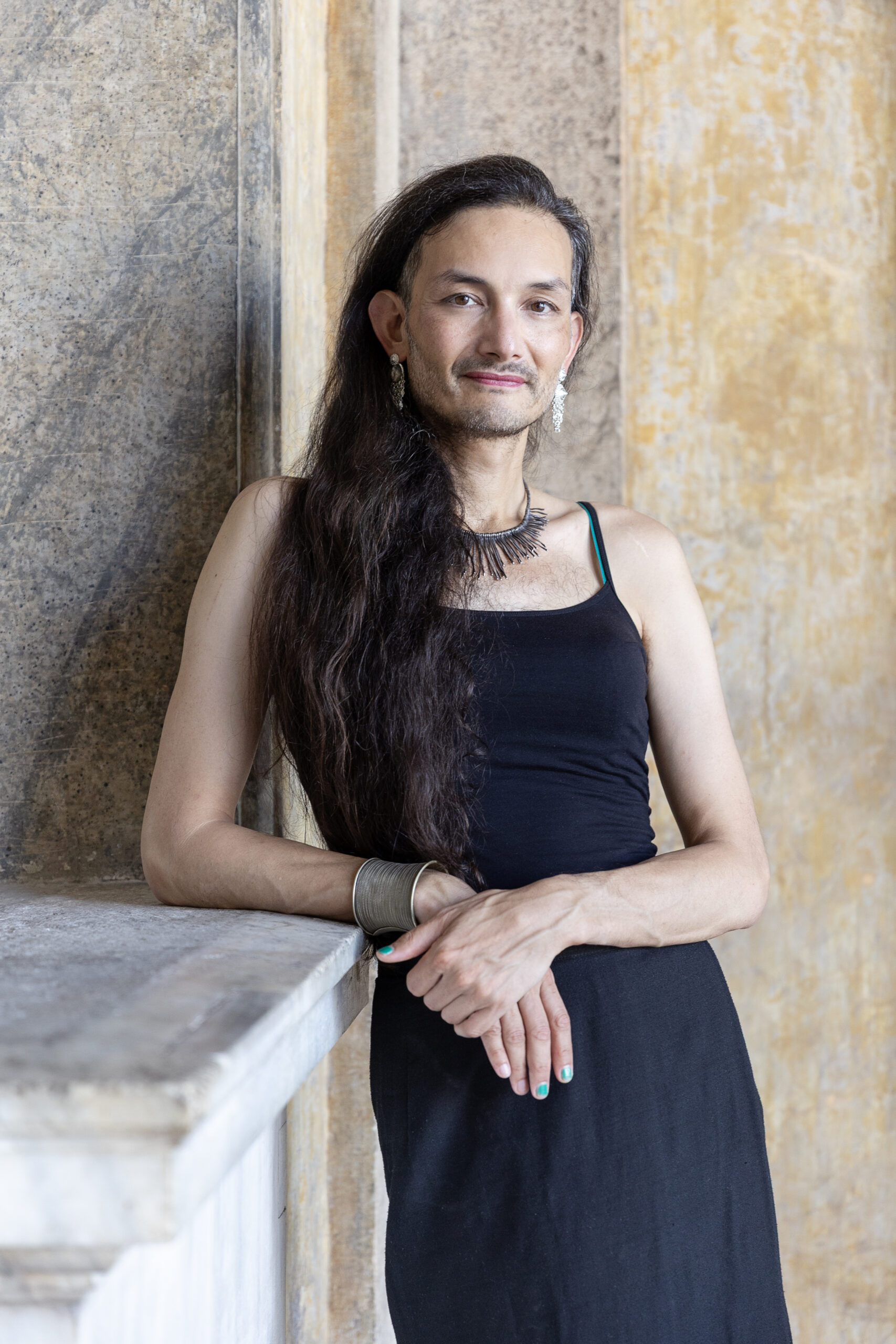
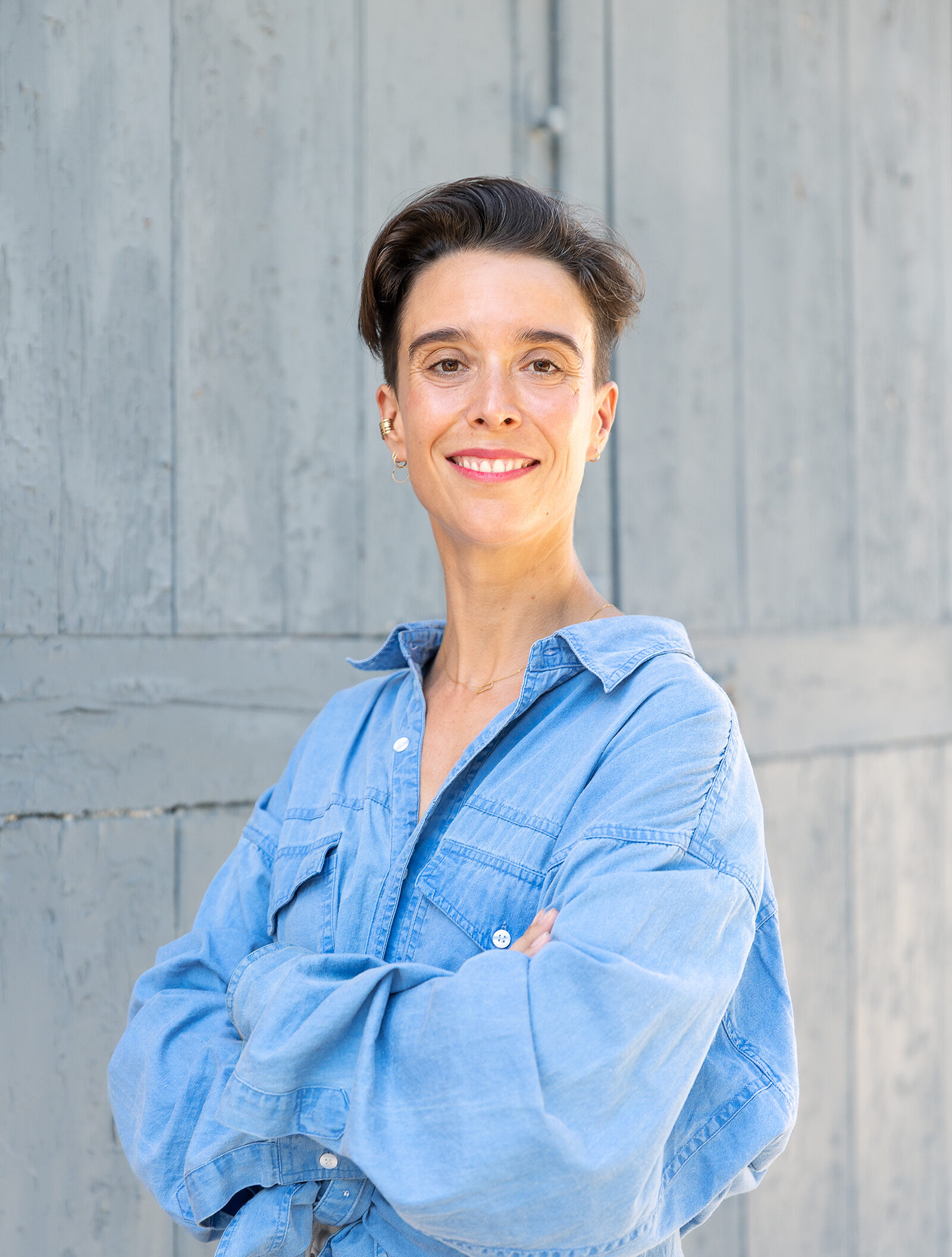
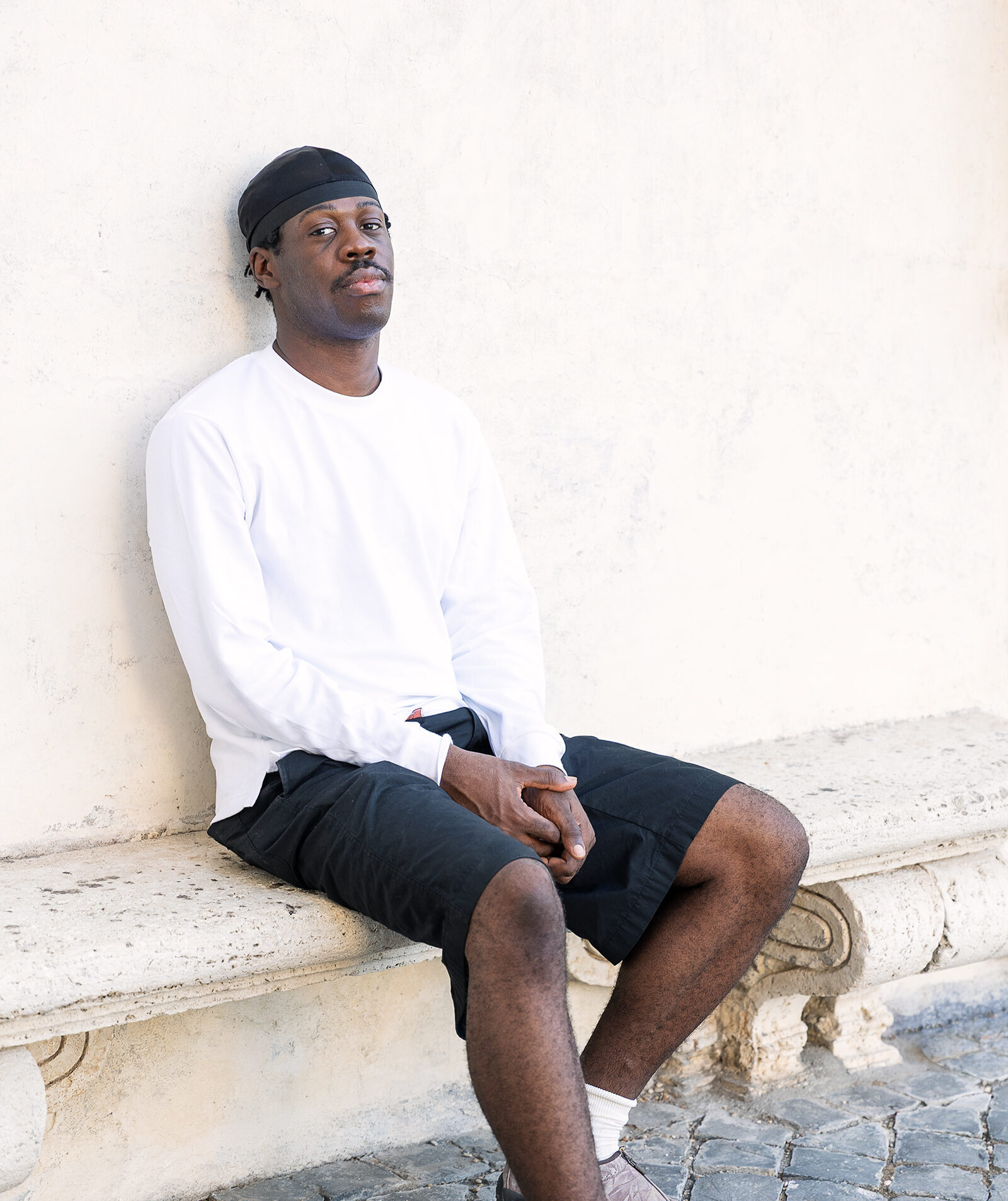
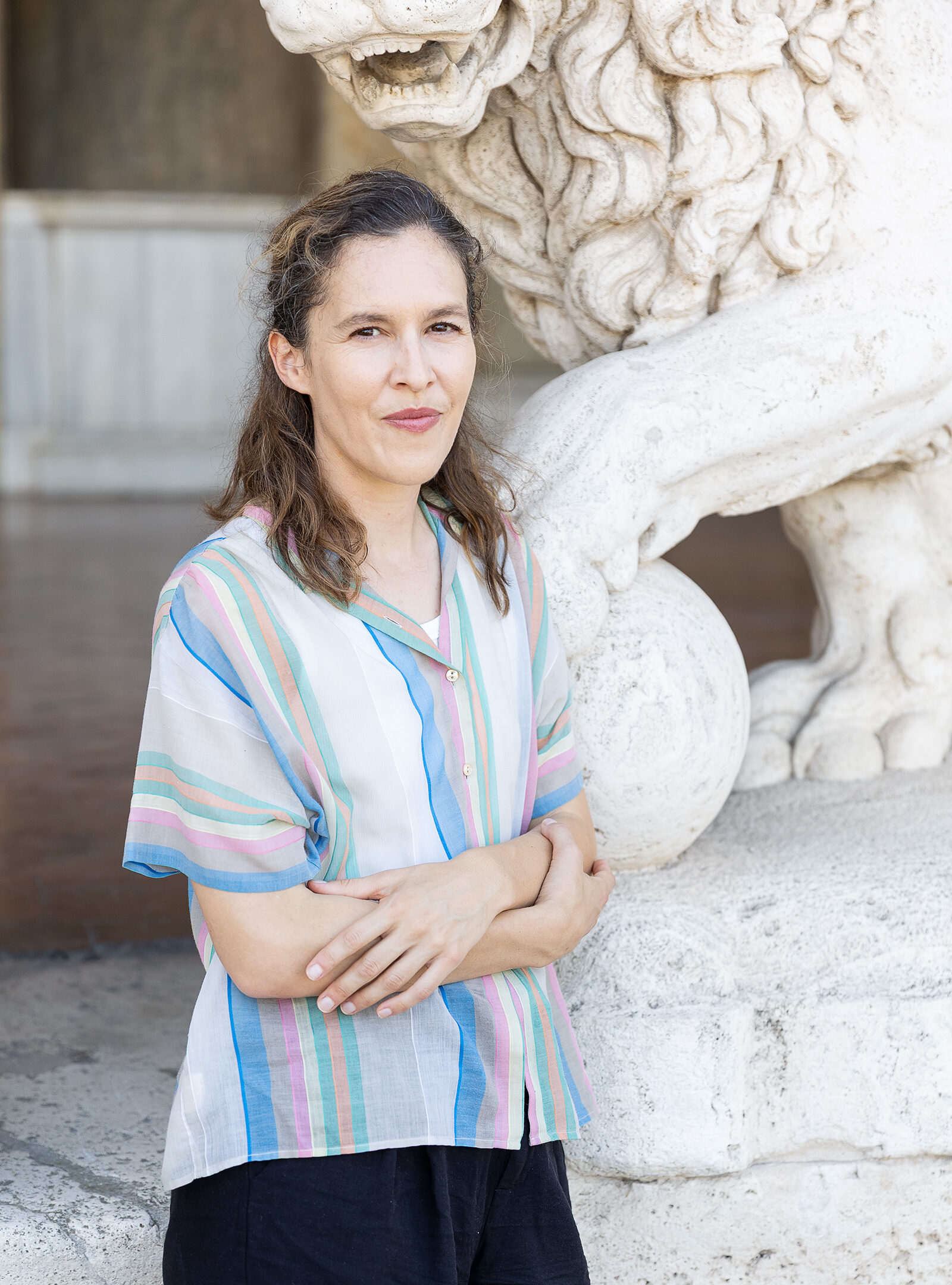
- Guest artists
- Vittoria Assembri
- Valentin Clabault
- Luca Di Giovanni
- Djarah Kan
- Julie Michael
- Zen My Nguyen (Radio Hito)
- Quentin Rey
- Igiaba Scego
- Tomma Wessel
A night-time celebration of contemporary creativity, the Nuit Blanche returns at Villa Medici on Friday 13 November for an evening dedicated to the projects of the fifteen fellows in residence.
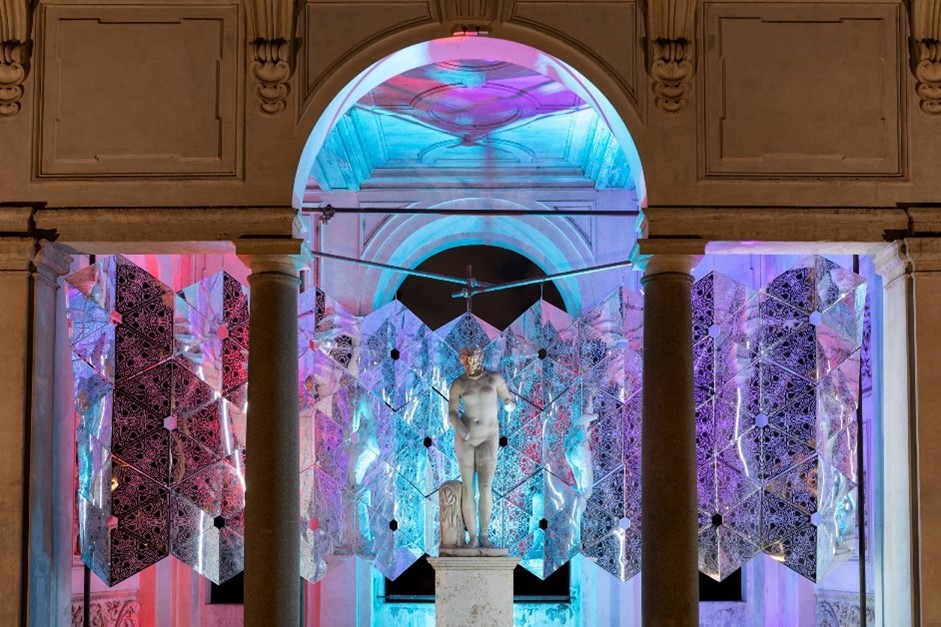
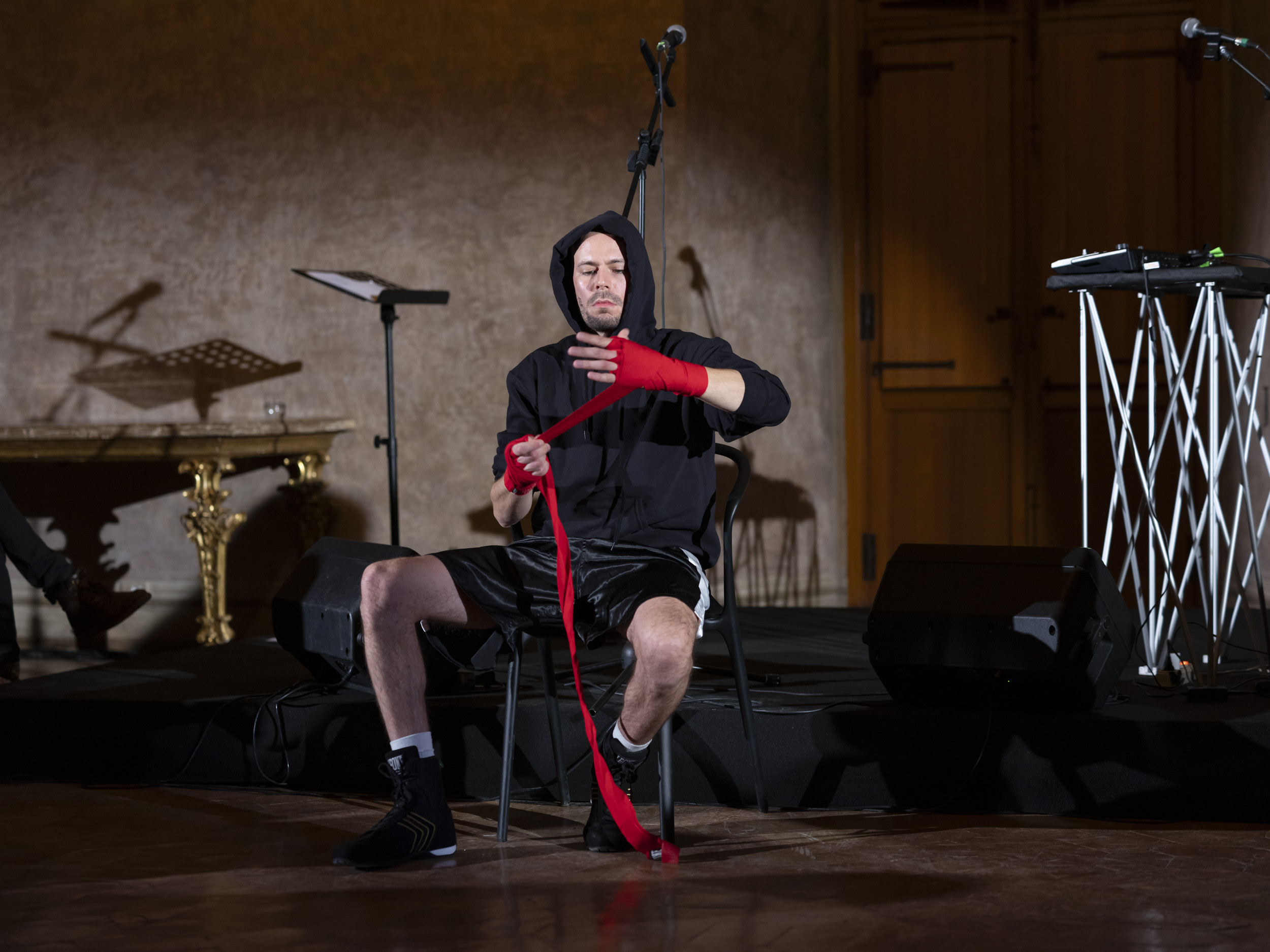
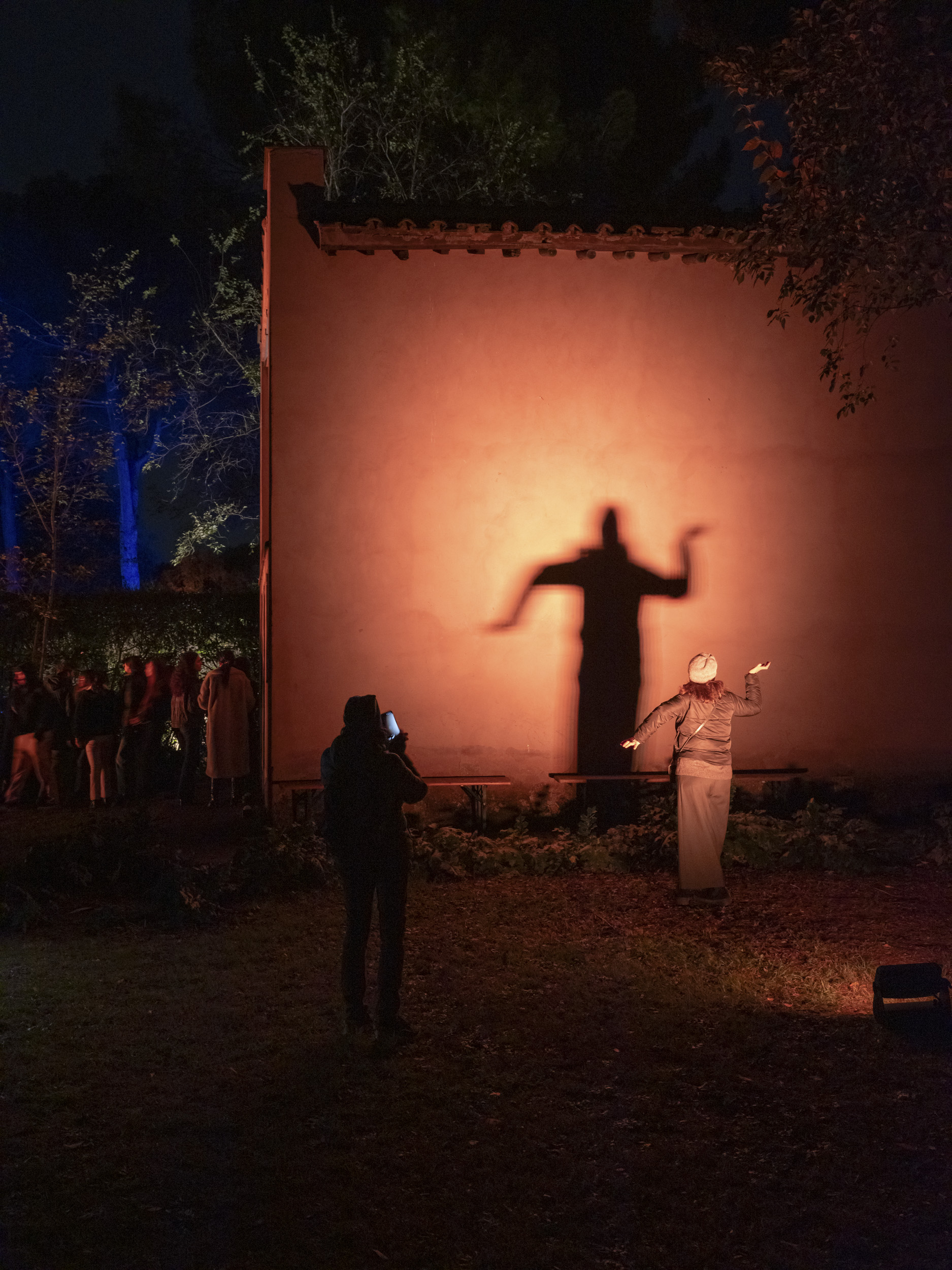
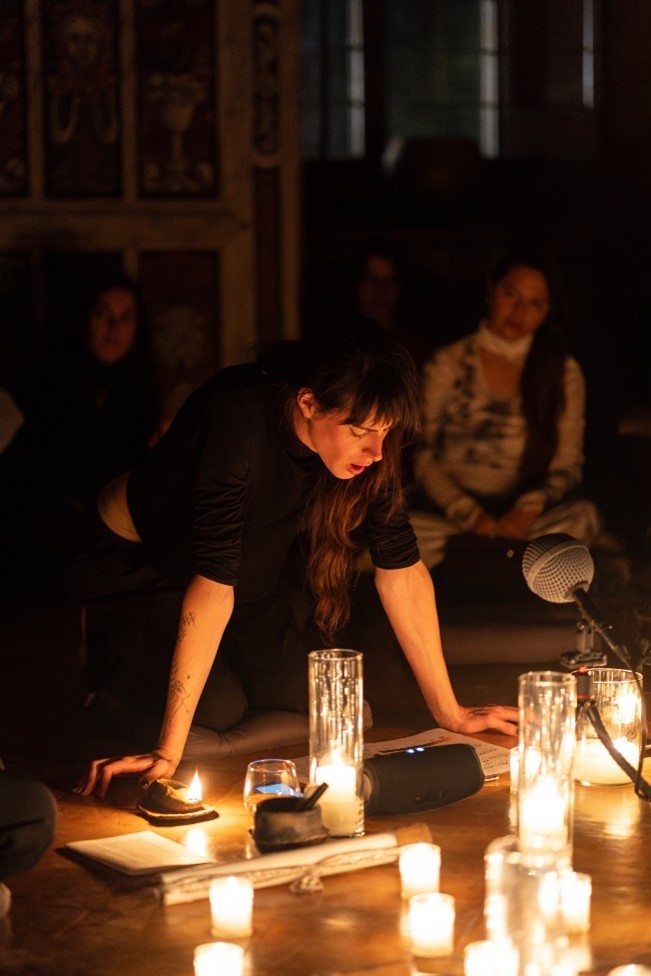
Artists, writers, researchers and performers present their work in progress in the salons, studios and gardens of Villa Medici, which opens to the public free of charge for the entire evening – an exceptional event. Conceived as an immersive journey through the Villa’s spaces, this Nuit Blanche brings together installations, performances, readings, concerts and screenings. A diverse and vibrant programme, reflecting the variety of disciplines and practices that characterise the residency.
Installations
Running continuously throughout the evening.
"Rose Moderne", Louidgi Beltrame
Through film, photography, drawing and sculpture, Louidgi Beltrame explores the vestiges and traces of the past, as well as the ways in which they are represented. His work focuses in particular on modernist architecture and entropy, examining the transformations of places and the narratives that inhabit them. During his residency at Villa Medici, he is developing a film project in dialogue with the nomadic work of the Peruvian poet and artist Jorge Eduardo Eielson, notably his project Habitación en Roma (1952).
Shot on Super 8, Rose moderne draws inspiration from the photographs taken by José Casals for the book Puruchuco, published in 1979. Situated on the outskirts of Lima, Peru, this Inca palace was restored in the 1950s. On film, its architectural forms appear in vibrant, softened images, where the site’s geometric rigour contrasts with signs of the present: a crane, a football pitch and the chaotic urban fabric of Lima’s outskirts.
The film also evokes the presence of Jorge Eduardo Eielson, who contributed a text to the book Puruchuco. His voice—or rather, his breath—permeates the images in the form of a whistled poem. Like an invisible trace made perceptible, this intervention creates a dialogue between architecture, memory and poetry, navigating the persistence of the past and the transformations of the landscape.
Louidgi Beltrame
Rose Moderne
2025
Super 8 film, 2K digital scan, HD transfer, stereo sound
4’05"Seven Squares in Orbit", Valentine Umansky, Vittoria Assembri
Valentine Umansky is an author and curator at Tate Modern in London. Her residency project at Villa Medici, As Soon as It Is Written: Systems of Notation in Contemporary Art, examines the ways in which artists use instructions to invite us to take action. Drawing on performance, dance and sound art, this research project analyses a collection of scores and explores their status.
For the Nuit Blanche, Valentine Umansky has invited the sound artist and researcher Vittoria Assembri. Together, they have devised a score based on a sound field study carried out by Assembri during her residency at Villa Medici in September 2026. They present a visual and sensory interpretation of a possible route through the garden’s squares. The figure of the kite functions in this work as a structuring device: sensitive to variations in the wind, it moves, tenses and changes direction under the influence of forces beyond its control. The graphic score thus created takes the form of the kite to channel sounds, interference and trajectories between the garden’s squares; these intersect, converge and drift apart.
Valentine Umansky, Vittoria Assembri
Seven Squares in Orbit
2026
Poster
Graphic design by Bahut studio"Capillarità", Lydiane Chomienne
A heritage conservator specialising in painting, Lydiane Chomienne has, for several years, been developing new methods for the conservation of monumental tempera paintings on canvas – particularly fragile works created using water-soluble binders. As an artist-in-residence at the Villa Medici, she is continuing her research into a novel cleaning process based on capillarity, using regenerated cellulose membranes normally intended for the production of mortadella casings.
For the Nuit Blanche, Lydiane Chomienne presents a snapshot of this experimental research, which aims to resolve a paradox in restoration: how can one clean paintings with water when the water itself risks destroying them?
Diverted from their food-grade use, the cellulose membranes are filled with water and then placed on the surface of the artworks. Through capillary action and osmosis, the water slowly penetrates the material, dissolving dirt and degradation products, before being extracted along with the residues it carries. This static and gradual method optimises water control and enables these fragile surfaces to be cleaned without resorting to direct mechanical action.
A test canvas, dry or saturated membranes, and images documenting the treatments illustrate the various stages of the process. The blotting papers on display were used in the restoration of the painted canvases on the organ shutters of Perpignan Cathedral. Laden with material accumulated over five centuries, they retain traces of the deposits extracted from the artwork. As physical evidence of this intervention, they reveal what restoration work usually seeks to remove.
Lydiane Chomienne
Capillarità
Installation
2026
Technical canvas painted in tempera (pigments and rabbit-skin glue) on linen canvas; dehydrated ViskaseÒ HS13 cellulose membranes in aqueous pouches; original blotting papers used in the treatment of the painted canvases from the organ screens of Perpignan Cathedral (Angels in the Clouds, tempera on canvas, anonymous, 1504); painting restoration materials; views of historic tempera works undergoing treatment (overall views, details, close-ups).Works on display, acknowledgements and thanks
The Capture of Jerusalem by Titus, The Creed, The Flagellation, tempera on canvas, anonymous, c. 1500, Reims Museum of Fine Arts.
© Lydiane Chomienne
Restoration project carried out under the auspices of the C2RMF – Centre for Research and Restoration of French Museums.The Feast of Herod, The Baptism of Christ, The Musician Angels, Saint Stephen, organ screens from Perpignan Cathedral, tempera on canvas, anonymous, 1504, owned by the State, listed as historic monuments.
Restoration project carried out under the supervision of the DRAC Occitanie – Regional Conservation of Historic Monuments.
© Dinh Thi Tien; Amoroso Consortium © DRAC Occitanie.
Special thanks to ViskaseÒJean Claracq, Neïla Czermak Ichti & Ibrahim Meïté Sikely, Charlotte Houette
Jean Claracq, Neïla Czermak Ichti and Ibrahim Meïté Sikely, all three artists-in-residence at Villa Medici, present a group exhibition of their most recent works, some of which were completed at the Villa Medici.
As painters and draughtsmen, Neïla Czermak Ichti and Ibrahim Meïté Sikely develop visual worlds in which art history engages with contemporary popular cultures. For the past five years, their collaboration has explored the intersection of these imaginaries. At Villa Medici, they are exploring the narrative devices of Italian painting and its ability to organise perspectives and temporalities, through a series of large-format paintings that blend and transform their respective references.
A painter of miniatures and icons, Jean Claracq combines classical painting with digital culture. His works create a dialogue between contemporary figures, images from social media and references to art history. Attentive to framing and composition, he explores the links between painting and space, whilst taking an interest in contemporary urban ruins, which bear witness to the memory and transformations of our societies.
Charlotte Houette
As a painter, Charlotte Houette explores visual effects that disrupt perception, at the crossroads of optical art and psychedelia. Conceived as constructed objects, her paintings possess their own architectural structure and question the very conditions of vision. She is also interested in the scenographic devices of Baroque painting – veritable visual machines that stage power and shape perception.
For the Nuit Blanche, Charlotte Houette is opening her studio and unveiling her initial pictorial research carried out at Villa Medici. By exploring optical illusions and Baroque forms, she examines the links between image, perception and representation. Her experiments create a tension between the sensory experience of looking and the visual mechanisms through which images capture attention, produce effects and establish their authority.
"Two other women without heads", Aïcha Snoussi
A visual artist, Aïcha Snoussi works in drawing, installations, sculpture and assemblages of organic and industrial materials, which she patiently collects and transforms. Her works examine the construction of narratives, the authority of knowledge and the power dynamics that shape our relationship with history, viewed from its margins. By blending fiction and archival material, she explores memory, ruins and erasures, revealing their political and poetic significance. By appropriating the tools of archaeology, anthropology and museology, she devises a counter-use of archives – falsified, eroticised and coded – as acts of resistance.
"Écho Eco", Amandine Gay
A director, producer, writer and Afro-feminist activist, Amandine Gay creates documentary work that challenges dominant representations and narratives. Currently in residence at the Villa Medici, she is writing a speculative fiction feature film about Giuseppina Bakhita, the first Catholic saint from sub-Saharan Africa in the modern era.
In October 2017, Ouvrir La Voix, the documentary directed by Amandine Gay—which invited 24 Francophone Black women to reclaim their narrative—was released in cinemas. Nearly ten years later, how do their words resonate within the Afro-Italian context?
For the Nuit Blanche, Amandine Gay presents an encounter across time and space. The authors Djarah Kan and Igiaba Scego will read their own texts, whilst extracts from the film are shown in the background. Blurring the lines between memory, transmission and the reclaiming of narrative, this performance creates a dialogue between words and experiences that transcend borders, exploring what connects them, transforms them and allows them to continue to resonate in the present.
Amandine Gay
Video installation
Écho EcoBooking required
Performances, Concerts, Readings
| ○ | Performances preceded by this symbol require a separate reservation (free of charge) due to limited seating. |
7.00 pm ○ Reading "Chant Balnéaire" (extracts), Oliver Rohe
READING, 15 mins (Grand Salon)
In Italian
Booking required (online)Oliver Rohe
With Luca Di Giovanni
Extracts from his book, Chant Balnéaire (Allia, 2023)
Translated into Italian by Francesca BononiThe writer, Oliver Rohe, is the author of several books, including Défaut d’origine (Allia, 2003), Terrain vague (Allia, 2005), Un peuple en petit (Gallimard, 2009) and Chant balnéaire (Allia, 2023). He also writes radio plays and contributes to several journals. His work explores, in particular, the links between violence, memory and language. His next book, Sept fois Beyrouth (Allia), is due to be published in January 2027.
For the Nuit Blanche, Oliver Rohe presents a reading, by the performer Luca Di Giovanni, of extracts from his latest book, Chant balnéaire.
The narrator, his mother and his sister flee the war raging in West Beirut to settle in a bungalow twenty kilometres from the fighting. In this confined setting, empty in winter and full in summer, the teenage narrator lives on the fringes of time, alone or in a pack, perpetually failing at school, perpetually surrounded by the militiamen of the seaside resort. Subjected to latent, then incessant violence that shapes the ways of thinking, feeling and speaking, the characters test and forge their identities; friendships, carefree moments and escapades remain possible. Chant balnéaire is the epic tale of an experience of civil war that merges with everyday life, and of an everyday life that stubbornly persists amidst the war.
7.30 pm / 8.30 pm / 9.30 pm ○ Performance "Songs of Grief (Love Me Tender)", Vanasay Khamphommala
PERFORMANCE, 25 mins (Petit Salon)
In Italian
Booking required (online)Vanasay Khamphommala
Songs of Grief (Love Me Tender)Playwright, performer, author and translator, Vanasay Khamphommala has been developing, since 2018 with her company Lapsus chevelü, stage work at the crossroads of performance and theatre. Her works, including L’Invocation à la Muse, Écho and Je viens chanter chez toi toute nue en échange d’un repas, have been staged at the Avignon Festival, amongst other venues. Drawing on European mythologies, her approach offers a critical reinterpretation, with a focus on postcolonial and post-gender issues.
For the Nuit Blanche, Vanasay Khamphommala presents Songs of Grief, a performance centred on loss and the anticipation of it. In front of the audience, she rehearses Love Me Tender, the song her father—who was born in Laos—asked her to perform after his death, which is yet to come. Through the repetition of this gesture, the song becomes a way of preparing for absence, of giving form to an intimate request, and of turning mourning into a shared experience. Straddling the personal and the collective, the performance explores what the voice can convey in the face of the inevitable.
Concept and performance: Vanasay Khamphommala
Artistic collaboration: Dagmara Billon
Production: Lapsus chevelü, Nordwind (Berlin)
Supported by: Ministry of Culture — Drac Centre-Val de Loire, Institut français, Centre-Val de Loire Region, Indre-et-Loire Department, City of Tours.8.00 pm ○ Performance "Le détail principal", Marie de Quatrebarbes
PERFORMANCE, 25 mins (Grand Salon)
Booking required (online)Marie de Quatrebarbes & Zen My Nguyen (Radio Hito)
Le détail principal
Exctracts from her book: Les éléments (P.O.L., 2024)
Italian translation: Laura GiulibertiA writer, poet and publisher, Marie de Quatrebarbes has published several works with P.O.L. and is co-director of Éditions Corti. As a resident at Villa Medici, she is conducting a literary investigation following in the footsteps of the American-Cuban artist Ana Mendieta, using her writing to further an exploration of the forms of memory, traces and voices.
For the Nuit Blanche, Marie de Quatrebarbes invites the Italian-Vietnamese artist and musician Zen My Nguyen (Radio Hito) for a two-voice poetic performance, in collaboration with the translator Laura Giuliberti. Drawing on extracts from Les éléments (P.O.L., 2024), they explore the transitions between languages, voices and bodies: from French read aloud to Italian sung, translation becomes a living, evolving substance.
The project builds on a dialogue that has been ongoing for several years, nourished by writing, performances and published works. It also brings back memories of a shared residency at the foot of the Jura mountains, where Marie de Quatrebarbes and Zen My Nguyen pooled their books, their questions and their dreams. Through reading, singing and translation, Le détail principal transforms this encounter into a space of resonance and transformation.
9.00 pm ○ Concert, Oren Boneh
CONCERT, 25 mins (Grand Salon)
Booking required (online)Oren Boneh
Her Majesty the Fool, for accordion and electronics, with Quentin Rey.
Color Wheel, for recorder and electronics, with Tomma Wessel.
Solo version of Wicker and Pearl, for viola, with Julie Michael.
2025Oren Boneh is a composer of instrumental and mixed-media music. His work explores contrasts and ruptures, creating a dialogue between abrasive textures, mechanical sounds and more supple registers, sometimes tinged with humour. Through his interplay with texture, timbre and transformation, he blurs the boundaries between acoustic and electronic sounds.
For the Nuit Blanche, Oren Boneh presents a set of three pieces that take familiar instruments into uncharted territory. The accordion is distorted to the point of evoking an industrial machine; the sopranino recorder soars into a whirlwind of birdsong, metal and electronic sounds; the acoustic viola reveals unexpected colours and resonances.
Virtuosity, extended playing techniques, microtonality and electronics transform these instruments, whose identities become unstable. Whether mechanical or melodious, brilliant or noisy, their timbres oscillate between fragility and strangeness, opening the listener’s ears to unexpected soundscapes.
9.30 pm / 10.30 pm ○ Reading "Écho Eco", Amandine Gay
READING, 15 mins (Salon des Pensionnaires)
In Italian
Booking required (online)9.30 pm
Amandine Gay & Igiaba Scego
Écho Eco10.30 pm
Amandine Gay & Djarah Kan
Écho EcoDirector, producer, writer and Afro-feminist activist, Amandine Gay creates documentary work that challenges dominant representations and narratives. Currently in residence at Villa Medici, she is writing a speculative fiction feature film dedicated to Giuseppina Bakhita, the first Catholic saint from sub-Saharan Africa in the modern era.
In October 2017, Ouvrir La Voix, the documentary directed by Amandine Gay—which invited 24 Francophone Black women to reclaim their narrative—was released in cinemas. Nearly ten years on, how do their words resonate within the Afro-Italian context?
For the Nuit Blanche, Amandine Gay presents an encounter across time and space. The authors Djarah Kan and Igiaba Scego will read their own texts, whilst extracts from the film are shown in the background. Blurring the lines between memory, transmission and the reclaiming of narrative, this performance creates a dialogue between words and experiences that transcend borders, exploring what connects them, transforms them and allows them to continue to resonate in the present.
10.00 pm ○ Reading "Maximum Joy", by Nina Leger
READING, 20 mins (Grand Salon)
In French
Booking required (online)Nina Leger
Maximum Joy
Music: Valentin Clabault
Italian translation: Francesca BononiAs a writer, Nina Leger explores themes centred on places, their stories, their conflicts and what has been forgotten. How can one tell the story of a space and bring to light the traces that constitute it? Mémoires sauvées de l’eau (Gallimard, 2024, Historical Novel Prize) told the story of a Californian river, whilst Antipolis (2021, Écrire la ville Prize) recounted the violence surrounding the founding of a town in the south of France. In other works, Nina Leger approaches places through the bodies that experience them, as in Mise en pièces (Gallimard, 2017), which won the Anaïs Nin Prize and the Vocation Literary Prize.
Written for the theatre, Maximum Joy is a monologue. One summer evening, on the runway of a former Berlin airport, a woman explores her body and searches for the words to describe a simple yet rare sensation: that of a desire which depends neither on the gaze nor the judgement of another, but becomes a force in its own right, a power of existence through which a space of joy and freedom opens up.
For the Nuit Blanche, Nina Leger performs the text herself, giving body and voice to this exploration of desire as an experience of emancipation, where movement becomes a way of fully inhabiting the world and oneself.
11.00 pm ○ Performance "Pour Britney", Louise Chennevière
PERFORMANCE, 20 mins (Grand Salon)
Booking required (online)Louise Chennevière
Pour BritneyAs an author, Louise Chennevière explores in her books feminist issues, taboos and forms of violence that permeate female subjectivities. She has published three novels with P.O.L. publishers, including Comme la chienne, her debut novel, which examines the contradictions and tensions at play in the construction of female identities. She is currently working on a theatrical reworking of the myth of Electra, centring on the figure of the matricide and its representation through a female lens.
Also a musician, Louise Chennevière is presenting a performance for the Nuit Blanche that blends reading and music, based on her book Pour Britney (P.O.L., 2024). Taking the singer Britney Spears as her central figure, the author examines the media, social and symbolic violence to which she has been subjected, and explores what this reveals about the mechanisms of domination that affect women more broadly.
Echoing the text, she performs the songs featured in the book on guitar and vocals. Words and music intertwine to bring to light, behind a figure who has become emblematic, the demands, the violence and the acts of resistance that shape representations of femininity.
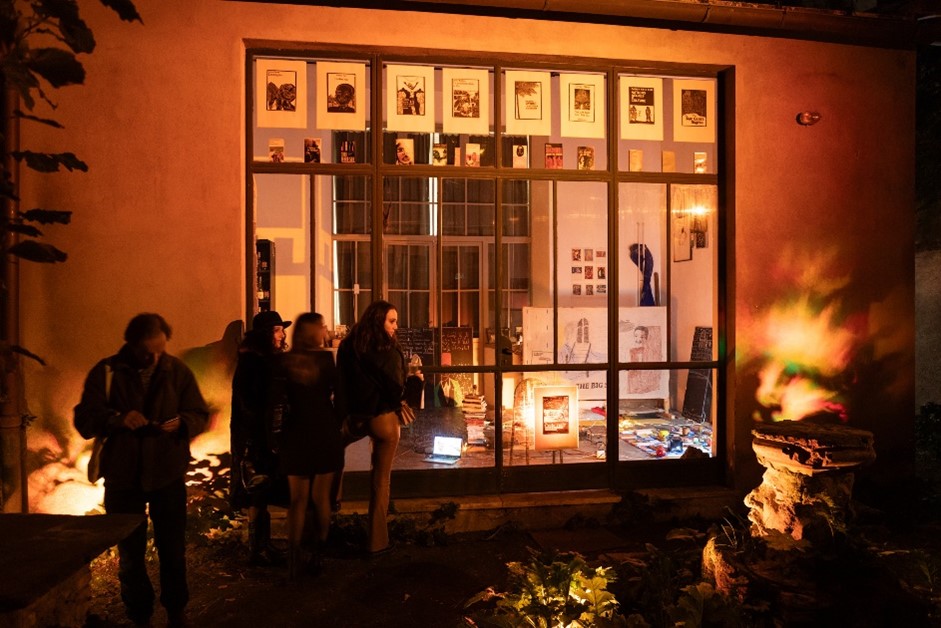
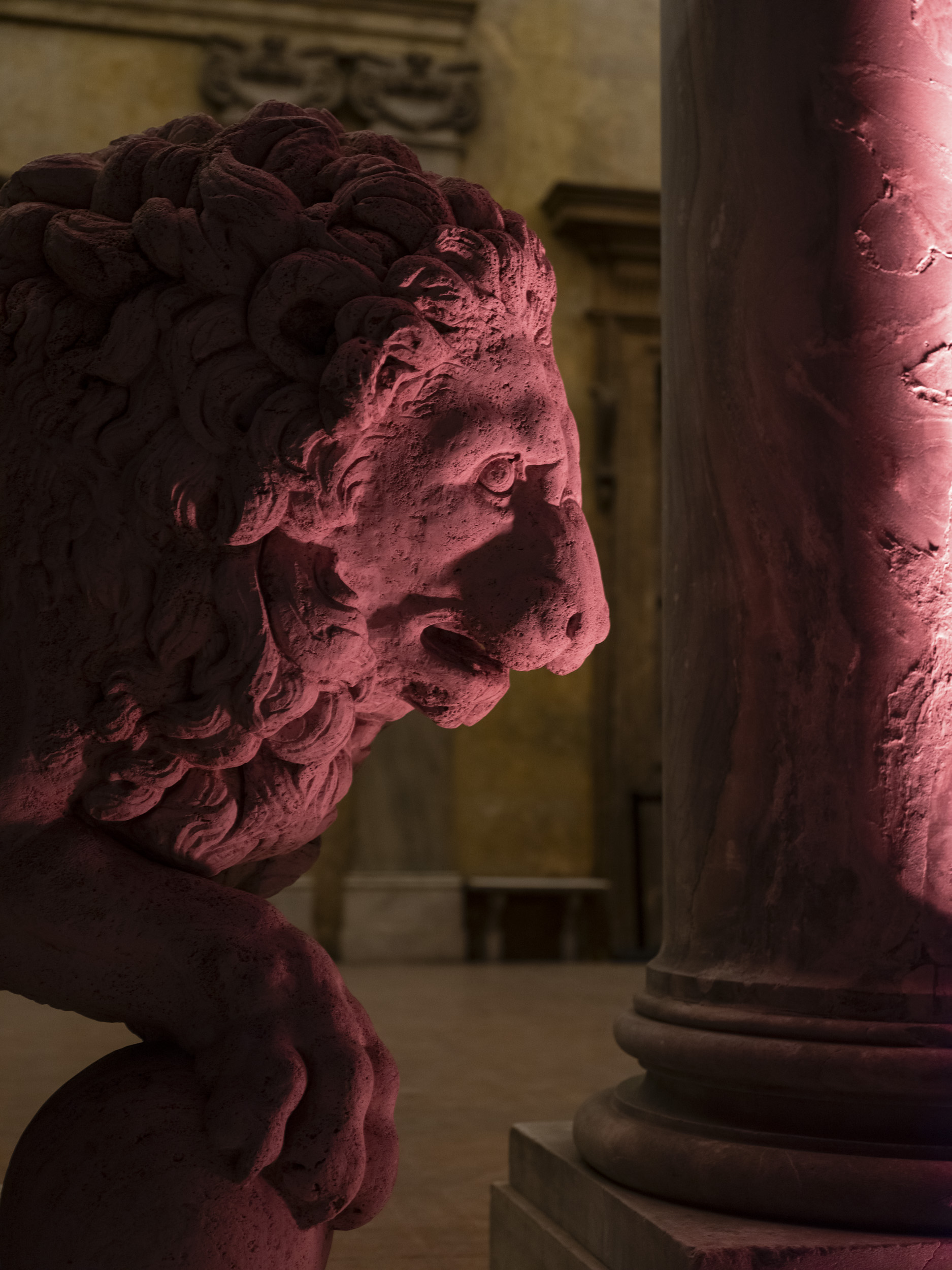
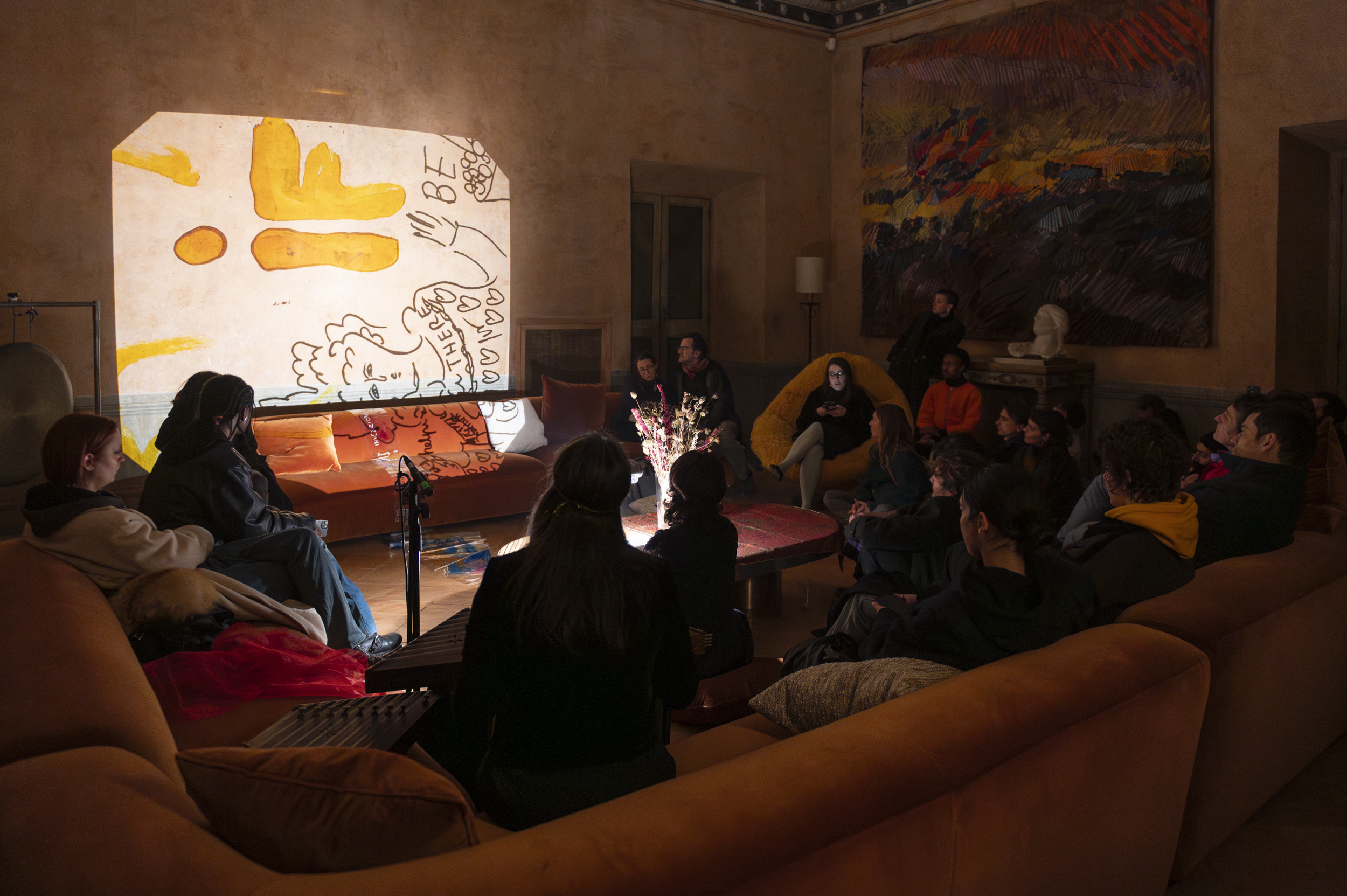
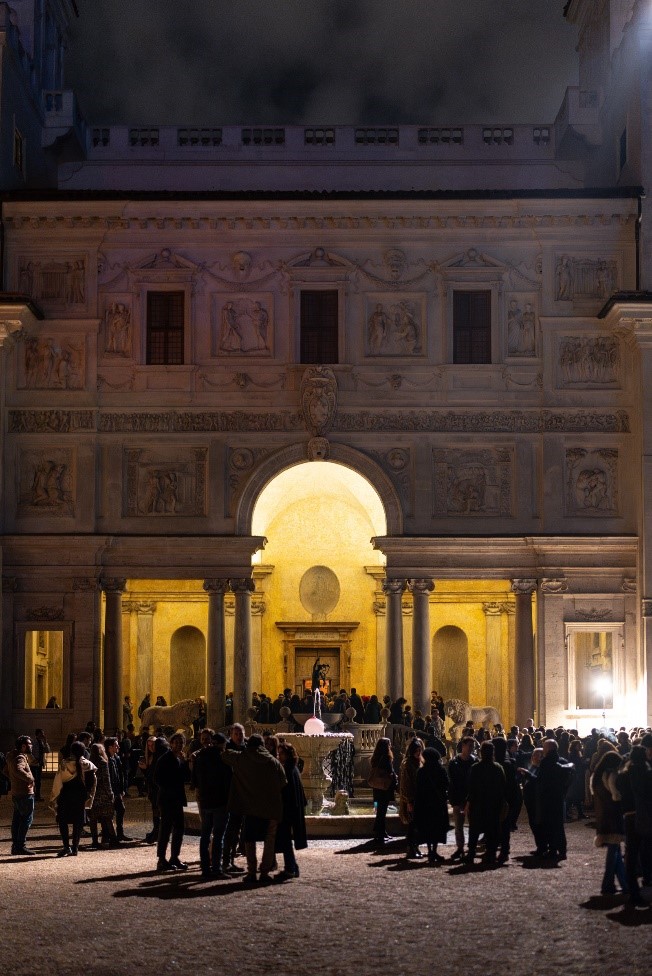
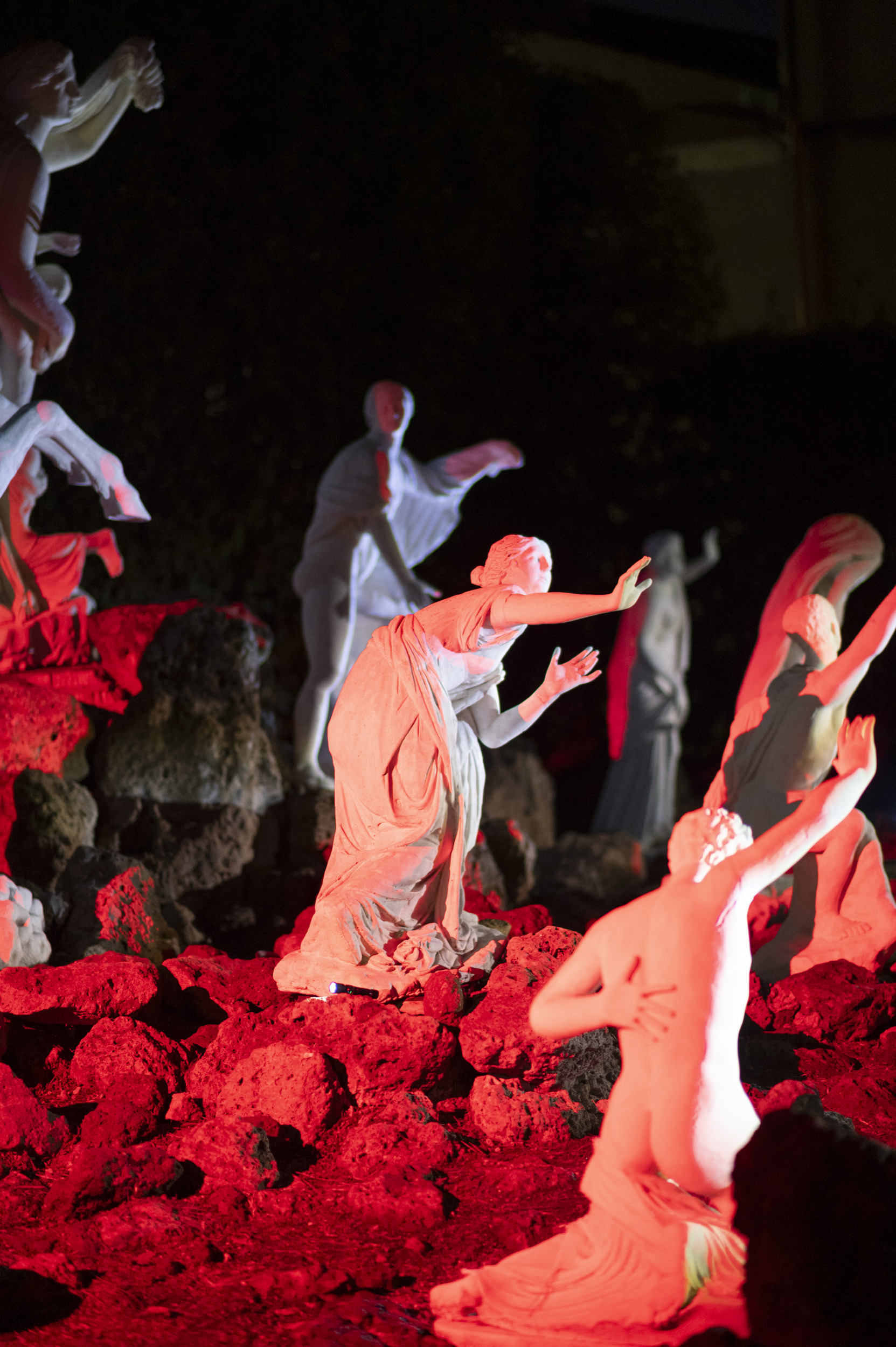
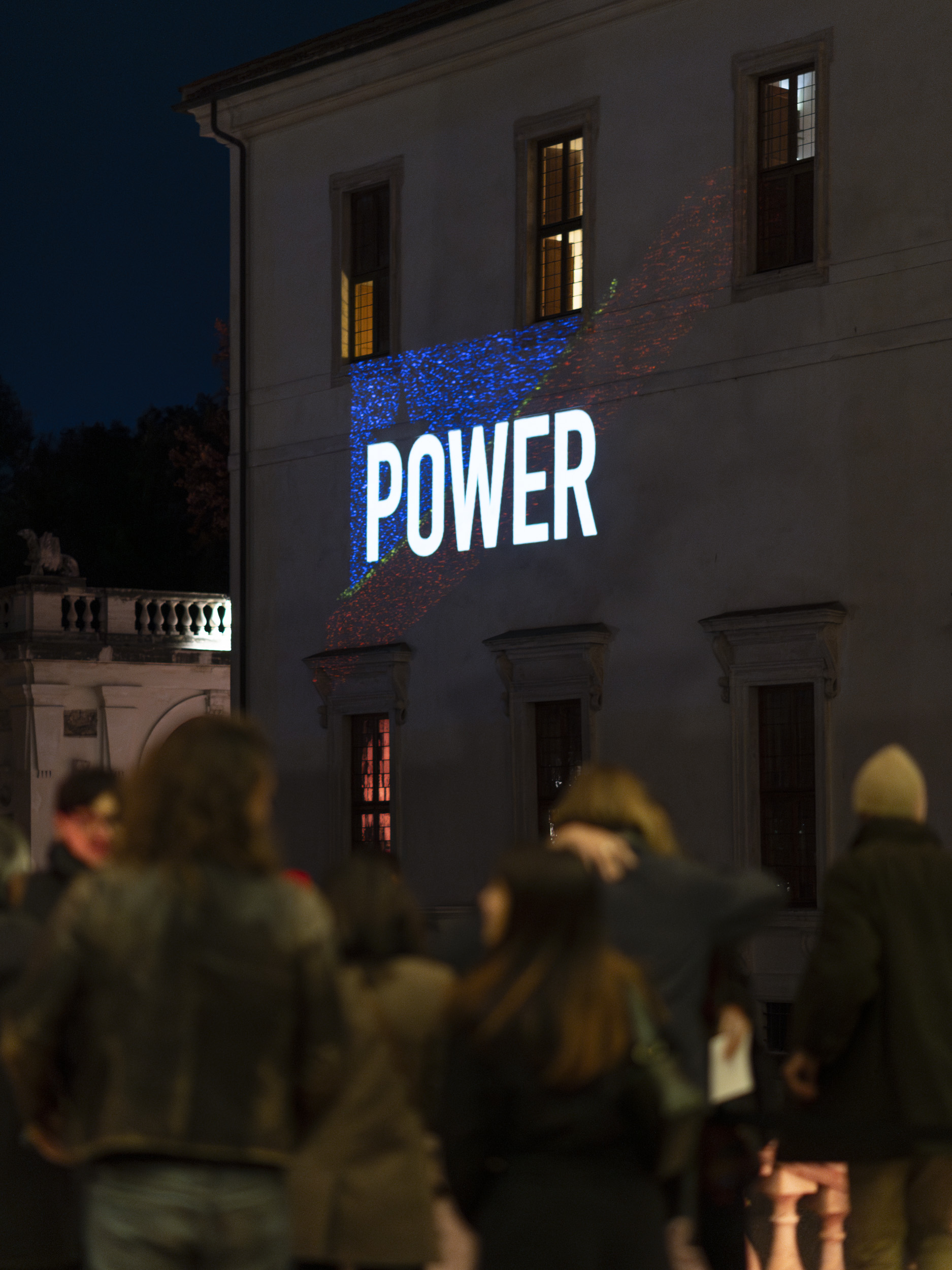
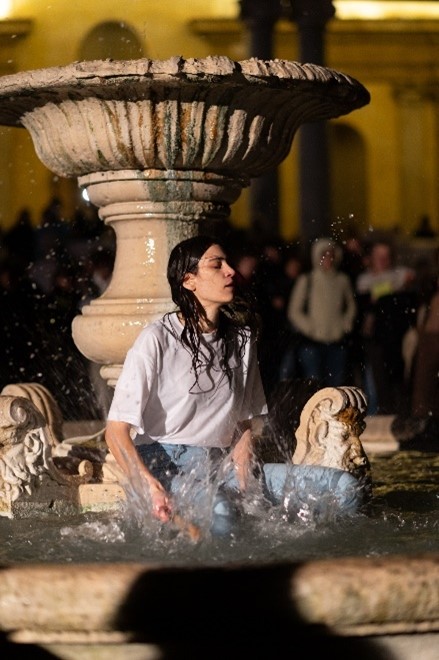
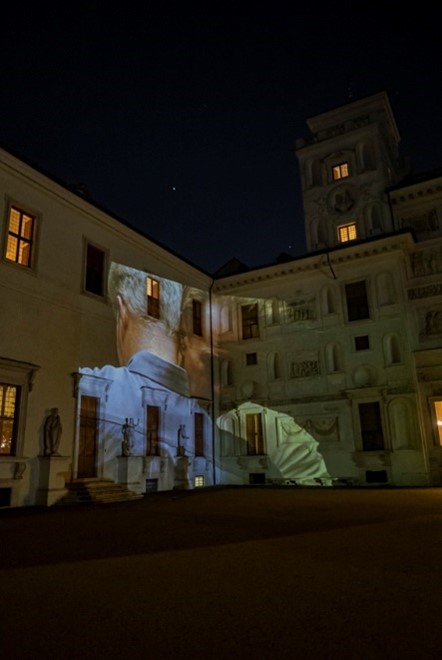
Nuit Blanche 2024 & 2025 © Daniele Molajoli, Claudia Gori & Margherita Nuti
Pratical inforation
Friday 13 November
From 6.00 pm to midnight
Admission to the Nuit Blanche is free with reservation.
Your ticket will be required at the entrance.
Tickets for the Nuit Blanche are sold out; new tickets will go online on Tuesday 10 November.
Some performances require a separate reservation (free of charge) due to limited seating.
Opening of reservations for the relevant performances: Tuesday 10 November.
Please read before you come
- Pets, motorbike/cycle helmets, pushchairs, bulky bags and suitcases are not permitted inside Villa Medici.
- Villa Medici does not have a cloakroom or left-luggage facility on site.
- Some areas of Villa Medici are partially accessible to people with reduced mobility (exhibition rooms) or completely inaccessible (the M. Piccoli cinema). If this applies to you, please consult the ‘Accessibility and Services’ section and contact us in advance of your visit so that we can ensure you are welcomed in the best possible conditions (select ‘Visit the Villa’).
The fellows
2026-2027