Search
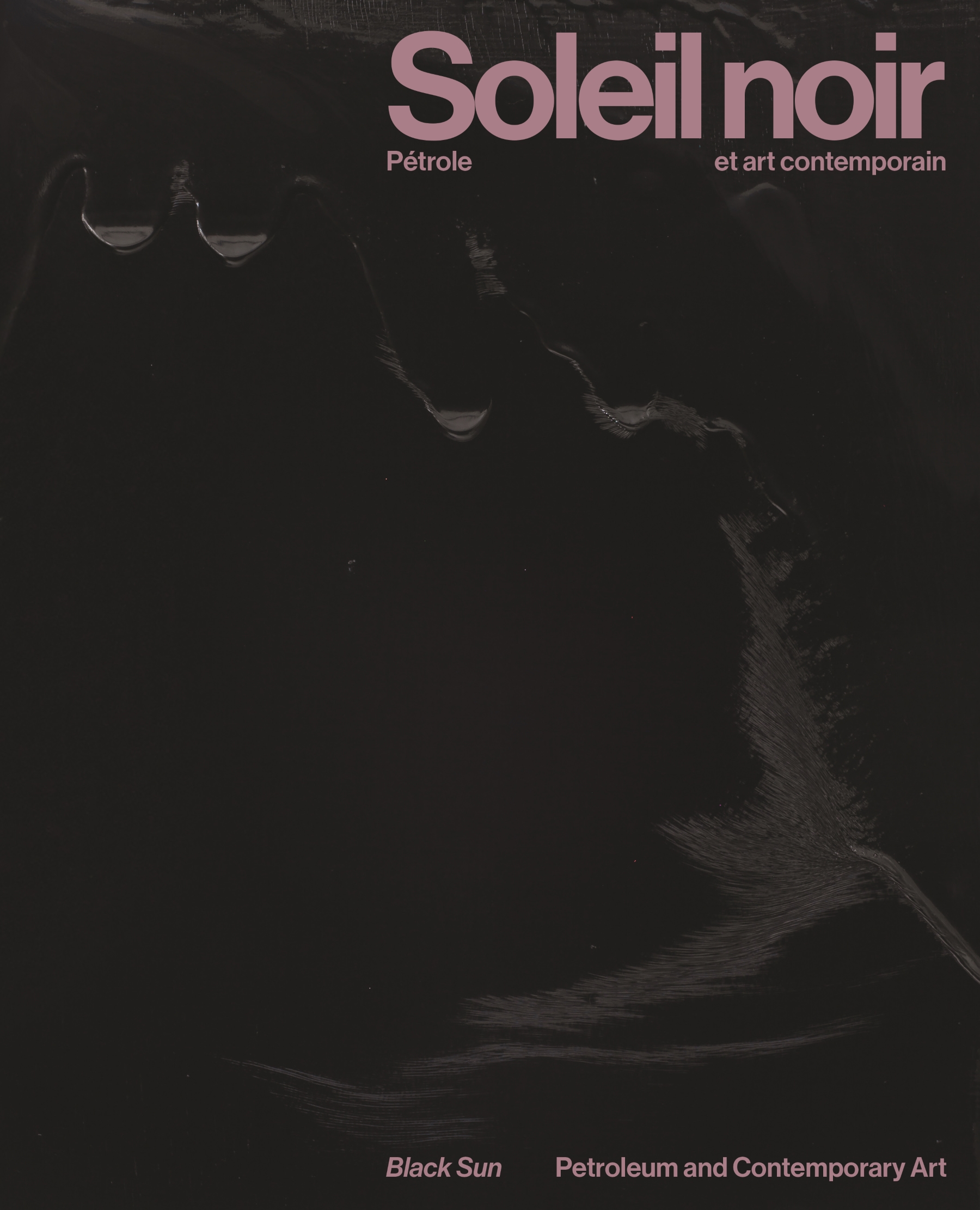
Black sun
Petroleum and Contemporary Art
09.10.2026 - 18.01.2027
- Artists
- Latif Al Ani
- Monira Al Qadiri
- Jananne Al-Ani
- Ana Alenso
- Ismaïl Bahri
- Alessandro Balteo-Yazbeck
- Bernardo Bertolucci
- Rossella Biscotti
- BP
- Alberto Burri
- Chloe Dewe Mathews
- Aref El Rayess
- Fouad Elkoury
- Joanne Farchakh Bajjaly
- Media Farzin
- Mehdi Ghadyanloo
- Lungiswa Gqunta
- Robert Gschwantner
- Jacqueline Hassink
- Isabelle Hayeur
- Romuald Hazoumè
- Michael Hirschbichler
- Alexandre Hogue
- Nancy Holt
- Jumana Manna
- Alessandro Marchi
- Anita Molinero
- Anahita Norouzi
- Robert Rauschenberg
- Ed Ruscha
- Shirin Sabahi
- Behjat Sadr
- Latifa Saeed
- Zina Saro-Wiwa
- Jessica Segall
- Allan Sekula
- Robert Smithson
- Thu-Van Tran
- Jala Wahid
- Hani Zurob
Curators Morad Montazami, Madeleine de Colnet (Zamân Books & Curating) and Caroline Courrioux (Villa Medici)
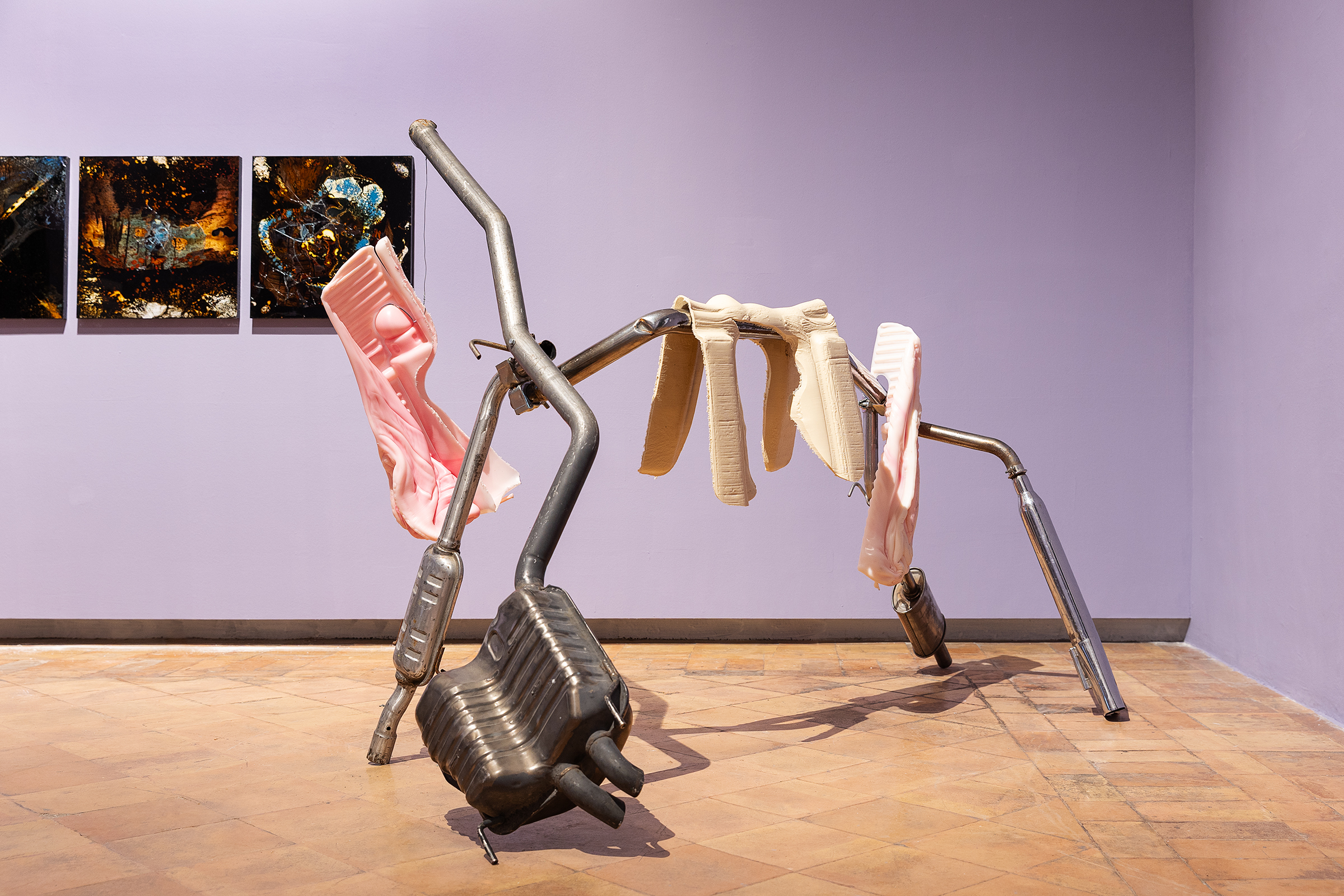
From October 9, 2026 to January 18, 2027, the French Academy in Rome – Villa Medici will be presenting the exhibition Black sun: Oil and Contemporary Art, which continues the series of events launched by Villa Medici in 2022.
Following Stone Stories, inspired by Roger Caillois, and then The Song of the Sirens, devoted to water, this new exhibition uses the theme of oil to address the question of artworks in the era of global warming and of our civilization burning.
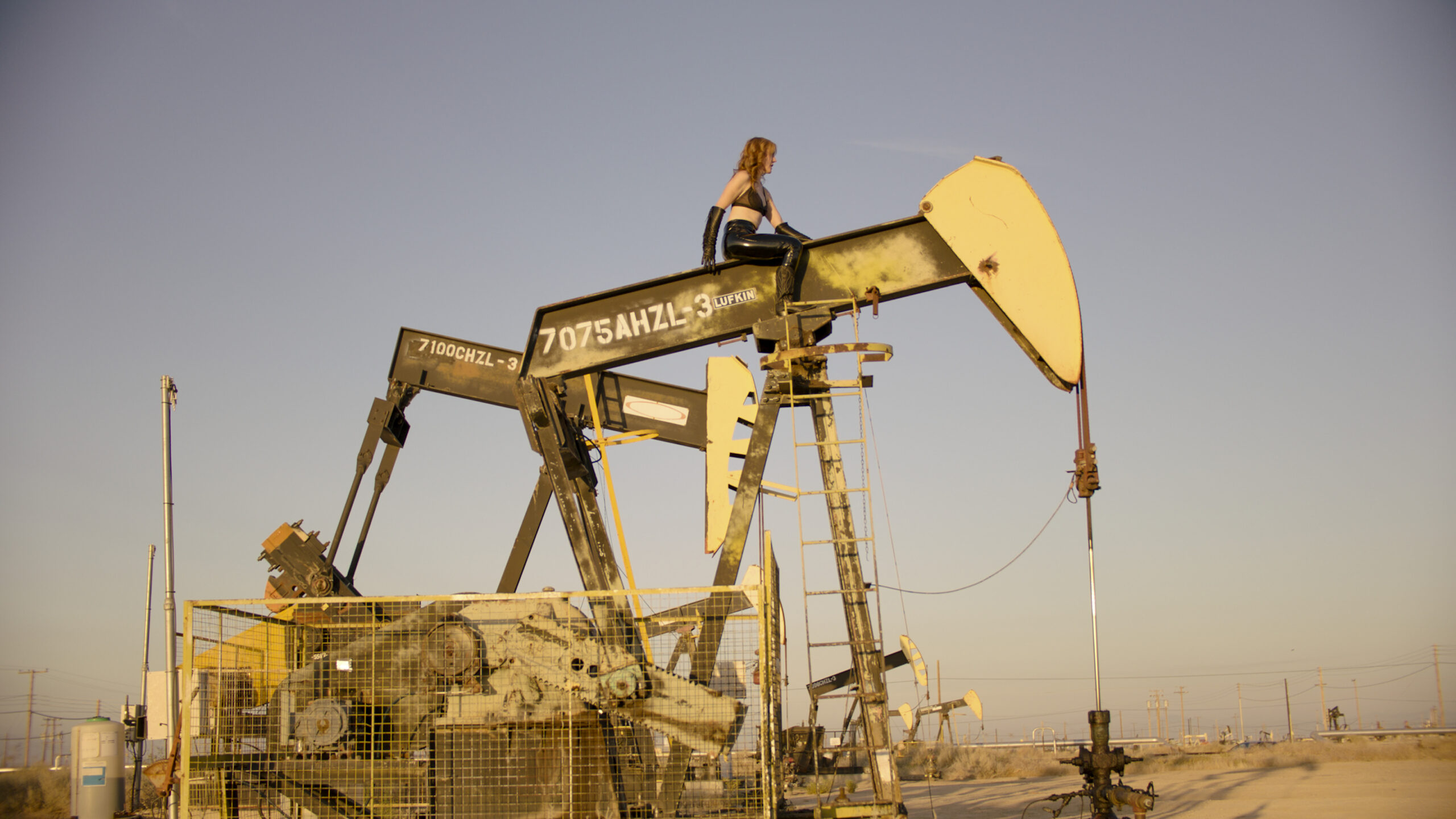
More specifically, the exhibition explores the impact of oil on contemporary artistic practices and on our imaginaries, reshaped by modernity. Conceived as an exploration of the dangerous relationships between art and oil, it brings together works that question the way in which the oil industry has determined power dynamics between North and South on the basis of extraction of natural resources, particularly in the postcolonial period.
From the construction of refineries, pipelines, and offshore platforms to revolutions, coups d’état, oil crises, and climate catastrophes, the artists in the show, ranging from Robert Smithson, Nancy Holt, and Robert Rauschenberg to Monira Al Qadiri, Zina Saro-Wiwa, and Ana Alenso, offer an entire visual and critical history of petromodernity. Oil emerges less as a mere resource than as an active force, a set of material and symbolic flows running through the works; or even as a cosmological system, a dramaturgy of natural or chemical elements that influence politics, economics, urban planning…
The exhibition examines both the strategies employed by oil infrastructure facilities to render themselves invisible and how they are staged for aesthetic or ideological purposes. It underlines the convergence between artistic practices and militant practices that come together to confront “fossil imperialism”, in the words of the thinker Andreas Malm, and to envisage a post-oil world.
This exhibition is also the result of the long-standing dialogue that the Villa Medici maintains with its former residents. It builds on the research carried out by Morad Montazami, a resident in art history at the Villa Medici in 2023–2024, during which time he developed his work on ‘petromodernities’, which now forms the core of this exhibition.
The exhibition is accompanied by a catalogue co-published by Zamân Books and Villa Medici.
It assembles a set of unpublished texts which illuminate the themes addressed in the show through the eyes of philosophers, art historians, and researchers.
Texts by Lotte Arndt & David Castaner, Laura Hindelang, Stéphanie LeMenager, Salar Mameni, Andreas Malm, Amina Adebisi Odofin, Justinien Tribillon.
Graphic design: Walid Bouchouchi, Akakir Studio.
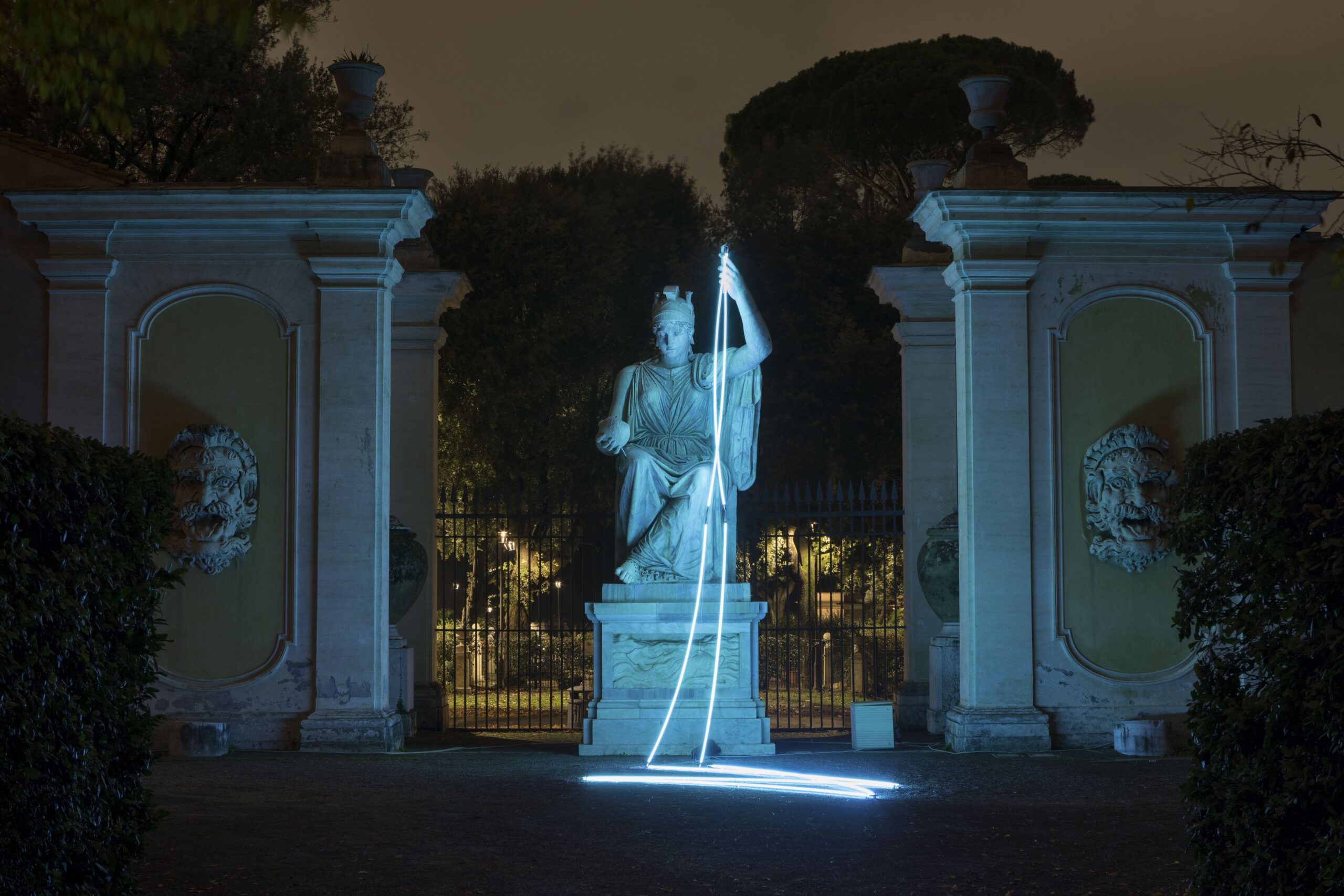
©Alessia Calzecchi
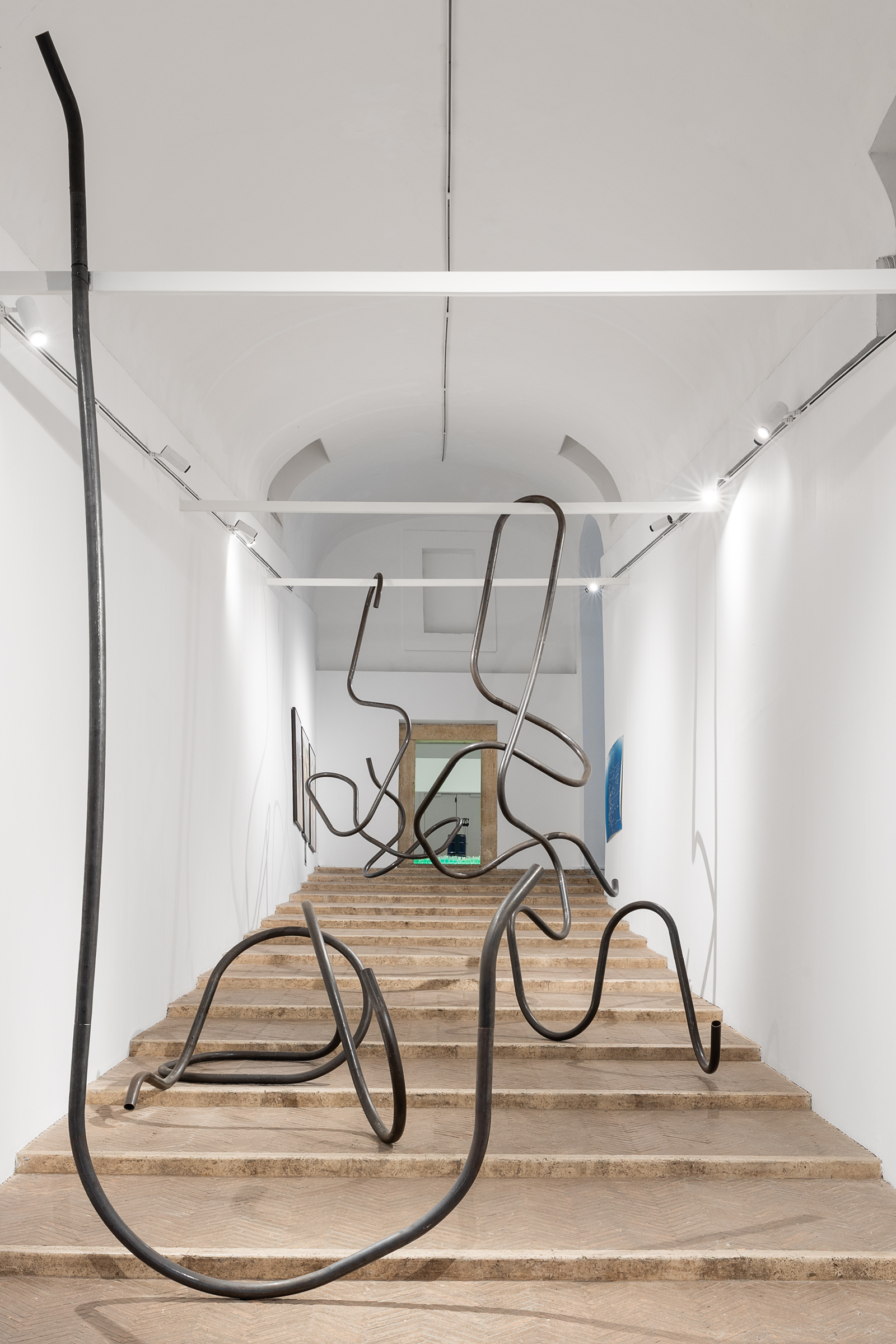
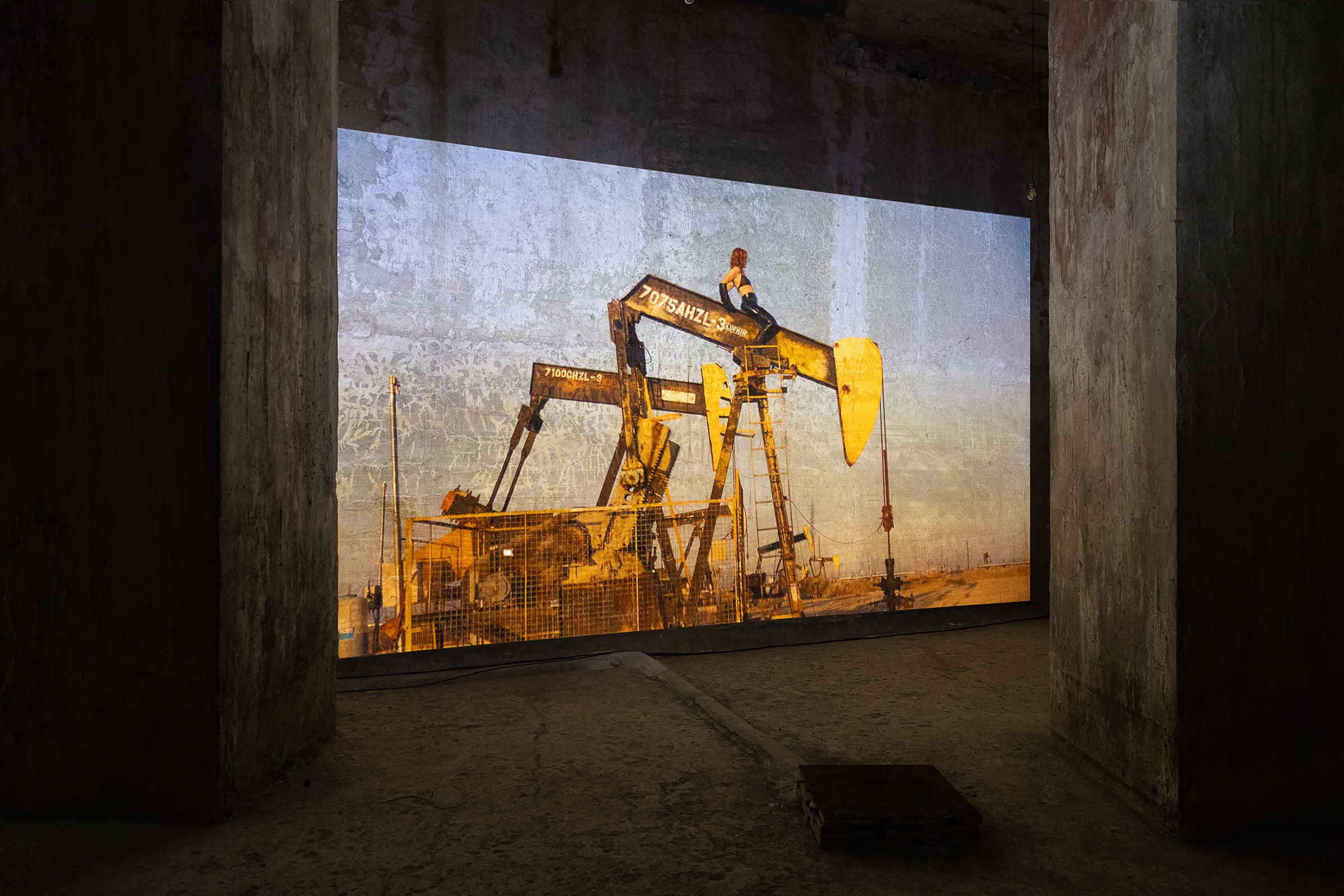
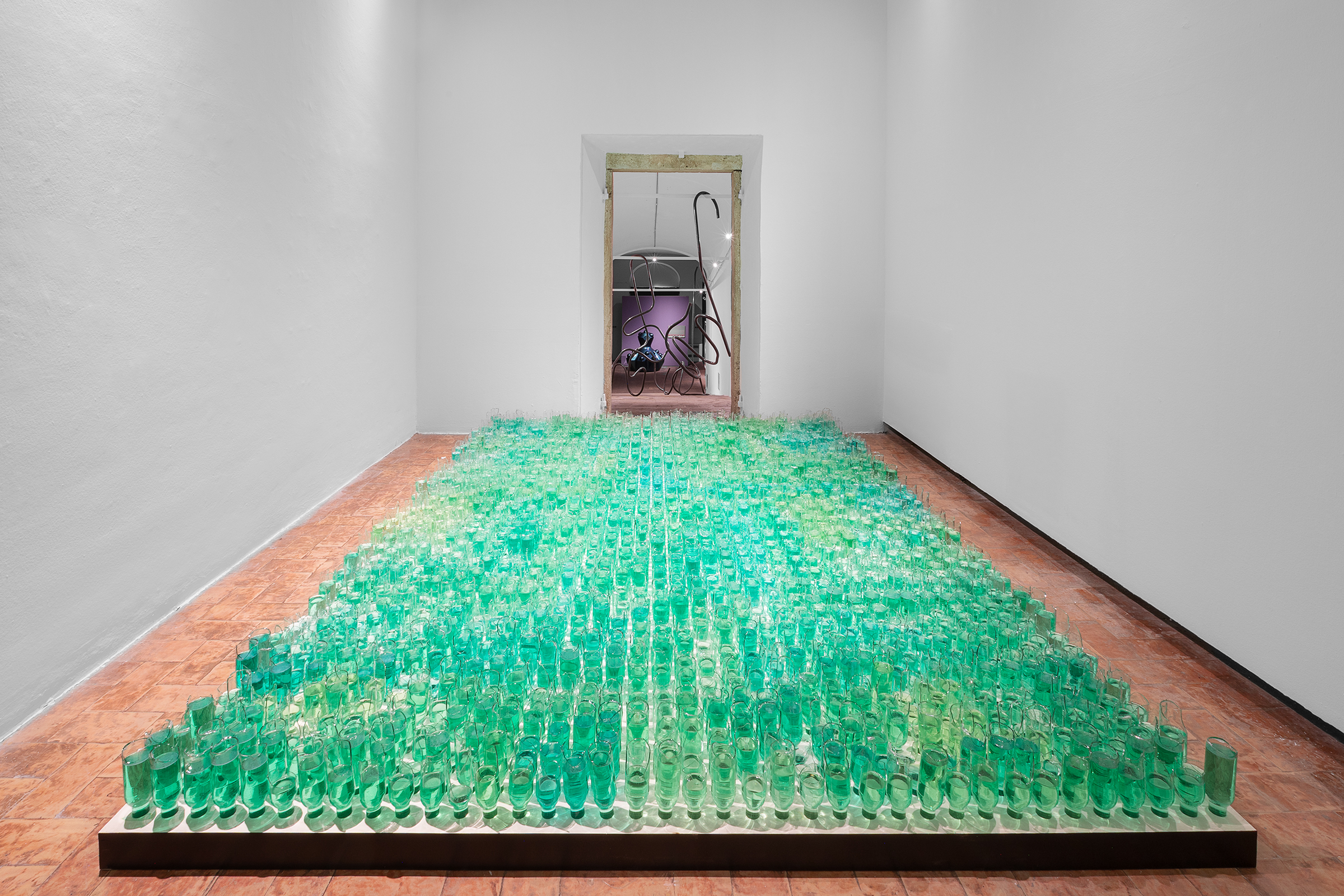
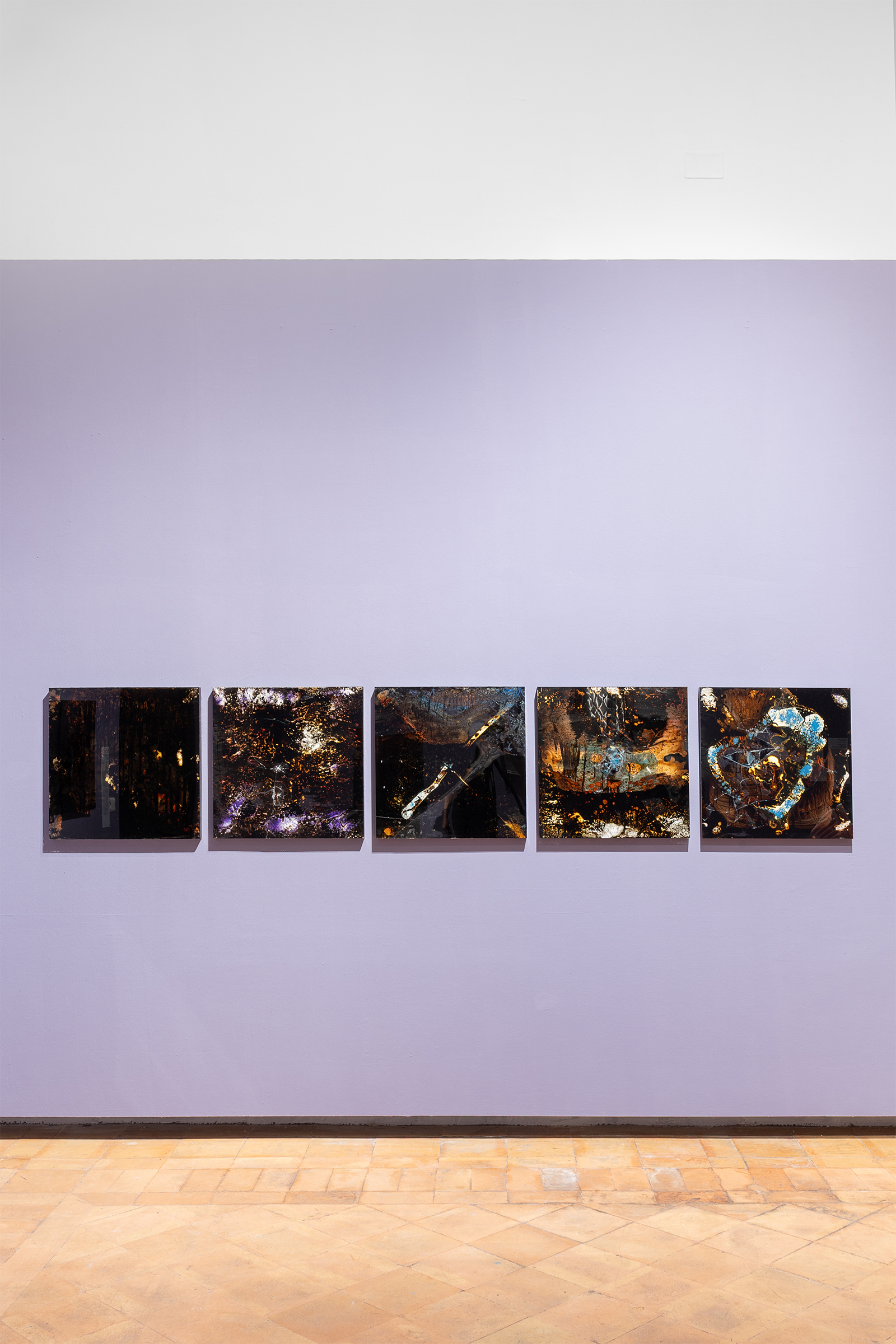
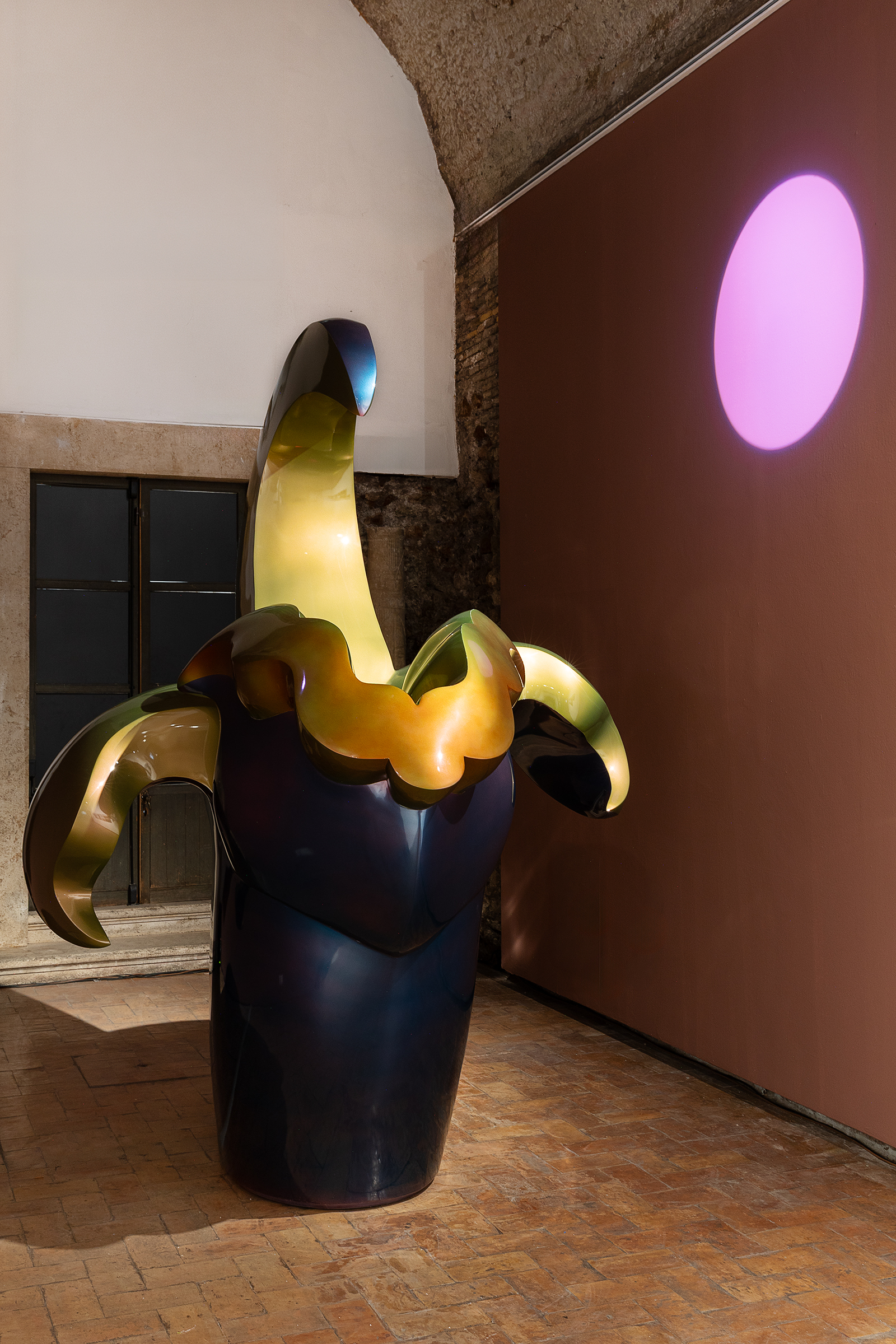
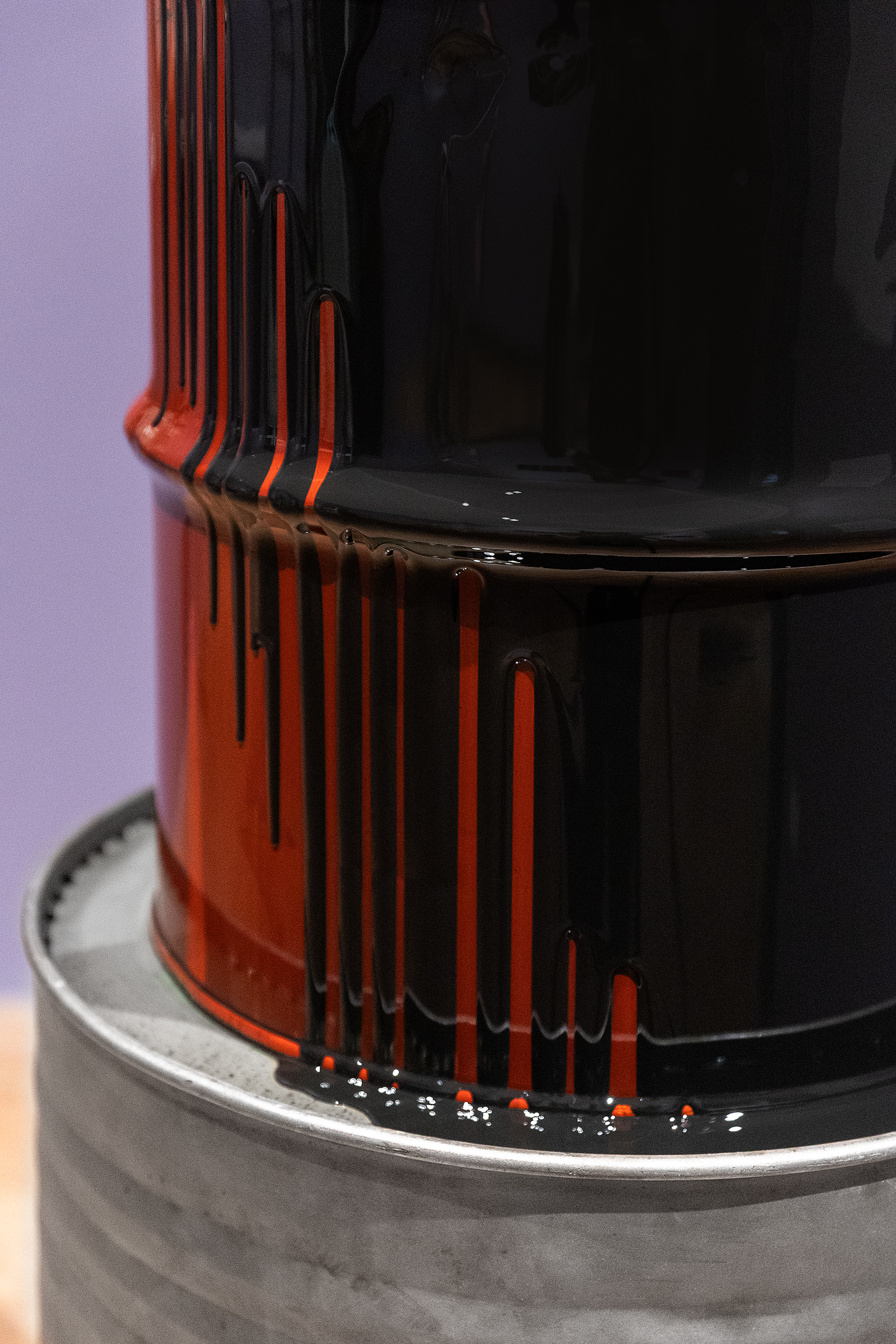
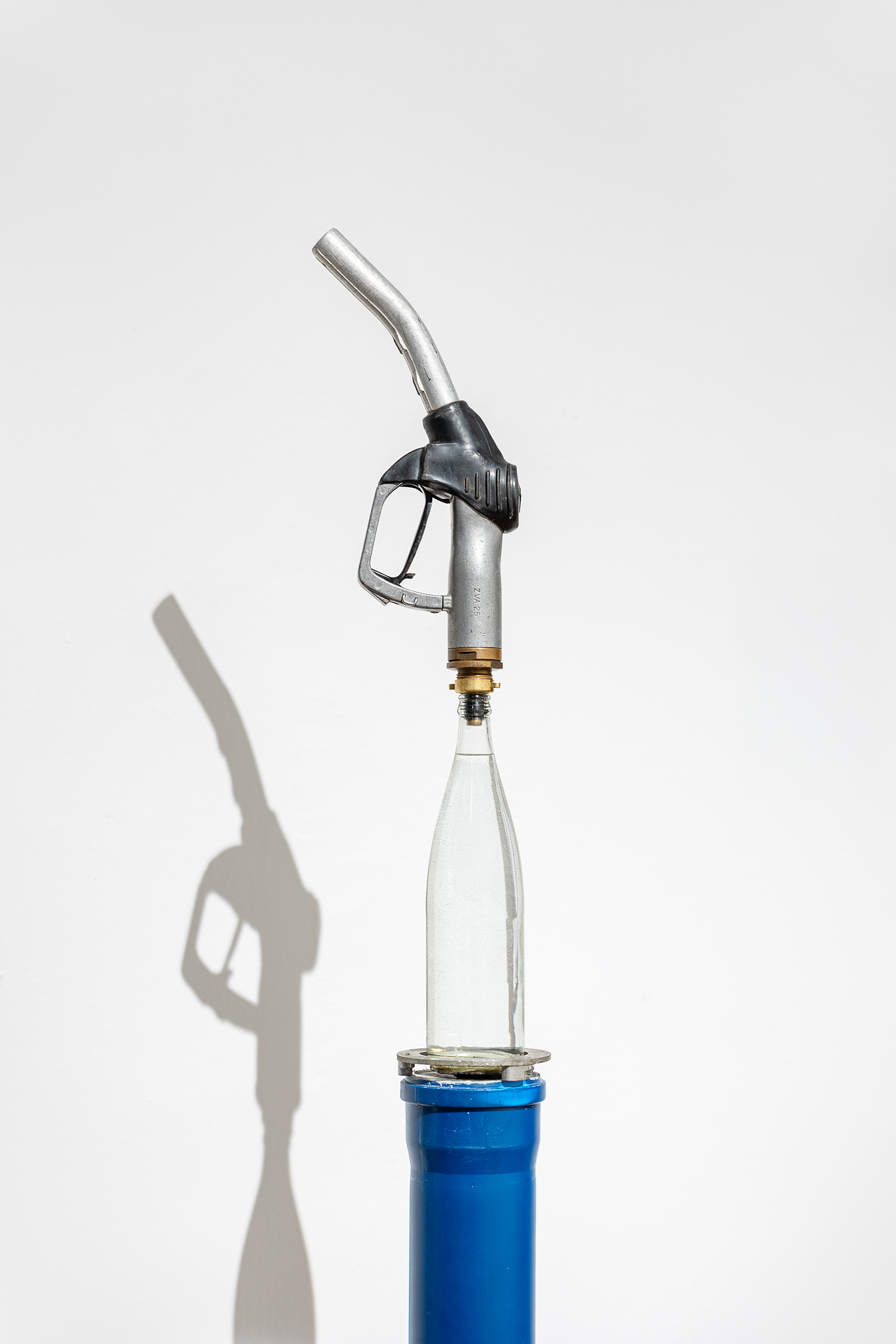
The exhibition in 7 chapters
1. The Petrocene [extraction]
Just as we speak of the Anthropocene or the Capitalocene, the Petrocene marks our shift into an era in which earth, sand, soil, and rock are literally being exhausted by mass extractivism. Spanning the period from the discovery of the first oilfields in the nineteenth century to the current times of widespread collapse, the Petrocene signifies the end of landscape in the classical sense. As resources are depleted and desertification takes hold, our experience of the landscape becomes more fragmented, but also more political. To alert us to the shifting sands and other kinds of no man’s land that our petromodernity leaves in its wake, artists have adopted the practices of geologists, by collecting samples of natural resources (Michael Hirschbichler, Ismaïl Bahri, Latifa Saeed) and mapping soil depletion (Jananne Al-Ani).
Artists exhibited:
Jananne Al-Ani (b. 1966, Kirkuk, Iraq)
Latif Al Ani (1932, Baghdad, Iraq–2021, Baghdad, Iraq)
Ismaïl Bahri (b. 1978, Tunis, Tunisia)
Bernardo Bertolucci (1941, Casarola, Italy–2018, Rome, Italy)
Michael Hirschbichler (b. 1983, Graz, Austria)
Latifa Saeed (b. 1985, Dubai, UAE)
Robert Smithson (1938, Passaic, NJ, USA–1973, Amarillo, TX, USA)
Alessandro Marchi (1975, Italie)2. Fossil fuels [combustion]
The cosmology of oil involves a mixture of liquid and solid, of aquatic and telluric forces: in short, the political forces that permeate the airways of what Andreas Malm calls “fossil imperialism”, raising the question of the dual nature, natural and industrial, of fossil fuels and hydrocarbons. This section of the exhibition also addresses petroleum-derived products, such as plastic and tar, and their role in the colonization of nature and humanity. Whether through refineries, fossilization, or industrial accidents, various forms of combustion can shape artworks in the era of global warming — from Alberto Burri’s burnt plastics to the BP collective’s waste oil sculptures.
Artists exhibited:
BP (Renaud Layrac, b. 1962, Monaco; Frédéric Pohl, b. 1962, Nice; and Richard Bellon, b. 1962, Antibes, France)
Alberto Burri (1915, Città di Castello, Italy–1995, Nice, France)
Anita Molinero (b. 1953, Floirac, France)
Robert Rauschenberg (1925, Port Arthur, TX, USA–2008, Captiva, FL, USA)
Ed Ruscha (b. 1937, Omaha, NE, USA)
Hani Zurob (b. 1976, Rafah, Palestine)3. Pipeline [circulation]
Pipelines represent the mutant body of oil infrastructure in the nineteenth and twentieth centuries, the ultimate system for moving hydrocarbons across the planet. Their installation — mostly underground and out of sight — transcends national boundaries and the sovereignty of states. Raised to the status of industrial icons of the petro-landscape, pipelines have become the object of numerous acts of sabotage or have fallen into ruin, rendered obsolete by the circulation of oil in tankers. They have been reappropriated many times by figures in conceptual art and minimalism, from Richard Serra to Nancy Holt, but also, recently, in the investigative art and underground artistic strategies of Rossella Biscotti.
Artists exhibited:
Alexandre Hogue (1898, Memphis, MO, USA–1994, Tulsa, OK, USA)
Aref El Rayess (1928, Aley, Lebanon–2005, Aley, Lebanon)
Monira Al Qadiri (b. 1983, Dakar, Senegal)
Mehdi Ghadyanloo (b. 1981, Karaj, Iran)
Zina Saro-Wiwa (b. 1976, Port Harcourt, Nigeria)
Rossella Biscotti (b. 1978, Molfetta, Italy)
Jumana Manna (b. 1987, Princeton, NJ, USA)
Nancy Holt (1938, Worcester, MA, USA–2014, New York, NY, USA)
Thu-Van Tran (1979, Ho Chi Minh Ville, VN)4. Protest [revolution]
Black gold lies at the heart of the long history of geopolitical conflicts and state interference in oil-producing countries. The latter have responded by asserting their sovereignty through the nationalization of oil resources, labor movements, or indigenous activism. The strategies of subversion adopted by contemporary artists in confronting oil companies range from the revelatory power of documentary images (Romuald Hazoumè, Jacqueline Hassink) to the mobilizing power of sensory installations (Lungiswa Gqunta, Ana Alenso).
Artists exhibited:
Ana Alenso (b. 1982, Caracas, Venezuela)
Lungiswa Gqunta (b. 1990, Port Elizabeth/Gqeberha, South Africa)
Jacqueline Hassink (1966, Enschede, Netherlands–2018, Amsterdam, Netherlands)
Romuald Hazoumè (b. 1962, Porto-Novo, Benin)5. Petromuseum [speculation]
Money from the oil industry has been used to fund films, festivals, and museums in countries of the Global South, as Shirin Sabahi and Alessandro Balteo-Yazbeck explain with the Tehran Museum of Contemporary Art (TMOCA), the first “global” museum combining contemporary artists from the North and the South. Through the petromuseum, the artists also question the notions of “petrophilanthropy”, soft power, and greenwashing that are found in the countries of the North. Finally, they discuss how the museum can unwittingly become a vehicle for militant anti-oil activism, such as the actions carried out by the Stop Oil movement, to denounce “petrophilanthropy”.
Artists exhibited:
Alessandro Balteo-Yazbeck (b. 1972, Caracas, Venezuela)
Fouad Elkoury (b. 1952, Paris, France)
Media Farzin (b. 1979, San Diego, CA, USA)
Joanne Farchakh Bajjaly (1975, Liban)
Shirin Sabahi (b. 1984, Tehran, Iran)
Behjat Sadr (1924, Arak, Iran–2009, Zonza, France)6. Oil spills [offshore]
Oil spills and other industrial accidents represent the dystopian side of the oil industry, thus revealing its long-term toxicity. These phenomena, which have come to be regarded less and less as “natural” disasters, are increasingly being shown to be human, political, linked to intensive seabed drilling off the Mediterranean and African coasts. They have been extensively documented by photojournalists and documentary artists working both on land (Allan Sekula) and at sea (Isabelle Hayeur) as well as through salvage and recycling strategies (Robert Gschwantner).
Artists exhibited:
Robert Gschwantner (b. 1968, Steyr, Austria)
Isabelle Hayeur (b. 1969, Montreal, Canada)
Allan Sekula (1951, Erie, PA, USA–2013, Los Angeles, CA, USA)7. Petromelancholia [burnout]
“Petromelancholia”, as researcher Stephanie LeMenager conceives it, primarily denotes a process of mourning in response to a modernity that has proved to be more of a destructive force than a source of progress. Similar to solastalgia (a feeling of distress at the degradation of the planet), “petromelancholia” also represents an impetus to environmental activism and an imaginative ability to move toward a post-oil society. Faced with the gradual disappearance of biodiversity, artists exorcise toxic landscapes (Linda Lamignan) by reviving resilient, even renascent, fauna and flora (Anahita Norouzi, Jala Wahid). They question the conditions of existence for works of art in the era of global warming.
Artists exhibited:
Chloe Dewe Mathews (b. 1982, London, UK)
Anahita Norouzi (b. 1983, Tehran, Iran)
Jessica Segall (b. 1978, Murphysboro, IL, USA)
Jala Wahid (b. 1988, London, UK)
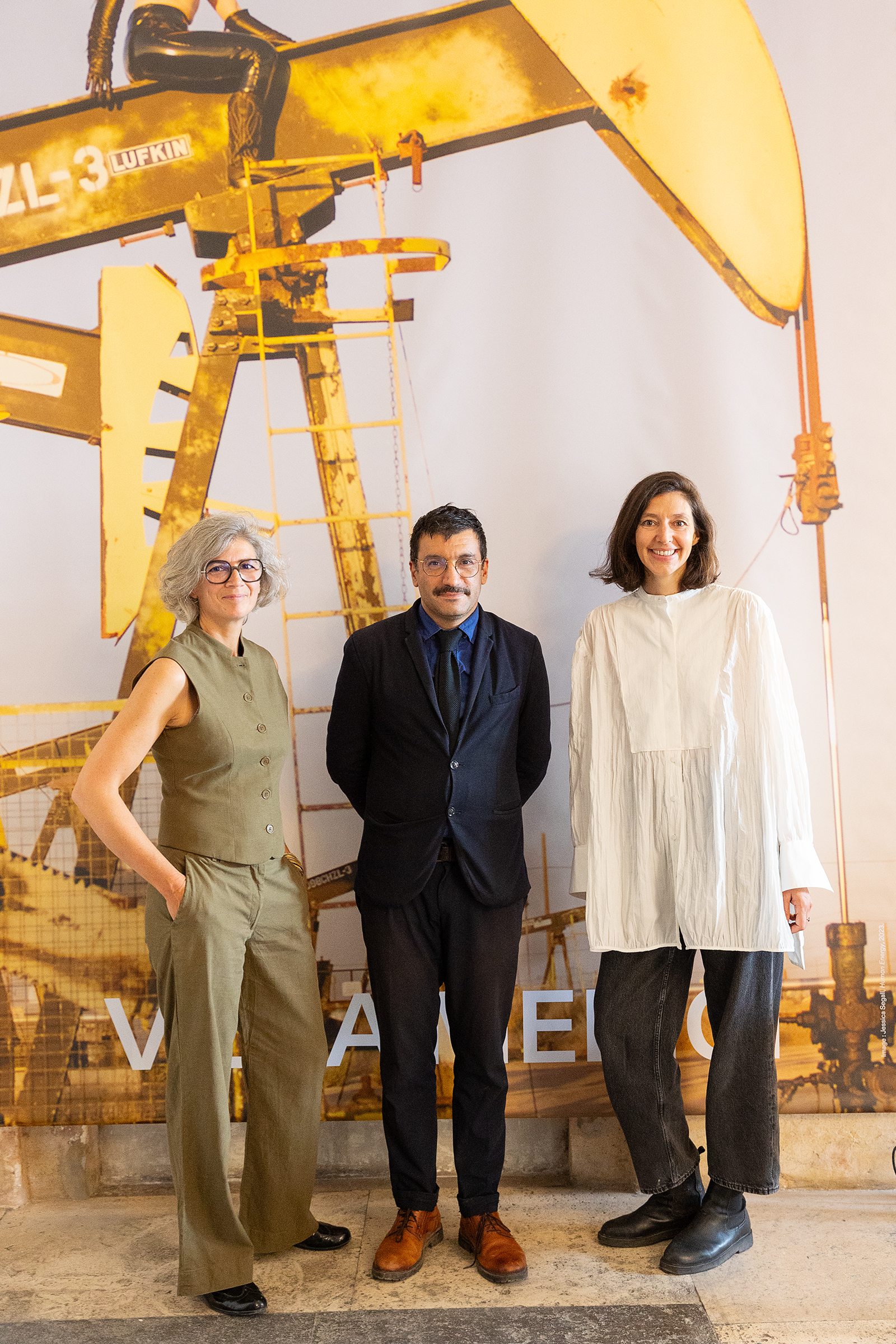
The curators
Morad Montazami and Madeleine de Colnet
Zamân Books & Curating
Led by Morad Montazami and Madeleine de Colnet, the editorial and curatorial platform Zamân Books & Curating is dedicated to the study of postcolonial art history across the Arab, African and Asian worlds. Morad Montazami previously worked at Tate Modern in the United Kingdom, where he was responsible for research and acquisitions relating to the Arab world, whilst Madeleine de Colnet has worked at institutions such as Kulte Galerie and Éditions in Morocco and Le BAL in France. ZBC’s mission is to disseminate new cosmopolitan knowledge on art and images through monographs, artists’ books, thematic publications and anthologies…
Among the exhibitions recently organised by ZBC are: Casablanca Art School, Tate St Ives–Sharjah Art Foundation–Schirn Kunsthalle Frankfurt, 2023–2024; Arab Presences. Modern Art and Decolonisation. Paris 1908–1988, Musée d’art moderne de Paris, 2024. Morad Montazami and Madeleine de Colnet are currently part of the curatorial team for the upcoming Dakar Biennale in Senegal, which will take place from 19 November to 19 December 2026.
Caroline Courrioux, Villa Medici
Caroline Courrioux has been Head of Exhibitions and Programming at Villa Medici since 2021. A specialist in aesthetics and visual studies, she explores the links between contemporary art, ecofeminism and political imaginaries. In 2024, she curated the exhibition The Siren Song, water as told by artists at Villa Medici. Prior to this, she supported artists and exhibition projects as head of production at the Rencontres d’Arles.
INFORMATIONS PRATIQUES
Horaires
From 9 October 2026 to 18 January 2027
10.00–19.00 daily, last admission at 18.30
Closed on Tuesdays
Prices
Open ticket (gives access to the exhibition on any date):
€15 full price
€12 reduced price*
Free admission under certain conditions*
Dated ticket (gives access to the exhibition on the date selected when booking the ticket):
€12 full price
€10 reduced price*
Free admission under certain conditions*
Please read before you visit
Pets, motorbike/cycle helmets, pushchairs, bulky bags and suitcases are not permitted inside Villa Medici.
Villa Medici does not have a cloakroom or on-site luggage storage.
Some areas of Villa Medici are partially accessible to visitors with reduced mobility (exhibition rooms) or completely inaccessible (the M. Piccoli cinema). If this applies to you, please consult the ‘Accessibility and Services’ section and contact us before your visit so that we can ensure you are welcomed in the best possible conditions (select ‘Visit the Villa’).
Conditions for reduced rates and free admission
Reduced rates
- Under 25
- Job seekers upon presentation of proof
- Residents and members of foreign academies in Rome
Free admission
- Under 18
- Holders of VILLA MEDICI SOLO or DUO membership cards (only for temporary exhibitions)
- Journalists
- People with disabilities (with a companion)
- ICOM or ICOMOS cardholders
- Holders of the French Ministry of Culture’s Carte Culture (with a companion)
- Professional artists in the graphic, plastic and photographic arts upon presentation of the annual certificate issued by the French organisation responsible for their affiliation
- Residents and staff of the Casa de Velázquez in Madrid and the Villa Kujoyama in Kyoto
- Members and staff of the Ecole française de Rome
Free or reduced-price tickets are issued upon presentation of valid proof of eligibility.
Partner