Search
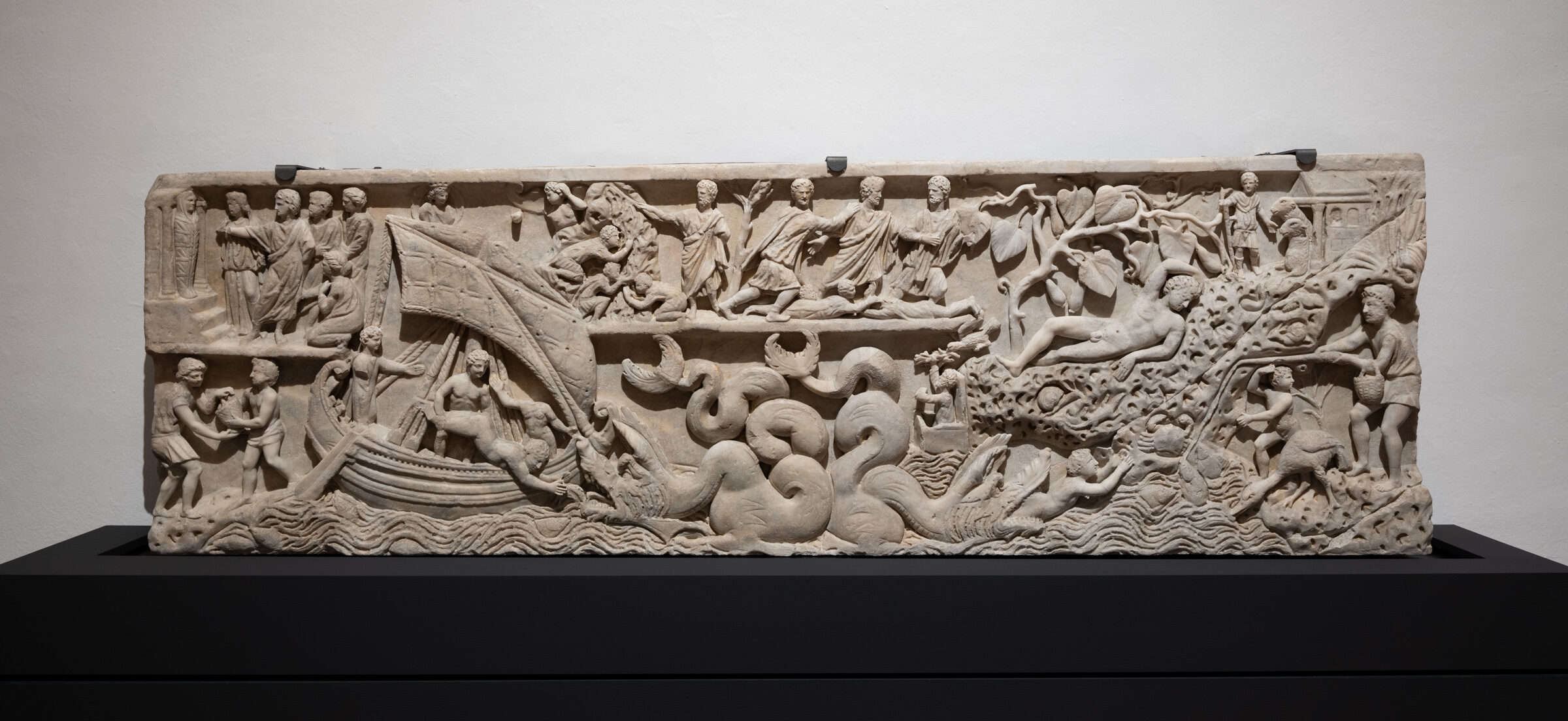
Sarcophagus of Jonah
between Villa Medici and the Vatican
11.03.2026
- Speakers
- Andrea Felice
- Alessandro Gallicchio
- Valentina Lini
- Umberto Utro
- Alessandro Vella
Villa Medici is organising a conference with the Vatican Museums to mark the entry of the cast of the “Sarcophagus of Jonah” in the Academy’s collections.
The ‘Sarcophagus of Jonah’, nowadays property of the Vatican Museums, adorned the gardens of Villa Medici until the 18th century. Discovered during the construction of the new St. Peter’s Basilica in the Vatican, it was purchased by Cardinal Ferdinando de’ Medici in 1584. The sarcophagus was newly presented at Villa Medici in the exhibition Shared Sacred Sites. On this occasion, the Vatican Museums Laboratories made a plaster cast of the original that will become part of the collections of the French Academy in Rome. This acquisition is in line with the Academy’s long tradition of copying. Its collection, formed between the 17th and 20th centuries, is one of the most important in Rome. Updating this practice, the contemporary cast, made according to tradition, will breathe new life into the Villa Medici Plaster Cast Gallery, inaugurated in 2009 and included in the guided tour itinerary.
The conference organised to mark the entry of the cast of the ‘Sarcophagus of Jonah’ in the Academy’s collections presents the history of this masterpiece of early Christian art and recounts the creation of its copy trough four presentations:
Introduction
Alessandro Gallicchio (French Academy in Rome – Villa Medici)
The “Sarcophagus of Jonah” at the origins of Christian art
Umberto Utro (Vatican Museums)
Between the Vatican and Villa Medici. The travels of the “Sarcophagus of Jonah”
Alessandro Vella (Pontifical Institute of Christian Archaeology)
The restoration of the “Sarcophagus of Jonah” from the 18th century to the present day
Valentina Lini (Vatican Museums)
The cast of the ‘Sarcophagus of Jonah’ for Villa Medici
Andrea Felice (Vatican Museums)
In the presence of
Sam Stourdzé (French Academy in Rome – Villa Medici)
Barbara Jatta (Vatican Museums)
Umberto Utro
Umberto Utro is curator of the Department of Christian Antiquities of the Vatican Museums. He teaches ‘Patristic Literature and Early Christian Iconography’ at the Patristic Institute Augustinianum. He is a corresponding member of the Pontifical Roman Academy of Archaeology and the German Archaeological Institute; extraordinary member of the Italian Society for Theological Research. He is a member of the Vatican Committee of the Association Internationale des Études Byzantines and of the scientific committee for the creation of the new Department of Byzantine and Eastern Christian Arts at the Louvre Museum.
Alessandro Vella
Alessandro Vella is Professor of Topography of Christian Cemeteries at the Pontifical Institute of Christian Archaeology. Between 2013 and 2025, he worked as an assistant in the Department of Christian Antiquities of the Vatican Museums, conducting research on the contexts of provenance and the antiquarian history of early Christian works belonging to the pontifical collections.
Valentina Lini
Restorer of Cultural Heritage (ICR), Degree in Literature with a specialisation in Classical Archaeology (Sapienza). She works in the Stone Materials Restoration Laboratory of the Vatican Museums, where she has carried out numerous restorations of ancient and early Christian stone works, including the “Sarcophagus of Jonah” in the Vatican Museums.
Andrea Felice
Head of the Stone Materials Restoration Laboratory of the Vatican Museums. A member of the Association Internationale pour la Conservation et la Promotion du Moulage, he is an expert in casting techniques and a passionate connoisseur of the history of plaster cast galleries and historic workshops.
Practical information
Wednesday, March 11, 2026
6pm – 8pm
Grand Salon of Villa Medici
Italian
Free: link

Shared Sacred Sites
09.10.2025 - 19.01.2026
- Curators :
- Dionigi Albera
- Raphaël Bories
- Manoël Pénicaud