Search
Every summer since 2022, the Festival des Cabanes has transformed the historic gardens of Villa Medici into a laboratory for architectural experimentation at the heart of the Académie de France in Rome.
From May 20 to September 28, 2026, its fifth edition brings together six original creations and a multi-disciplinary artistic program, at the crossroads of architecture and landscape.
Villa Medici Cabin Festival is celebrating its fifth edition from 20 May to 28 September 2026!
Since its inception in 2022, the festival has transformed the historic gardens of the French Academy in Rome into a laboratory for architectural experimentation and practice every summer. This year’s edition features six cabanes (hut) to visit in the gardens, a pop-up bookshop and a multidisciplinary artistic programme.
The six huts are original architectural creations designed by six teams with varied practices and backgrounds: Bento Architecture, l’ECAL, University of Art and Design Lausanne with Mutina, la Fondation Huttopia, la NABA/Nuova Accademia di Belle Arti, PRÌA and VELIA, and salazarsequeromedina.
The idea of the hut, which gives the Festival its name, is the starting point for a dialogue between architects, artists, designers and landscape architects around various concerns: how to propose non-invasive architectural forms? What are tomorrow’s sustainable housing solutions?
Designed in wood, steel, brick or recycled materials, the cabins are set in the quadrati of the historic garden, rectangles of grass planted with pine trees, some of which are almost 200 years old, and bordered by hedges of laurel, box, holm oak and myrtle. Wandering from hut to hut offers a new experience of Villa Medici gardens, and invites you to take in the breathtaking panorama of Rome.
Find out more about the Villa Medici gardens
The 6 cabanes
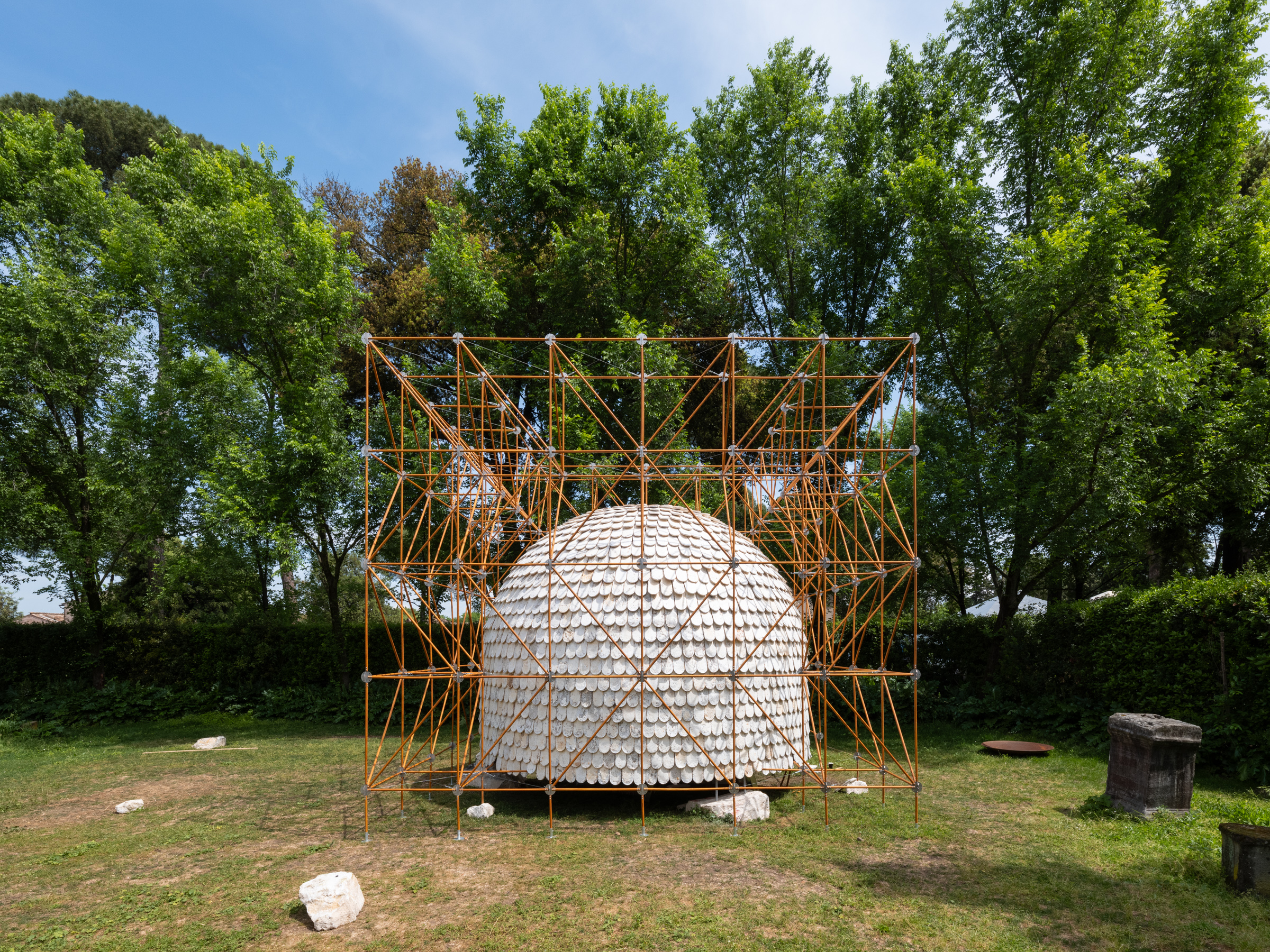
IL DUOMO INVERTITO, designed by Bento Architecture
Bento Architecture (Brussels, Belgium) reinterprets the archetype of the Roman dome by subverting its codes: monumentality gives way to the lightness of a suspended wire structure. Made of wood and mycelium (fungal roots), the organic installation creates an island of shade and coolness, questioning the persistence of architectural form and the fragility of living matter.
Produced in collaboration with Quentin Bourguignon.
Co-produced with the Centre Wallonie-Bruxelles I Paris and with the support of Wallonie-Bruxelles Architectures and Wallonie-Bruxelles International, it will be presented there in 2027.© Daniele Molajoli
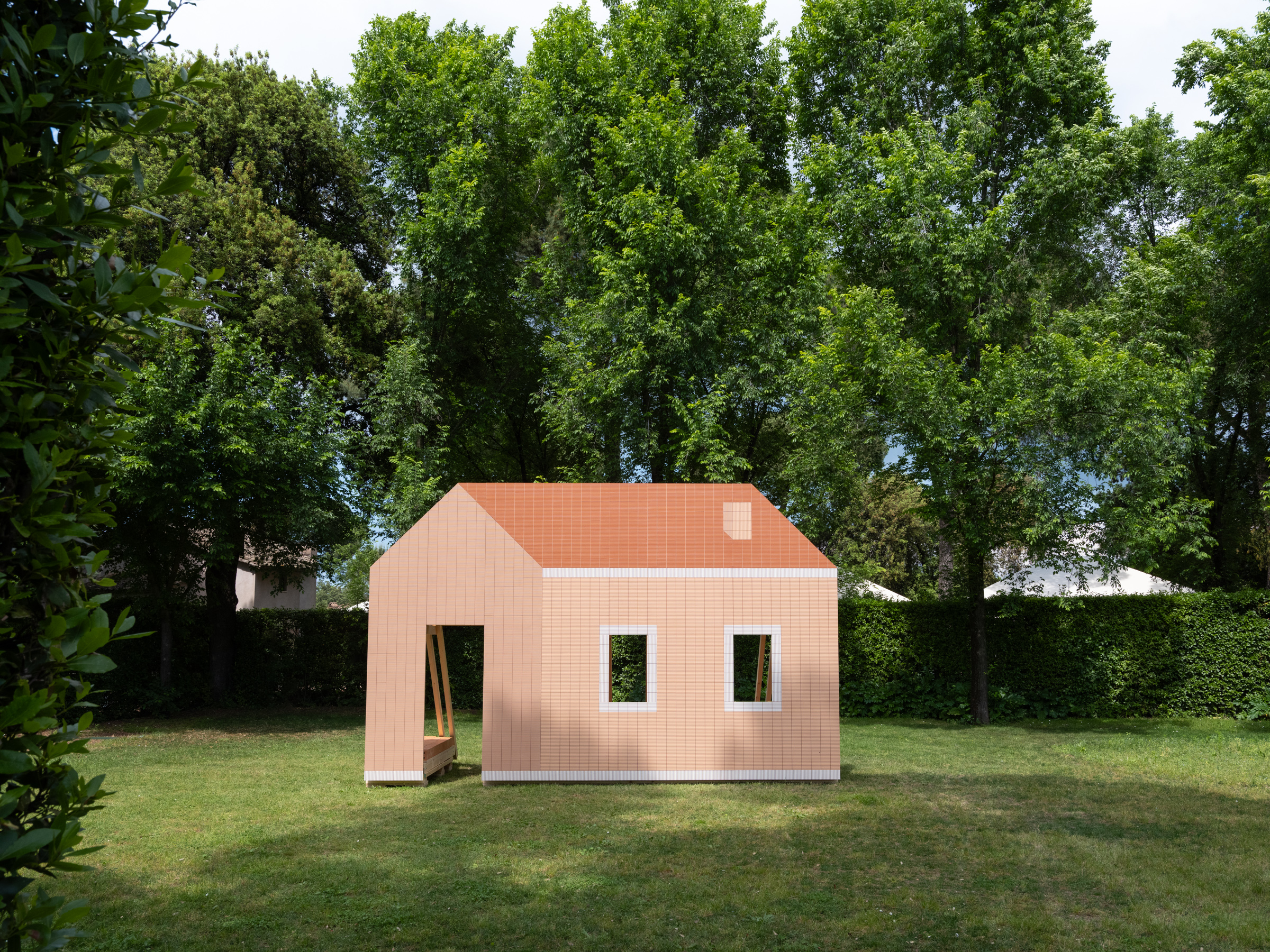
FAÇADE, designed by ECAL/Ecole Cantonale d’Art de Lausanne with Mutina
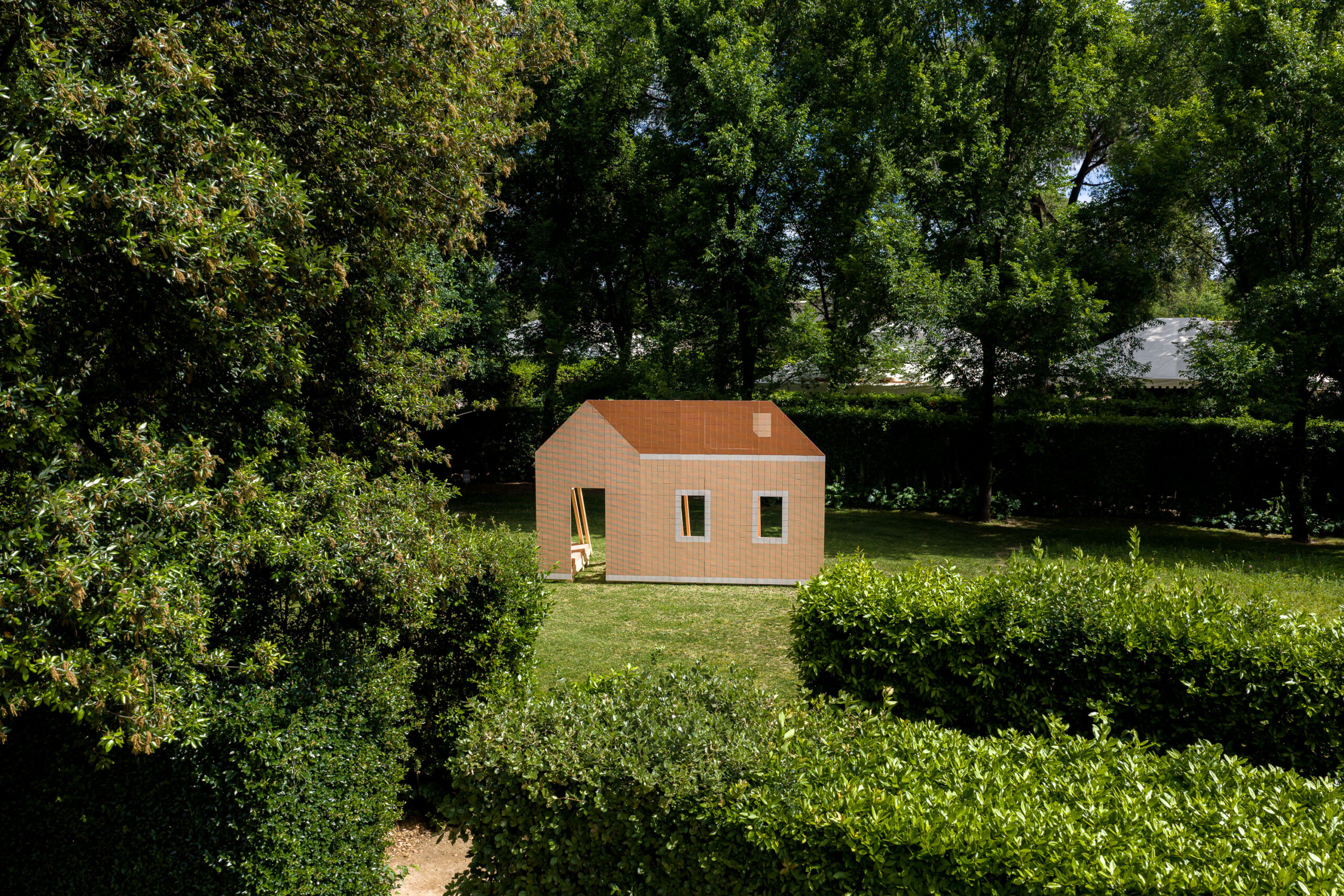
ECAL (Lausanne, Switzerland) has joined forces with Mutina (Modena, Italy), a company that specializes in creating ceramic tiles, to present a trompe-l’oeil project in which a single wall becomes architecture, transforming a fragment into a real space. Through a subtle use of motifs and colour variations, this installation interrogates the boundary between surface and depth, reality and illusion. The project was selected and supported by French designer Ronan Bouroullec.
© Daniele Molajoli
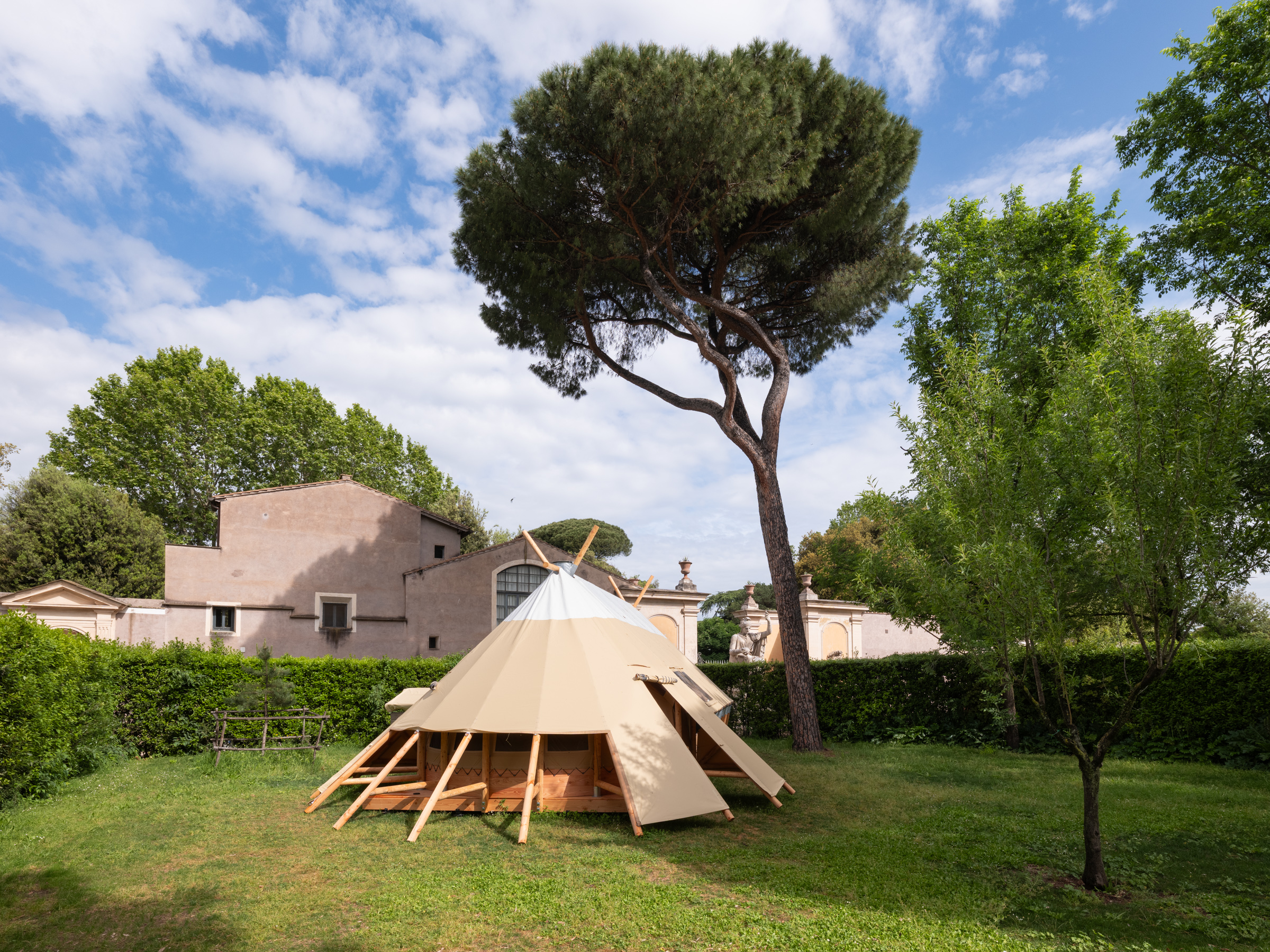
CREETOPIA, designed by Fondation Huttopia
Fondation Huttopia (Lyon, France) presents a prototype for a sustainable dwelling designed to cope with the extremely harsh climate of Canada’s Far North. Inspired by the traditional skills of the Cree, the indigenous people of that region, the project combines high tech, contemporary design, and respect for ancestral practices.
© Daniele Molajoli
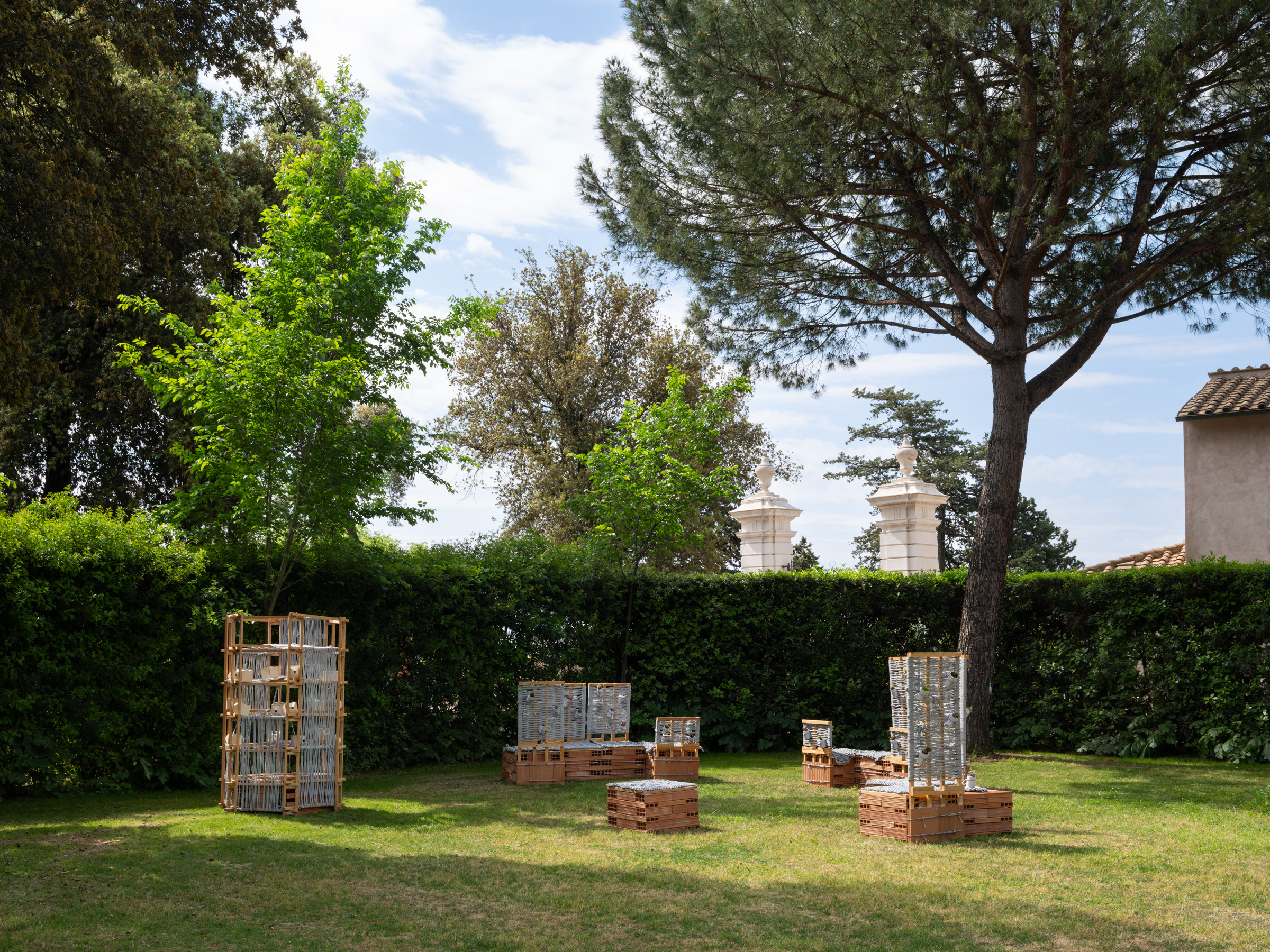
REASSEMBLED VIEWS, designed by NABA/Nuova Accademia di Belle Arti
NABA/Nuova Accademia di Belle Arti, a prestigious school of art and design, with campuses in Milan and Rome, is developing a project that forms part of a reuse initiative by recycling materials from the 2025 festival, producing a series of seats and light structures scattered around the garden.
© Daniele Molajoli
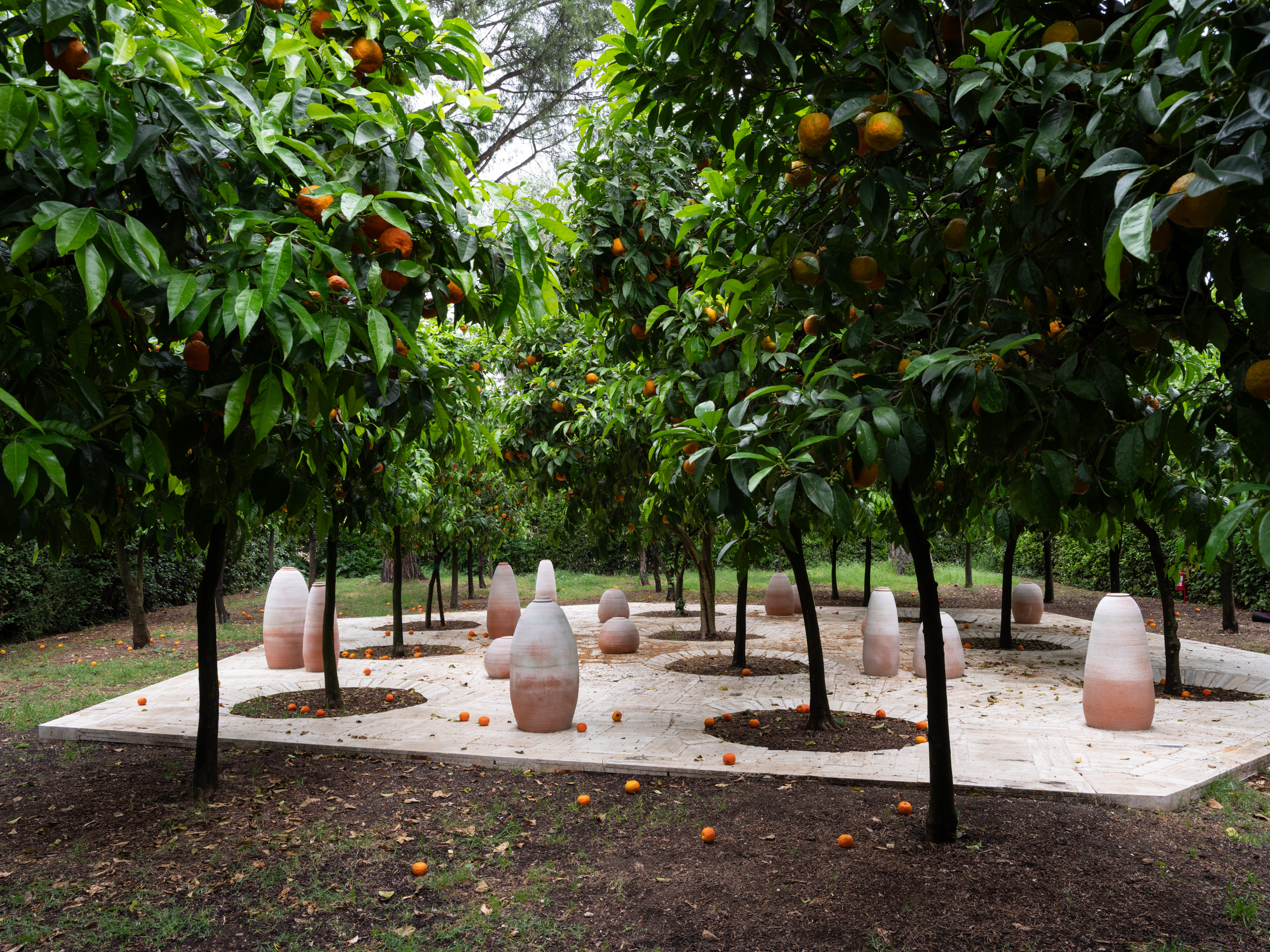
Acquifère, designed by PRÌA and VELIA
The PRÌA (Saint-Laurent-la-Vernède, France) and VELIA (Rome, Italy) architecture studios have devised a project that combines travertine stone with terracotta vases to create a natural cooling system. Based on the principle of evaporation, this installation helps to lower the temperature in the garden of Villa Medici, thereby offering a model of “communal water management” to address climate issues in urban environments.
© Daniele Molajoli
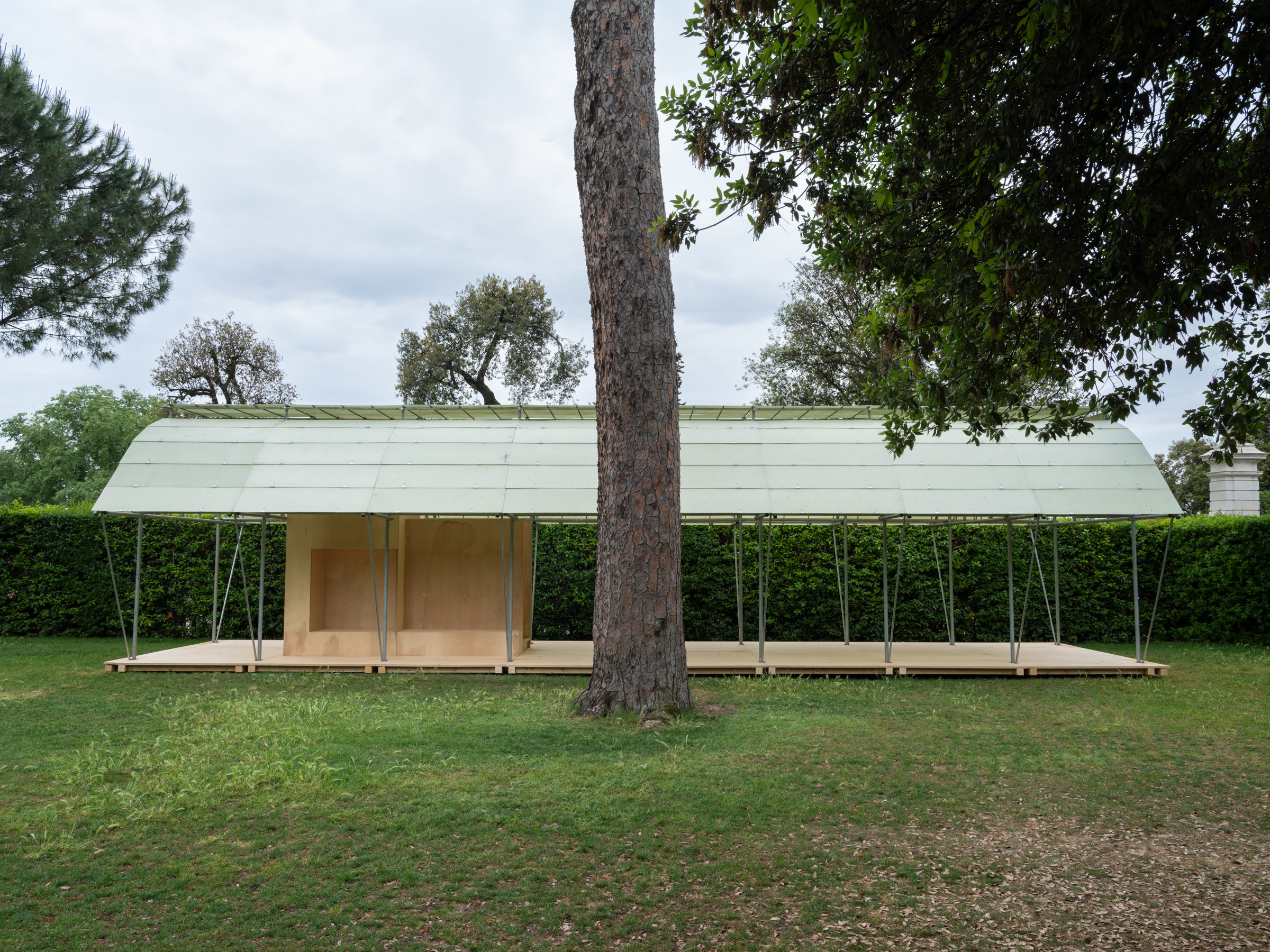
CABANE 7L AND LIBRAIRIE 7L X VILLA MEDICI, designed by salazarsequeromedina
The salazarsequeromedina studio (Madrid, Spain; Lima, Peru; New York, USA) is occupying two spaces at Villa Medici. On the one hand, it has designed Cabane 7L, a reading pavilion nestling in the heart of the gardens, which is inspired by Villa Medici’s Room of Birds and offers visitors a place to pause for reading or contemplation.
© Daniele Molajoli
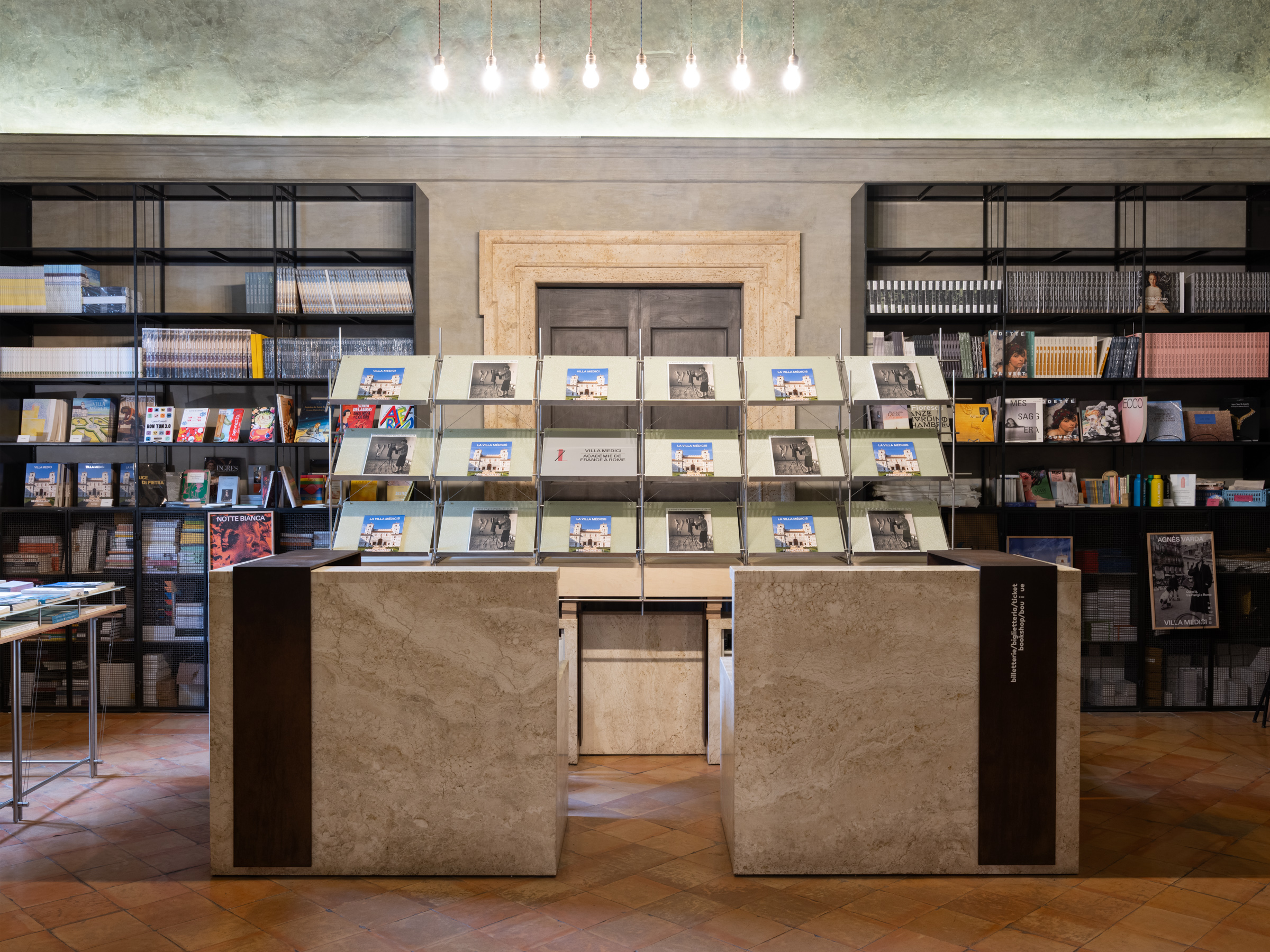
On the other, Librairie 7L x Villa Médicis presents a selection of books related to the themes of the Festival des Cabanes.
© Daniele Molajoli
Find out more about the cabins
Il Duomo Invertito
For the 2026 Festival des Cabanes, the Brussels-based studio Bento Architecture reinterprets the Roman dome by replacing its classical monumentality with the lightness of a suspended structure.
The architecture no longer rests on the ground; it becomes a design in space. The suspended dome offers visitors a delicate shelter, a cool oasis enlivened by the light from the sky and the rain falling through the oculus, its central opening.
The wireframe structure is built using broom handles assembled with removable steel plates. The whole dome is covered with tiles made from mycelium, a natural substance derived from fungal roots. This innovative material is fully compostable and will return to the earth after being exhibited.
Il Duomo Invertito therefore plays on a striking contrast: a historical monumental form created from lightweight, ephemeral materials. Co-produced by the Centre Wallonie-Bruxelles in Paris, it will be presented there in 2027. Co-produced with the Centre Wallonie-Bruxelles I Paris and with the support of Wallonie-Bruxelles Architectures and Wallonie-Bruxelles International, it will be presented there in 2027.
Year of design: 2025
Materials: mycelium, wooden broom handles, steel, travertine
Dimensions: L 6 m × W 6 m x H 5.60 m
Design: Bento Architecture (Corentin Dalon, Charles Palliez, Florian Mahieu, and Corentin Mahieu) with Quentin Bourguignon (carpenter, co-designer), Baptiste Chatenet
Construction: Bento Architecture with Quentin Bourguignon, Baptiste Chatenet, Mathilde Wittock
Assembly: Bento Architecture with Quentin Bourguignon, Baptiste Chatenet, Sven Dutrieux and François Willemarck
Structure: Atelier PoCo l Poésie ConstructiveAbout Bento Architecture
Bento Architecture is a multidisciplinary Brussels-based studio founded by Corentin Dalon, Florian Mahieu, and Charles Palliez, joined by designer Corentin Mahieu. Their practice combines built projects, research, and teaching, in dialogue with architecture, art, design, and scenography. Experimentation with biosourced materials plays a central role, driven by a determination to decarbonize construction through optimal use of resources and focusing on the “already-there” and on “making do”. Their approach has been demonstrated by several significant projects and distinctions. In 2023, the studio curated the Belgian pavilion at the 18th Venice Architecture Biennale, alongside Vinciane Despret, centering on the In Vivo project. Winner of a Europan 16 award for the CIVA site in Brussels and finalist for the TerraFibra Award, the studio espouses a localized, resource-efficient, reversible approach.
For further details, visit the @bento.architecture Instagram page.About the Centre Wallonie-Bruxelles | Paris
Far from being a mausoleum serving to canonize the pa/ma/trimonial heritage of French-speaking Belgian culture, the Centre — known as “the Vessel” — is a space for experiential engagement. It is a prime catalyst for so-called “Belgian” contemporary creativity and for the artistic ecosystem across the full range of its diversity. Through a resolutely inclusive and transdisciplinary program, the Centre’s mission is to disseminate and promote artists based in the Wallonia-Brussels Federation. As a decentralized service of Wallonia-Brussels International (WBI), it helps to stimulate international co-productions and partnerships.
For further details, visit the @cwb_paris Instagram page and the cwb.fr website.The project’s itinerary, from Rome to the Centre Wallonie-Bruxelles | Paris
Having been presented in Rome in Summer 2026, Il Duomo Invertito will travel to Paris in 2027 to take up residence at the Centre Wallonie-Bruxelles. The project will be transformed into a laboratory for sound and radio creation, becoming a testing ground for performances.
In partnership with
FRENCH ACADEMY IN ROME – VILLA MEDICI
CENTRE WALLONIE BRUXELLES / PARIS
WALLONIE-BRUXELLES INTERNATIONAL
WALLONIE-BRUXELLES ARCHITECTURELa Cabane 7L and Librairie 7L × Villa Medici
The architects at the salazarsequeromedina studio have devised a project spread between two spaces at Villa Medici. In the gardens, Cabane 7L, a reading pavilion inviting visitors to pause in contemplation, and in the entrance hall, the Librairie 7L x Villa Medici, a pop-up bookstore that presents a selection of titles related to the themes of the Festival des Cabanes.
Cabane 7L revisits the Villa Medici’s Room of the Birds, painted by Jacopo Zucchi in the Renaissance, where the aviary motif constitutes an early environmental device that shapes the way we traverse, see, and experience the Medici gardens. In the late sixteenth century, Cardinal Ferdinando de’ Medici had the gardens of his Roman villa laid out to combine horticultural productivity with aesthetic splendor. The biological abundance reflects the Cardinal’s dynastic prestige and the scientific curiosity of the period, while the pergolas, loggias, and lemon houses serve as proto-environmental devices to control light, microclimates, and delicate species.
Cabane 7L continues this tradition: airy and permeable, the cabane is designed as a lightweight summer pavilion that reinterprets the idea of a pergola, offering a shaded retreat for rest, reflection, and contemplation. The vaulted structure combines movement, air, and light, and its elevated “nest” creates a vantage point — an opening onto the orderly pattern of the gardens and the city below. Thus, Cabane 7L invites us to linger in the gardens and can accommodate readings, performances, workshops, and meetings as part of the program associated with the festival.
Echoing the pavilion, Librairie 7L x Villa Médicis takes its place at the entrance to Villa Medici as an interior landscape in motion. The project is set out as a constellation of furniture designed by salazarsequeromedina, echoing the spirit of the Librairie 7L bookstore in Paris.
Year of design: 2025–26
Materials: pine, steel, fiberglass
Dimensions of the cabane: L 6 m x W 5.2 m x H 4.4 m
Design: salazarsequeromedina (Laura Salazar, Pablo Sequero e Juan Medina) with Joe Zhao
Construction and assembly: ArtWorks | Otiima Industries, S.A.About salazarsequeromedina
salazarsequeromedina is a collaborative architecture practice founded in 2020 and led by Laura Salazar, Pablo Sequero, and Juan Medina. Their projects focus on civic-oriented constructions, involving a range of communities and a variety of geographical contexts. The practice is concerned with the environmental impact of building and seeks to establish a sensitive dialogue with the existing context.Their work has been recognized in numerous architecture competitions, published in prestigious design magazines, and exhibited internationally. Most recently, salazarsequeromedina won an Architecture League Prize in 2025. Their Greenhouse for Plants and Humans in El Carmen was selected as an outstanding project in the 2024 Mies Crown Hall Americas Prize for emerging practices. The members of the studio hold teaching posts at Pratt Institute, Syracuse University, and Tulane University. They are committed to the practice of building, critical thought, and teaching.
For further details, visit the @salazarsequeromedina Instagram page and the salazarsequeromedina.com website.About Librairie 7L
Librairie 7L, founded in Paris by Karl Lagerfeld in 1999, was acquired in 2021 by CHANEL. The 700-square-meter space includes a bookstore specializing in the latest publications in the visual arts field, the library-studio, where on-site creation draws inspiration from Lagerfeld’s personal library (located in his former photographic studio adjacent to the bookstore), and also Éditions 7L. As for the bookstore, its editorial focus reflects the diversity of twentieth- and twenty-first-century artistic production. It features works on photography, design, decoration, and interior architecture, but also monographs on fashion arts, major exhibition catalogues, and books concerned with gardens or ceramics.
For further details, visit the @librairie7l Instagram page and the librairie7l.com website.In partnership with
FRENCH ACADEMY IN ROME – VILLA MEDICI
CHANEL
LIBRAIRIE 7LWith the support of
Syracuse UniversityCreetopia
The Creetopia project stems from a collaboration initiated in 2019 between Fondation Huttopia and the Cree Outfitting and Tourism Association (COTA), based on a prototype of lightweight architecture designed on the Eeyou Istchee territory of the Cree Nation, in northern Quebec.
Inspired by the ancestral skills of the Cree, an indigenous people of North America, this demountable, sustainable structure is the result of immersion in traditional camps and of dialogue with the elders and guardians of the land. Beyond housing, Creetopia offers a model for conscious tourism where accommodation becomes a space of cultural transmission.
The summer of 2023 marked a turning point in the project: forest fires of historic intensity ravaged millions of hectares of boreal forest, forcing the evacuation of several Cree communities and posing a lasting threat to their ancestral lands. The project on display at Villa Medici bears witness to that vulnerability today: it becomes a manifesto through which to imagine, with the communities, concrete solutions for resilience in one of the world’s most challenging environments.
Year of design: 2019
Materials: canvas, wooden logs, and metal connectors
Dimensions: L 11 m x W 8.3 m x H 5.2 m
Design: Camille Blanc, Philippe Bossanne and Julien Schurmann
Construction and production: Bruyas (metal), Cabanon (canvas), Monin (logs),
and FOB (wood)
Assembly: Huttopia Montage et Maintenance, Ghislain Chaumillon, Benjamin Michel, Swany RaimbaultAbout Huttopia
Huttopia is an independent company founded in Lyon in 1999 by the Bossanne family, lovers of a certain art of camping and the great outdoors. Twenty-six years later, under the Huttopia brand or as part of the CityKamp and OnlyCamp networks, the company currently runs nearly 200 sites in eight countries, including 72 Huttopia Nature Campsites in Europe and North America. From design and operation to marketing and manufacture of its equipment, the Huttopia Group encompasses all the essential expertise required to set up camp in the midst of nature with minimum impact. Through Creetopia, Fondation Huttopia affirms its commitment to promoting responsible tourism practices, not merely offering aesthetic experiences, but observing ethical, ecological, and social standards of behavior. The initiative paves the way towards new forms of hospitality that reconcile the beauty of the landscape, the living heritage of indigenous peoples, and the contemporary challenges of climate and sustainability.
For further details, visit the @huttopiaeurope Instagram page and the huttopia.com website.About the Cree Outfitting and Tourism Association (COTA)
The mission of the Cree Outfitting and Tourism Association (COTA), the leading organization for developing sustainable and authentic tourism in Eeyou Istchee (North Quebec), is to support Cree entrepreneurs and local communities in promoting their cultural and natural heritage. By combining traditional know-how with modern tourism standards, COTA preserves Cree identity while offering visitors a respectful immersion in the heart of the Far North.
For further details, visit the creetourism.ca website.In partnership with
FRENCH ACADEMY IN ROME – VILLA MEDICI
FONDATION HUTTOPIA
CREE OUTFITTING AND TOURISM ASSOCIATION (COTA)
CABANON
BRUYAS
FOBFacade
Every year, Villa Medici invites an art school or a university to create a project with its students for the Festival des Cabanes. This year, Villa Medici is joining forces with ECAL/Ecole Cantonale d’Art de Lausanne, Mutina, and the designer Ronan Bouroullec, to present a groundbreaking collaboration.
The Facade project plays on the idea of a two-dimensional figure; from the concept of a house it retains just a single wall, envisaged as an independent fragment. With no interior and no specific function, this installation reduces architecture to its essence: a wall. And yet this minimal device transforms the space around it. It casts a shadow, offers a place to pause, and traces a new passage through the landscape. It invites visitors to walk round it to discover a play of textures and details that reveal themselves only when you come closer. Depending on the time of day and the viewing angle, the light animates the surface of the wall, which is composed of ceramic tiles, altering our perception of the work. From a more contemporary perspective, this installation also echoes the recent series of photographs by Brigitte Niedermair for Mutina.
The installation is inspired by trompe-l’oeil, a painting technique that originated in Antiquity and was reinvented in the Renaissance to blur the boundary between the real and the illusory. The project extends this Roman tradition by repeating a basic pattern, subtly modulated. Through a play of color shades and intensities, the surface comes to life and suggests an absent depth that reveals itself to visitors depending on the viewing angle and the light.
Year of design: 2025–26
Materials: ceramics, bricks, wood, metal
Dimensions: 5 m × 4 m × 1.10 m
Architects: HaoWei Hsu, Hayao Takebayashi
Design: ECAL/Ecole cantonale d’art de Lausanne
Construction and assembly: ECAL/Ecole cantonale d’art de Lausanne and Mutina
Mutina collection: Bloc, Ronan & Erwan Bouroullec – Fringe, Michael AnastassiadesAbout ECAL/Ecole Cantonale d’Art de Lausanne
Renowned internationally, ECAL is ranked among the world’s leading schools of art and design. Its influence is demonstrated by the success of its graduates and its prestigious collaborations with global institutions and brands. The school offers a wide range of programs, from visual arts to luxury design. Its Master in Product Design emphasizes professional immersion: through concrete projects, students grasp brand identities and industrial expertise to design innovative products.
For further details, visit the @ecal_ch and @ecal_design Instagram pages and the ecal.ch website.About Mutina
For over twenty years, Mutina has been elevating ceramics by collaborating with the world’s leading designers and international artists. At the intersection of design and art, the company blends Italian artisanal tradition with industrial innovation to create timeless products. This expertise spans from surfaces to hand-crafted exclusive editions, where material becomes a poetic language. Finally, the Mutina for Art project reaffirms this commitment by supporting experimentation and contemporary cultural exchanges.
For further details, visit the @mutinaceramics Instagram page and the mutina.it website.In partnership with
FRENCH ACADEMY IN ROME – VILLA MEDICI
ECAL/ECOLE CANTONALE D’ART DE LAUSANNE
MUTINAAquifère
The Aquifère project, designed by the PRÌA and VELIA studios, proposes a specific response to the intensification of heatwaves. Set among orange trees in Villa Medici’s garden, this device uses the interaction between basic materials and water to generate cooling without using any mechanical energy.
The structure consists of a plinth made of travertine stone from the Tivoli quarries, near Rome, and a system of interconnected terracotta vessels comprising ollas, amphorae historically used for irrigation. The travertine acts here as a reservoir rock, whose porosity absorbs, retains, and releases water, which emerges on the surface of the amphorae. As it evaporates on contact with the warm air, this slow, unobtrusive movement absorbs heat, acting in tandem with the shade of the orange trees and the natural circulation of air.
Conceived as an experimental prototype, the project will be evaluated by the TRIBU climate engineering firm and through user experience. Thus, Aquifère explores a passive, replicable urban cooling system, which examines the ability of public spaces to become thermal comfort infrastructure.
Year of design: 2025
Materials: travertine, terracotta, pozzolan
Dimensions: 120 m2 footprint
Design: PRÌA (Antoine Gouachon, Elsa Molinard, Giacomo Monaco), VELIA (Giorgio Azzariti, Edoardo Cappella)
Assembly: PRÌA Construction and VELIA, with Kamal Cherkaoui, Emma Elouard, Matteo Fabiani, Louise Jacquemard, Joséphine Louarn, Pierrot Matt, Pénélope PrzybylkoAbout PRÌA
PRÌA, a trio of architects, designers, and craftspeople, works on renovating and constructing simple architecture, rooted in its surroundings and sustainable. Their projects draw inspiration from traditional expertise based on rational uses of the site’s resources. Their practice explores the surrounding area in search of disciplines that work to propagate it and ensure its future. PRÌA engages in contextual and environmental research in order to propose new solutions for urban and rural architecture in transition. In 2023, they founded PRÌA CONSTRUCTION to carry out projects in rammed earth. They won a 2025 Albums des Jeunes Architectes et Paysagistes (AJAP) award, presented by the French Ministry of Culture.
For further details, visit the @pria.atelier Instagram page and the priaatelier.com website.
About VELIA
Founded in 2024 by Giorgio Azzariti and Edoardo Cappella, VELIA is a collaborative architecture studio devoted to design, research, and teaching. It draws on multidisciplinary experience acquired in international architecture practices and research institutions, including Herzog & de Meuron (Basel), David Chipperfield Architects (Berlin), and the Museum of Modern Art (New York). Its work has been presented, notably, at the 19th Venice Architecture Biennale and at MAXXI and the Mattatoio in Rome.
For further details, visit the @velia.biz Instagram page and the velia.biz website.In partnership with
FRENCH ACADEMY IN ROME – VILLA MEDICI
FRATELLI PACIFICI S.P.A.
POTERIE JAMET
TRIBU
NEXT GROUP
PANTHEON INSTITUTE
VIABIZZUNO
SAINT-ASTIER
IMMOHOUSE
QUADRO DESIGNReassembled views
For this new edition of the Festival des Cabanes, Villa Medici and NABA — a prestigious school of art and design based in Rome and Milan — are launching a collaboration based on upcycling and design research.
The seating project Reassembled views originated from a study conducted by Bachelor in Design students from the NABA campus in Rome regarding the previous edition of the Festival des Cabanes. This work focused on the deconstruction of Cabane 7L, designed in 2025 by the agency MBL Architectes (Sébastien Martinez-Barat, Benjamin Lafore, and Florian Jomain).
Rather than envisaging the materials as having reached the end of their useful life, this process of reuse turns the original brick modules into real objects of study dotted around the gardens of Villa Medici. Through this reassembly exercise, the initial structures are transformed into contemporary installations: the collection of seating invites visitors to rest and observe, creating a new resonance between ephemeral architecture and historic gardens.
Year of design: 2025–26
Materials: bricks, rope, and wood
Bachelor of Design students at NABA in Rome: Miruna Georgiana Batîr, Alberto Lucchetti, Riccardo Luciani, Maria Teresa Menale, Flaminia Clhoé Petrini, Francesco Rinaldi, Chezcka Mae Villalba, Alice Zavarise
Supervision: Emiliano Auriemma (architect and PhD student at NABA), with Daniele Giorgi, Daniele Mancini and Fabrizio De Paolis (Design Laboratory Specialist for the NABA campus in Rome)About NABA, the Nuova Accademia di Belle Arti
NABA is the largest Academy of Fine Arts in Italy and the first to have obtained official recognition from the Ministry of University and Research in 1981. It is ranked among the top 100 institutions in the world for Art & Design. With campuses in Milan, Rome and—starting from the 2026/2027 academic year—London, NABA offers programs in the fields of design, fashion design, graphics and communication, multimedia arts, new technologies, set design, and visual arts. Founded in Milan in 1980 by Ausonio Zappa, with the initial involvement of Guido Ballo and Tito Varisco, and the subsequent activation of a core group of artists including Gianni Colombo, the Academy has always aimed to challenge the rigidity of academic tradition and introduce visions and languages closer to contemporary artistic practices.
For further details, visit the @naba Instagram page and the naba.it website.
In partnership with
FRENCH ACADEMY IN ROME – VILLA MEDICI
NABA, NUOVA ACCADEMIA DI BELLE ARTI
Practical information
Opening days and times:
Monday to Sunday (closed Tuesdays), 10am to 7pm (last admission at 6:30pm)
Rates:
Full rate: €10 / Reduced rate: €8
TRIBU rate: €2
Free for SOLO or DUO card holders
From June 1 to July 6, the festival is also offering yoga sessions in the gardens of Villa Medici.
Every Monday from 7:00 p.m. to 8:15 p.m.
Paid activity; reservations required
Festival partners
The Festival des Cabanes de la Villa Médicis 2026 is made possible thanks to the support and guidance of



Partners of Habiter Demain Air France, Sofitel Rome Villa Borghese, Azienda Frank Cornelissen
With the support of


Media Partner of the Festival des Cabanes

Photo credits
Cover image/ Aerial view of the Villa Medici © M3 Studio, Nicolas Vanegas Sanchez