Search
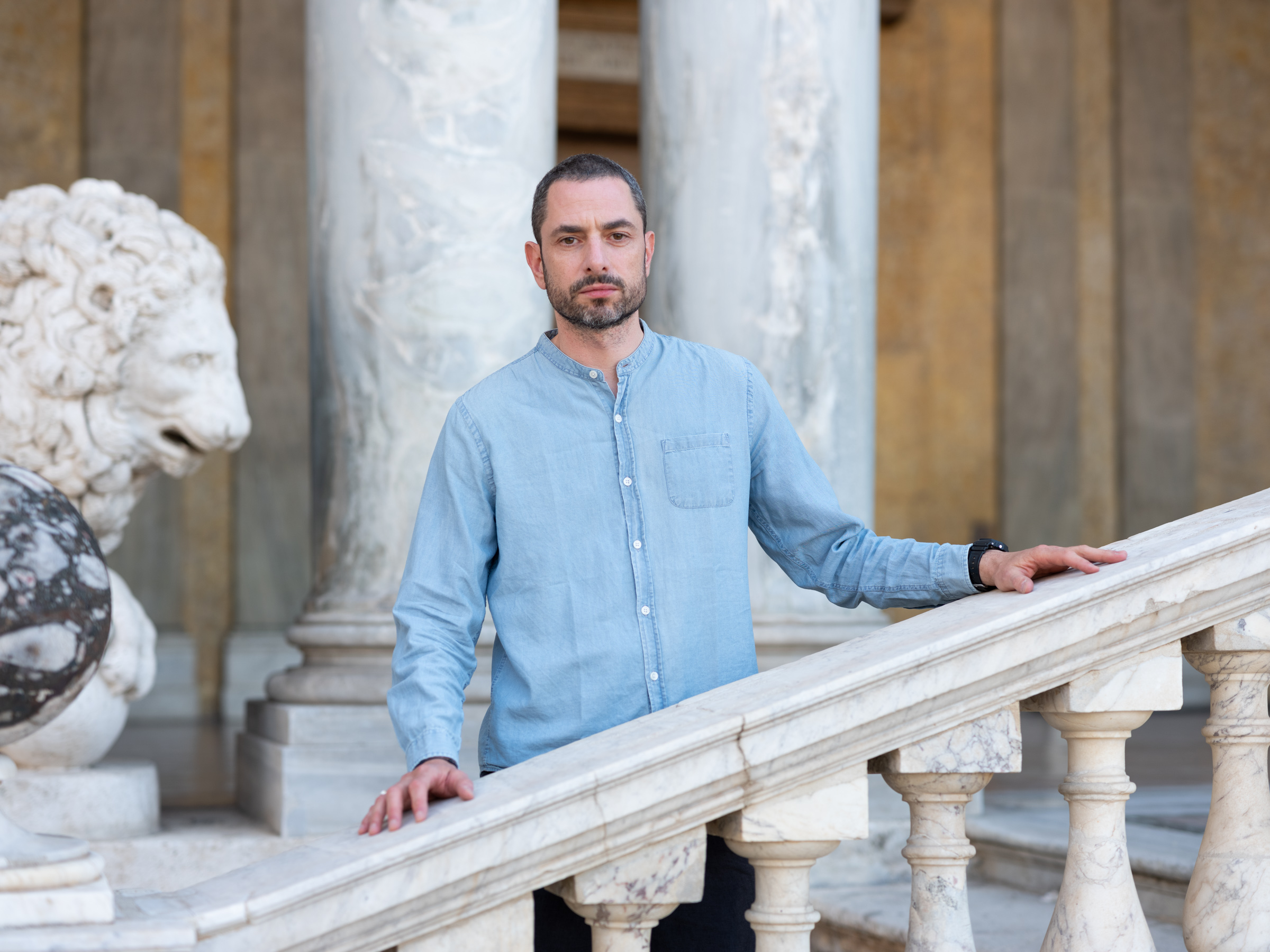
Denis Ribouillault
Fellow
2009 - 2011
Art history
Biography
Denis Ribouillault
Period: 2009-2011
Profession: Art historian Art, landscape and garden historian (15th-17th c.) born in 1976, Denis Ribouillault obtained his doctorate in art history from Université Paris I Panthéon Sorbonne in 2006, after several years of study in Rome, Florence and London’s Warburg Institute. Between 2003 and 2005, he taught at the University of Paris I as an ATER, then from 2006 to 2008 at the prestigious Courtauld Institute in London, where he taught art of the 16th and 17th centuries. He is the recipient of numerous international research fellowships: the Dutch Institute of Art History in Florence, the École française de Rome, the bilateral France-Italy Fellowship, Dumbarton Oaks, Harvard University, Washington D.C. and, for 2008-9, the Florence J. Gould Fellowship at the Villa I Tatti – Harvard University Center for Italian Renaissance Studies in Florence. Since October 2009, he has been a resident at Villa Medici for 18 months. His thesis is currently being published by the Institut National d’Histoire de l’Art (
Le pouvoir des lieux dans l’art de la Renaissance : paysages, jardins et décors topographiques à Rome au XVI e siècle , Paris, 2011). He is also editor of a collective work to be published by Editions Olschki in 2010 (
Paysage sacré et exégèse visuelle aux XVI e et XVII e siècles ). He is the author of a dozen articles in French, English and Italian for specialized journals and collective works, and has participated in and organized numerous international colloquia since 2002. His research focuses mainly on landscape painting in Italy from the 15th to the 17th centuries, as well as the art of the villa and the garden. The specificity of his work lies in the study of the interactions that exist between different media of expression: painting, architecture, garden art, landscape architecture, literature, agricultural and botanical treatises, and so on. According to this approach, landscape can no longer be reduced to the simple notion of an “artistic genre”, but responds to the more abstract but infinitely richer notion of landscape as a “medium”,
a “landscape figure” with a changing morphology capable of crystallizing and communicating a complex network of values and ideas. This research is part of a historiographical trend which, over the last ten years or so, has focused on interdisciplinarity and the social history of art, considering “landscape” as a “cultural factory”. His project for the Villa Medici is to study the function and significance given to “landscape figures” in Counter-Reformation Rome at the end of the 16th century, and the way in which they are arranged both in mentalities and in the space of the city.
Medici Residency André Chastel
with the INHA
Application 01.04 - 12.06.2026
Since 2010, the National Institute of Art History (INHA) and the French Academy in Rome – Villa Medici have awarded two research grants each year for research into modern and contemporary art.
These grants are intended for established researchers, whether French or foreign, who wish to travel to Rome to carry out research.