Search
Call for papers
Telling the world in images during the Renaissance
02.12 - 03.12.2026
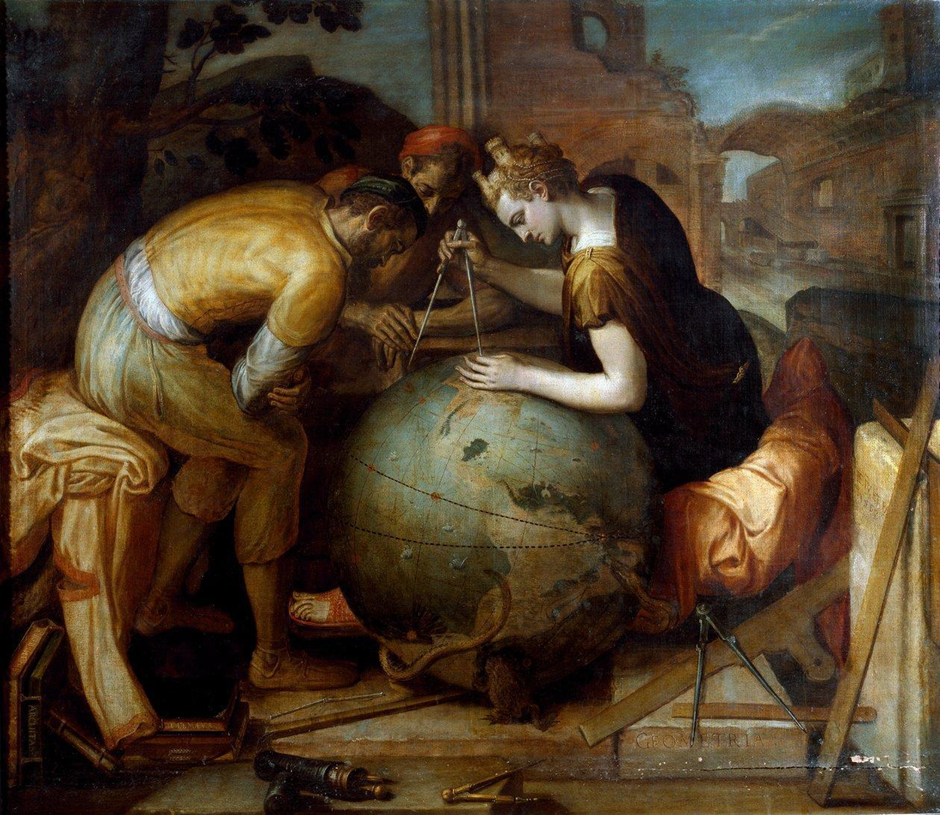
As part of an international symposium devoted to the world in images during the Renaissance, Villa Medici is opening a call for papers from March 27 to May 30, 2026.
At a time when the contours of what is known are being redefined, images – whether knowledge-based, mental, poetic or artistic – are becoming privileged mediations, complex operators of knowledge and enunciation of the world.
This colloquium will explore how the world is constructed and expressed in images, by studying how images describe, organize and transform human and possibly non-human experience. The approach is resolutely interdisciplinary, drawing on the perspectives of art history, the history of knowledge, philosophy, visual anthropology, and the history of techniques and beliefs.
This call explores how images play an active part in the cultural construction of the world, without limiting ourselves to predefined categories of visual objects or devices (illustrated books, illuminated manuscripts, maps, frescoes, sculptures, scientific objects, engravings, tapestries, etc.).
This reflection is based on a set of formal, symbolic and theoretical tensions, conceived as flexible analytical tools. They enable us to consider images not simply as reflections of reality, but as essential players in its production, organization and transformation.
This international symposium will result in a publication, following evaluation of the contributions by the scientific committee.
CALL FOR PAPERS
Proposals should be submitted in French, Italian or English, and include the following information:
- a title
- a brief summary of the communication project
- an indicative bibliography including a maximum of six productions
- an academic curriculum vitae or brief bio-bibliographical note
All these documents must be compiled in a single PDF file and sent by May 30, 2026 to the following addresses: [email protected], [email protected], [email protected]
Organizing committee
Étienne Bourdon (Grenoble Alpes University, LARHRA)
Guillaume Cassegrain (Grenoble Alpes University, LARHRA)
Florian Métral (CNRS, Centre André-Chastel, CPJ Arvigraph)
Anaëlle Rossi (Grenoble Alpes University)
Angèle Tence (CNRS, Centre André-Chastel)
Alessandro Gallicchio (Académie de France à Rome – Villa Médicis)
PRACTICAL INFORMATION
Wednesday, December 2 and Thursday, December 3, 2026
9am – 6pm
Free: registration link coming soon
This international symposium is organized in Rome by the CNRS/Centre André Chastel, the Université Grenoble Alpes/LARHRA and the Académie de France à Rome – Villa Médicis
Symposium languages: French, Italian and English
Documents to read