
Search
Samuel Gratacap
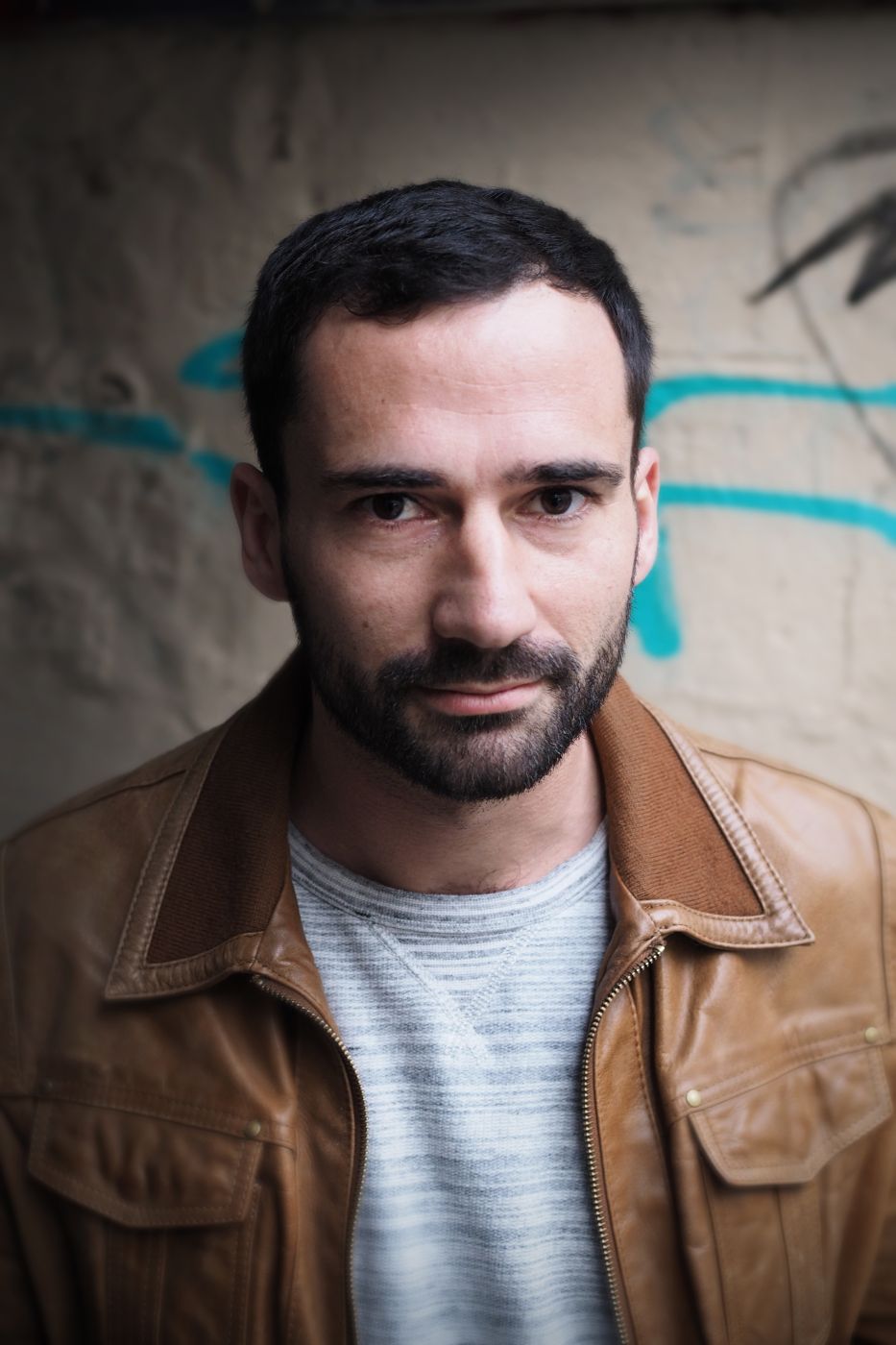
Resident
01.03.2021 - 31.03.2021
Fellow
2019 - 2020
Medici Residency
Journalism
Photography
Biography
Born in 1982 in Pessac (France).
Samuel Gratacap is a photographer who works in both the visual arts and photojournalism. He is interested in the phenomena of migration and the places of transit generated by contemporary conflicts. His projects are the fruit of long periods of immersion, the time needed to understand the complexity of situations and to capture what, beyond numbers, flows, maps, geopolitical data and media coverage, lies at their heart: personal trajectories and experiences.
He was awarded a CNAP grant in 2012 (Fonds d’aide à la photographie documentaire contemporaine) and the Le Bal-ADAGP young creation prize in 2013. First monographic exhibition La Chance at the CRAC Languedoc-Roussillon in Sète in 2014. His work carried out over two years in Tunisia in the Choucha refugee camp (2012-2014) was the subject of a solo exhibition at Le Bal (Paris) in 2015 and a publication by Editions Filigranes. That same year, he received the jury’s special mention at the Plat(t)form meetings at Winterthur’s Fotomuseum, as well as a working grant from the FNAGP (Fondation nationale des arts graphiques et plastiques) and the agnès b. endowment fund for the project Les Naufragé(e)s (Libya), exhibited at the Institut du Monde Arabe as part of the Biennale des photographes du monde arabe contemporain. In 2017, he won the “Prix Arendt du Mois européen de la photographie” following his solo exhibition at MUDAM. That same year, he exhibited Fifty Fifty as part of the official Rencontres d’Arles, an exhibition on a Libya torn between war and the plight of migrants.
Resident for 2019-2020, photographer Samuel Gratacap is interested in the phenomena of migration and the places of transit generated by contemporary conflicts, and places his work in both the field of visual arts and that of photojournalism. In 2021, he returns to Villa Medici for a residency on his Interzones project.
Interzones is a three-part project begun during Samuel Gratacap’s residency at Villa Medici in 2019-2020.
The aim of this multimedia installation is to bring together a documentary archive (2007-2019) and a fiction film produced in 2020 entitled Un Tipo Strano and a documentary film for which Samuel Gratacap has received support from the Fondation des Artistes. The subject of this installation work is the movement of exiled populations around the Mediterranean, and migrant transit zones between Italy, France, Tunisia and Libya.
Samuel’s documentary project and interest in the subject took shape in 2007 at the Canet detention center in Marseille. The documentary archive recurs episodically in this installation work: with the photographic reproductions of stranded documents made in Lampedusa in 2010. Then with the recovery of an amateur video in the Choucha camp (Tunisia) in 2012, which led him to leave for Libya in 2014 to continue his work on the imprisonment and trafficking of human beings in the country. In 2017, Samuel Gratacap returned to France and Italy to work on the solidarity movement in the Alps region and the living conditions of immigrant workers in southern Italy (Puglia and Calabria).
1st step_The documentary archive
Video and photographic rushes from 2007 to 2019
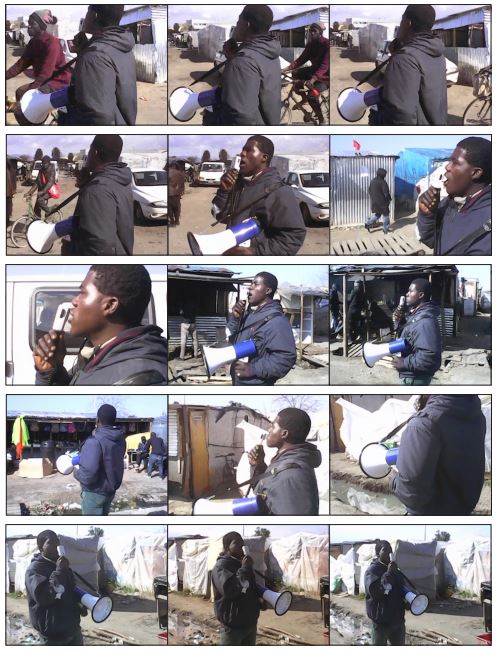
Pasquale Call to workers’ rally-Baracopoli in San Ferdinando, Calabria © Samuel Gratacap
2nd step_Fiction
The film Un Tipo Strano (2020)
Amadou is a young Gambian who arrives in Italy after a long journey. After working in the fields, he decides to continue on his way to Rome, where he meets three Italians his own age. They are in a busy public square at the end of the day. They hit it off and join a party where they dance the night away. The evening ends on a beach, as dawn breaks. The meeting has taken place and will take them even further, to the border crossing of the Alps.
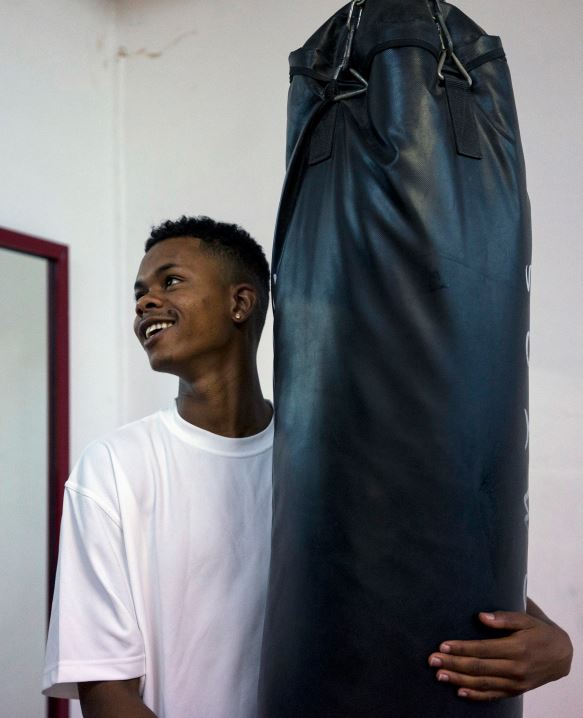
Amadou Juldeh Bah Lead actor in the film Un Tipo Strano, 2020 © Samuel Gratacap
Use and function of archives
“The function of archives is to work on the memory and recollection of the main character. The film lends him a story, through the presence of archive fragments, which also question the fundamental role of the spectator – in the interpretation he gives to the narrative and the back-and-forth between fiction and real-life testimony.
By choosing to interweave fictional and documentary sequences, I hope to offer the spectator a more complex and embodied reading of reality. Amadou and the young Romans become the messengers of a generation that thinks and imagines differently. They go where others would not have taken the first step. And it’s clearly fiction that makes this possible. At the same time, the reality of the documentary footage always informs us about the conditions of the passage, of the ordeal, and brings us back to the question of memory. Personal and hypothetical for the fictional character played by Amadou Juldeh Bah. Collective and concrete in the case of the migratory routes between Libya, Italy and France.
3rd time_Post-fiction (2021)
“I’m going back to Italy to finalize the 3rd Interzones time trial.InterzonesI’m going back to Italy to finalize the third phase of Interzones, to meet up with the film’s actors and film them in their daily lives, in ways that might define, contradict or affirm the roles I’ve given them in the fiction.
Fiction is the story of how these young people, who have nothing in common but live in the same town, meet.
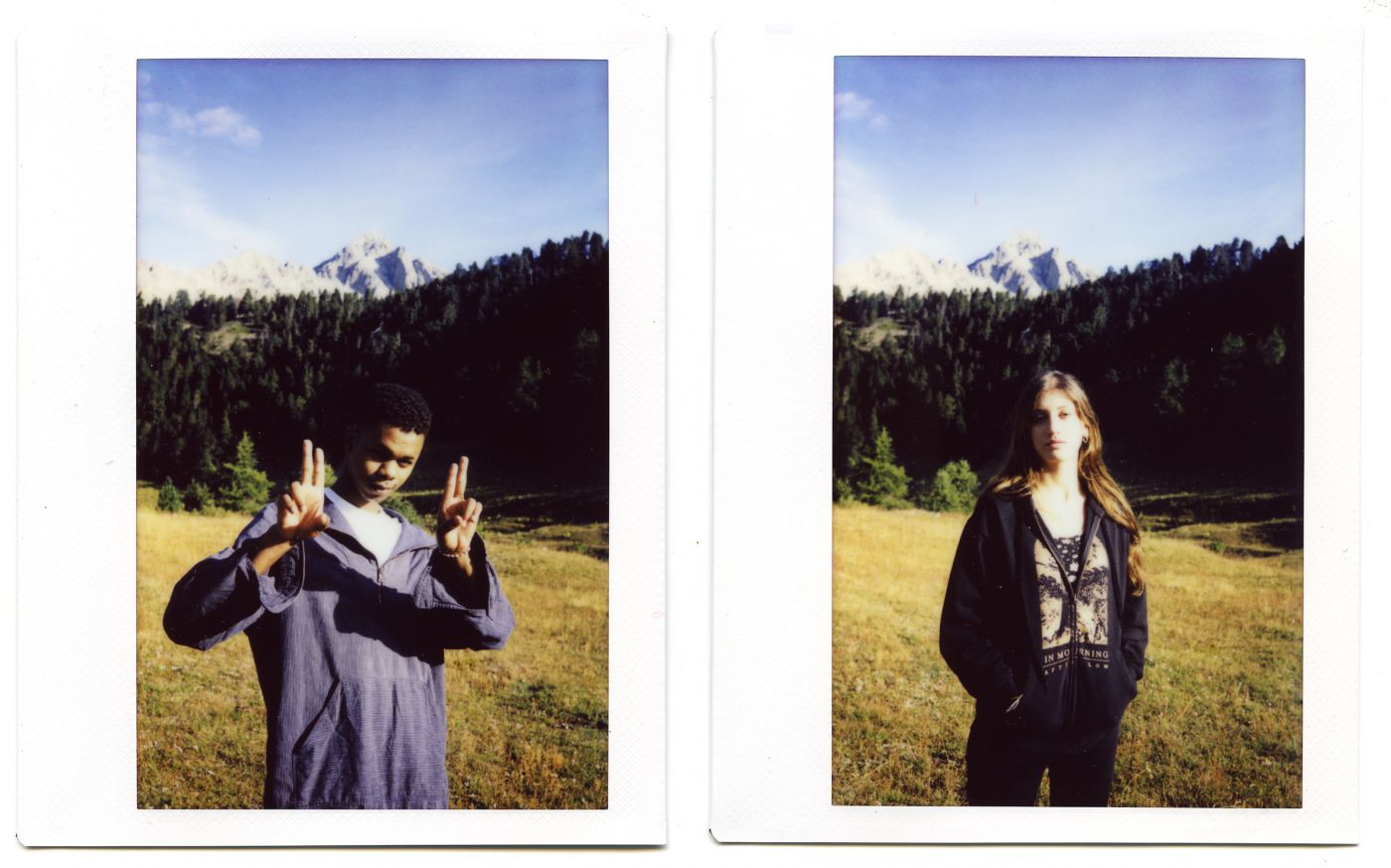
Amadou Juldeh Bah and Elena Ordonez Valverde, the two protagonists of the film Un Tipo Strano, 2020 © Samuel Gratacap
The starting point for the continuation of the project will be to question these young people about their future as actors, by filming them in their everyday lives. Their very first experience as actors, and my very first as a director, will lay the foundations for a new film that I plan to make during three 15-day stays in Rome and its suburbs. This film will be the third and final part of my research into fiction and documentary experiments, entitled Interzones. A first restitution of this work will take place in 2022 at La Banque (Béthune) during a group exhibition entitled À nos élans curated by Léa Bismuth.
To complete the third stage of his project, Samuel Gratacap is launching a fundraising campaign open to all.
Cover image: Un Tipo Strano, photogram, 2020 © Samuel Gratacap
Open call fellows annual selection
Application 04.09 - 16.10.2026
Each year, the French Academy in Rome - Villa Medici organizes an international competition to select fellows who will be welcomed at the Villa Medici in Rome for a 12-month residency in creation, experimentation and research (residency begins in September, ends in August).