Search
Tony Garnier
Designing modern architecture in Rome around 1900
19.11.2026
The symposium organized by the Tony Garnier Institute (1869–1948) and its partners aims to highlight the role that the Villa Medici, Rome, and Italy played in the evolution of the French architect’s thinking at the turn of the 20th century.
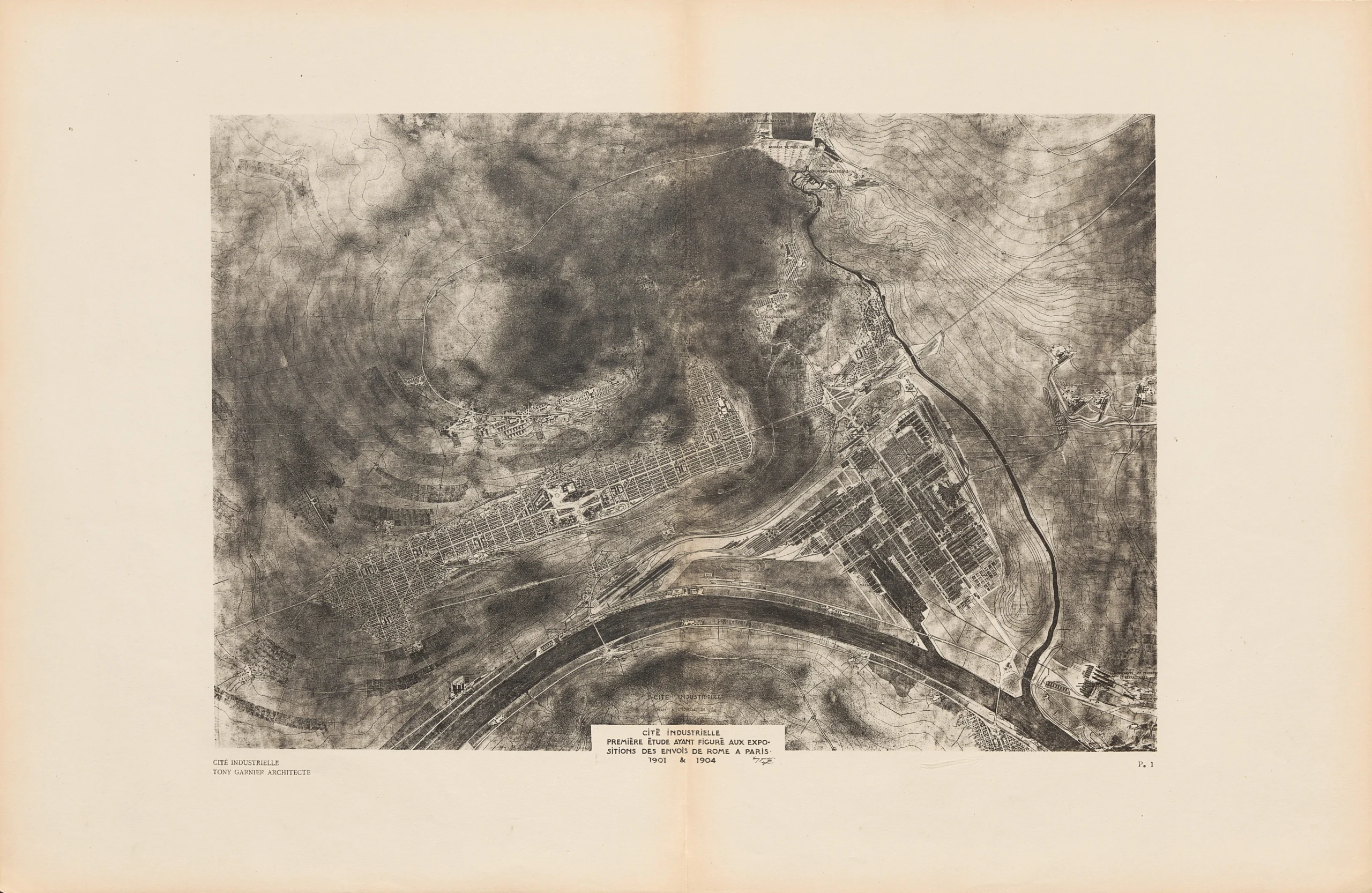
Tony Garnier’s stay in Rome was both the culmination of a long educational process and a turning point in his academic career. It was in 1899, at the age of thirty, that the architect from Lyon won the Grand Prix and arrived in Rome. As early as 1901, he drew the first plans for*Une Cité industrielle*, a project for a modern city that was criticized by the institutions responsible for evaluating the submissions of the residents of the Académie de France.
To illustrate the context in which Tony Garnier developed his Cité industrielle project, we focus on three main themes:
Rome and Italy
The first involves exploring the context of Roman and Italian architecture around 1900. Tony Garnier certainly may have met Italian architects and drawn inspiration from their ideas. The urban development of the Testaccio neighborhood and its new slaughterhouses may have served as models for envisioning the facilities of the future. Industrial City. More generally, did the architectural and urban culture of Camillo Boito’s generation and that of his students hold any interest for the Lyon-based architect? Did Tony Garnier have any connections with members of theArtistic Association of Architecture Enthusiasts Founded in 1890? Gustavo Giovannoni was active in Rome as early as the late 1890s and, in the early years of the 20the Throughout the century, he gradually developed the urban concepts that would give rise to Rome’s new master plan in 1909.
The Académie de France in Rome: players and sociability
The second area of focus concerns the Villa Medici itself. The social interactions among the residents and their shared interests in political and social issues warrant closer examination. It is well established that Tony Garnier rubbed shoulders with other residents who played significant roles in the history of the birth of urban planning: Henri Prost (a resident from 1902 to 1906) and Léon Jaussely (from 1903 to 1907). Next came Ernest Hébrard, winner of the Prix de Rome in 1904, who designed the World Capital of Humanity with Hendrik Andersen and Olivia Cushing Andersen. However, the project for the Industrial City strictly speaking, preceded their arrivals. It is therefore a matter of clarifying the role Tony Garnier played in this favorable context.
International networks
Finally, the last theme proposes examining Rome’s international milieu and the ideas circulating there. Which European architects might Tony Garnier have met during his stay at the Villa Medici? Charles Buls, for example, was in Rome in 1900 and 1901. Peter Behrens stayed there in the summer of 1903. An in-depth study is needed to compile a list of the architects and urban planners whose ideas may have contributed to the convergence of architectural and urban cultures in Rome in the early 20the century and thus gain a better understanding of how Tony Garnier was able not only to draw inspiration from them but also to transform them.
Program
9:30 a.m.: Welcome
10:00 a.m.: Opening remarks by Sam Stourdzé and Alessandro Gallicchio (French Academy in Rome – Villa Medici)
10:20 a.m. Introduction: Laurent Baridon (Tony Garnier Institute, University of Lyon 2—LARHRA UMR 5190)
1. Tony Garnier, a resident at the Villa Medici
Moderator: Alessandro Gallicchio
10:30 a.m. Éléonore Marantz (University of Paris I Panthéon-Sorbonne). A Resident Captured on the Spot: Tony Garnier in the Caricature Albums of the French Academy in Rome—Villa Medici
11:00 a.m. Manuel Royo (University of Tours), Ancient Rome in the 4th Century A.D.: Paul Bigot’s Lesson in Urban Planning
11:45 a.m. Pieter Uyttenhove (University of Ghent), Insights into Tony Garnier at the Villa Medici
2. Tony Garnier and Modernity in Rome
Moderator: Antonio Brucculeri
2:00 p.m. Philippe Dufieux (Lyon National School of Architecture), Rome at the Dawn of the New Century
2:30 p.m. Judi Loach (Cardiff University, LARHRA), Modern and “Hygienist” Facilities in Rome around 1900
3:00 p.m. Lucie Prohin (University of Paris I Panthéon-Sorbonne), The “case popolari” of the Bel Paese: The Sources of Tony Garnier’s (Possible) Italian Inspiration in the Field of Affordable Housing
4:15 p.m. Fabrizio di Marco (Sapienza University of Rome), The Artistic Association of Architecture Enthusiasts in Rome and the Development of Urban Art in the Early Twentieth Century
5:00 p.m.–6:15 p.m. Closing Roundtable Discussion
Moderator: Pierre Gras (Tony Garnier Institute, LAURe-ENSAL), with:
Antonio Brucculeri (École nationale supérieure d’architecture Paris-La Villette)
Julie Cattant (Lyon National School of Architecture)
Alessandro Gallicchio (Sorbonne University, Director of the Department of Art History at the French Academy in Rome – Villa Medici)
Gilbert Richaud (Tony Garnier Institute, LARHRA UMR 5190, Lyon)
Practical Information
Thursday, November 19, 2026
9 a.m.–6 p.m.
Free with reservation
Registration link coming soon
Study day organized in Rome as part of the Villa Medici program: “Architecture and Architects at the French Academy in Rome: Perspectives, Works, and Mobility—19th–20th Centuries.”
In partnership with the competition organized by the École nationale supérieure d’architecture de Lyon and the Tony Garnier Institute