Search
Agnès Varda
Here and there, Paris-Rome
25.02 - 25.05.2026
- Curators
- Anne de Mondenard
- Carole Sandrin
Villa Medici is honouring the photographic work of the artist and filmmaker Agnès Varda (1928–2019) with her first major retrospective in Italy, as well as marking the 70th anniversary of the twinning agreement between Paris and Rome.
The exhibition invites us to immerse ourselves in postwar Paris, and more specifically in the courtyard-studio on Rue Daguerre, where Agnès Varda lived, created, and experimented for nearly seven decades, a place inseparable from her work. Her years in Paris are complemented by the photographs she took on her travels in Italy, from Venice to Rome, in Renaissance villas and gardens, or on film sets. Through the places and figures that inspired her, this retrospective traces the career path of a prolific and remarkable artist. Her work will also be the subject of another show in Italy at the Galleria Modernissimo of the Cineteca di Bologna. Entitled Viva Varda (March 5, 2026–January 10, 2027), this exhibition, held in collaboration with the Cinémathèque Française and Ciné-Tamaris, will explore the entire body of work of the first female director to be awarded an honorary Oscar for her career achievement.
Agnès Varda’s Paris
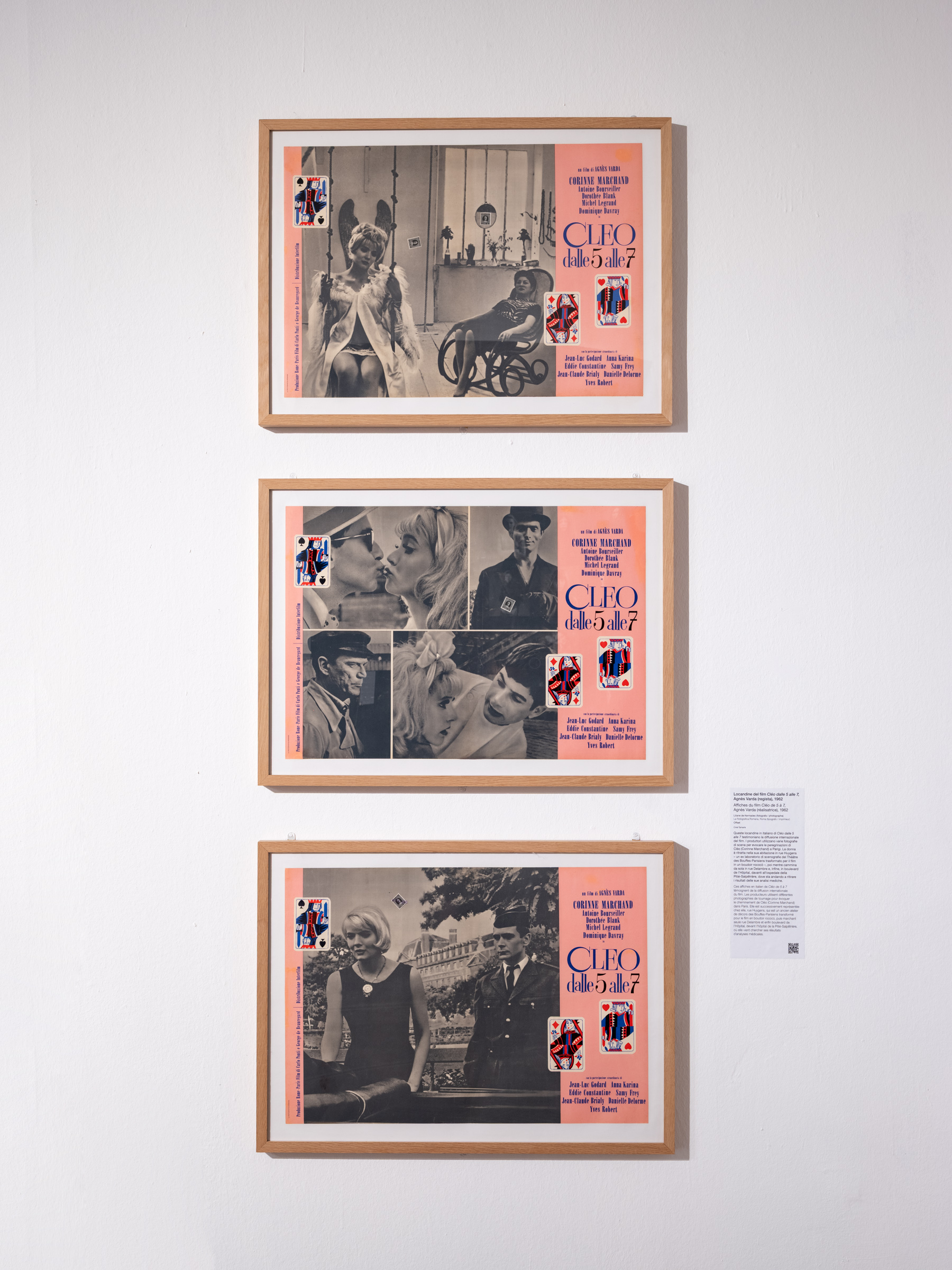
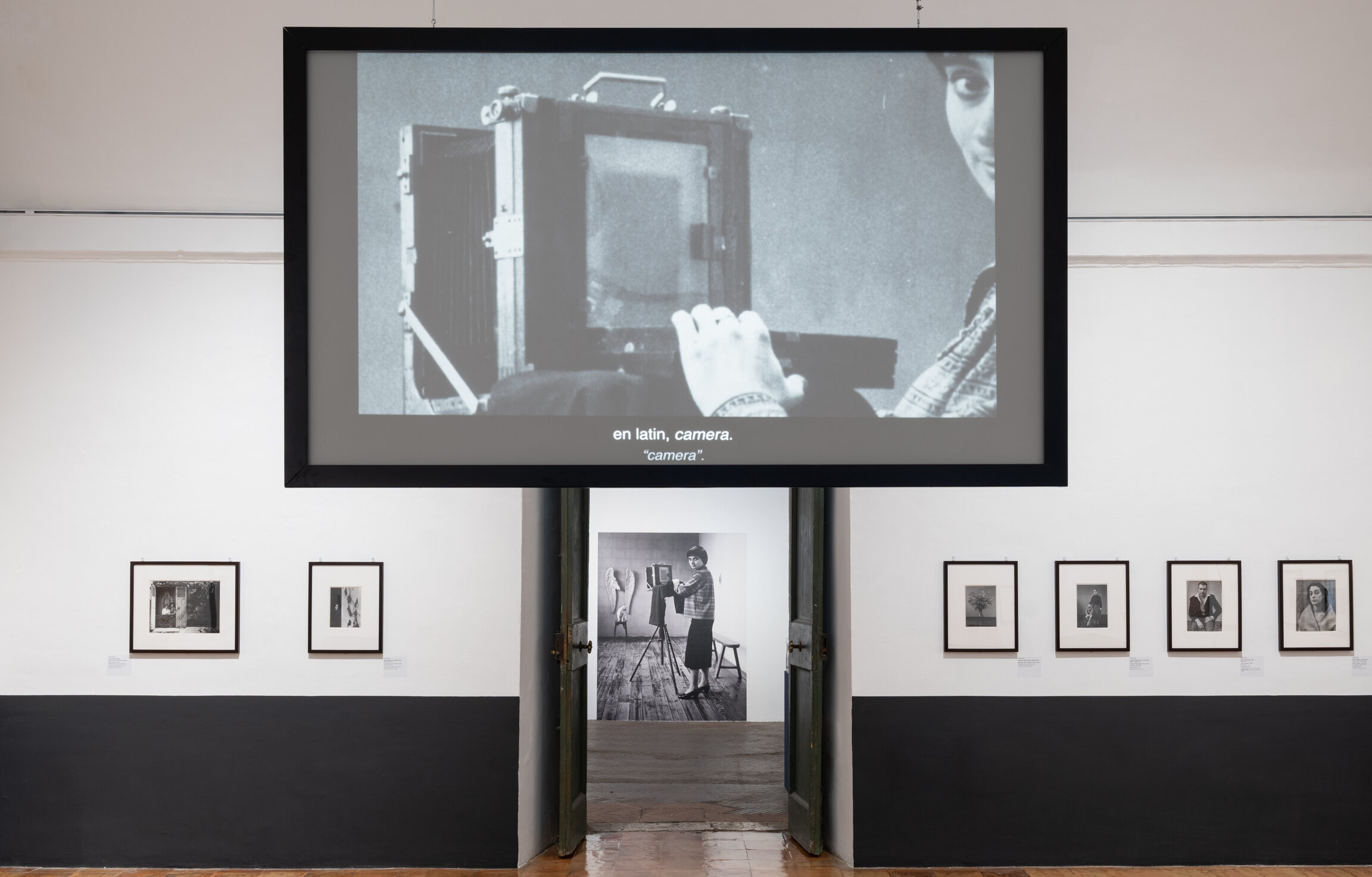
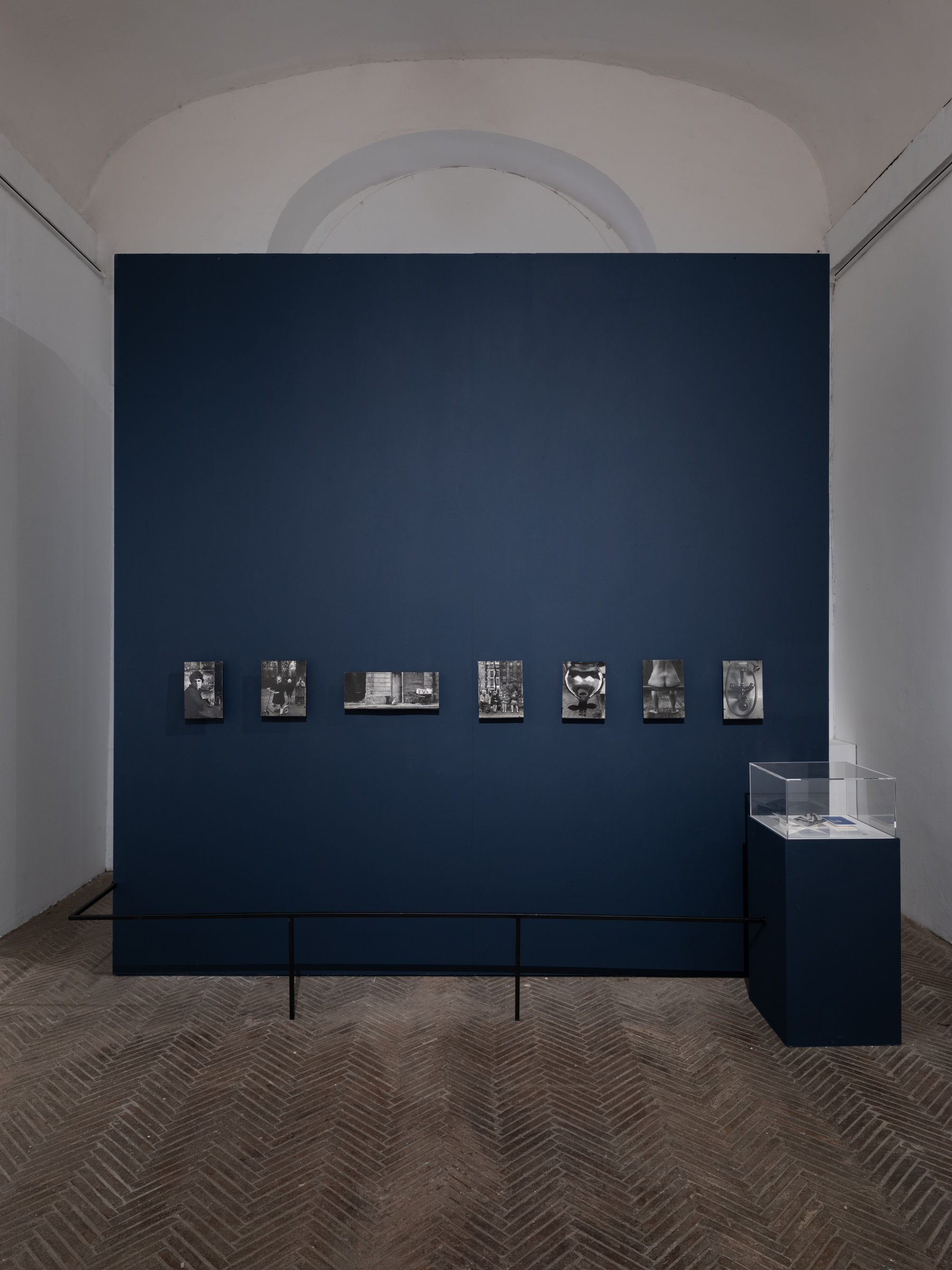
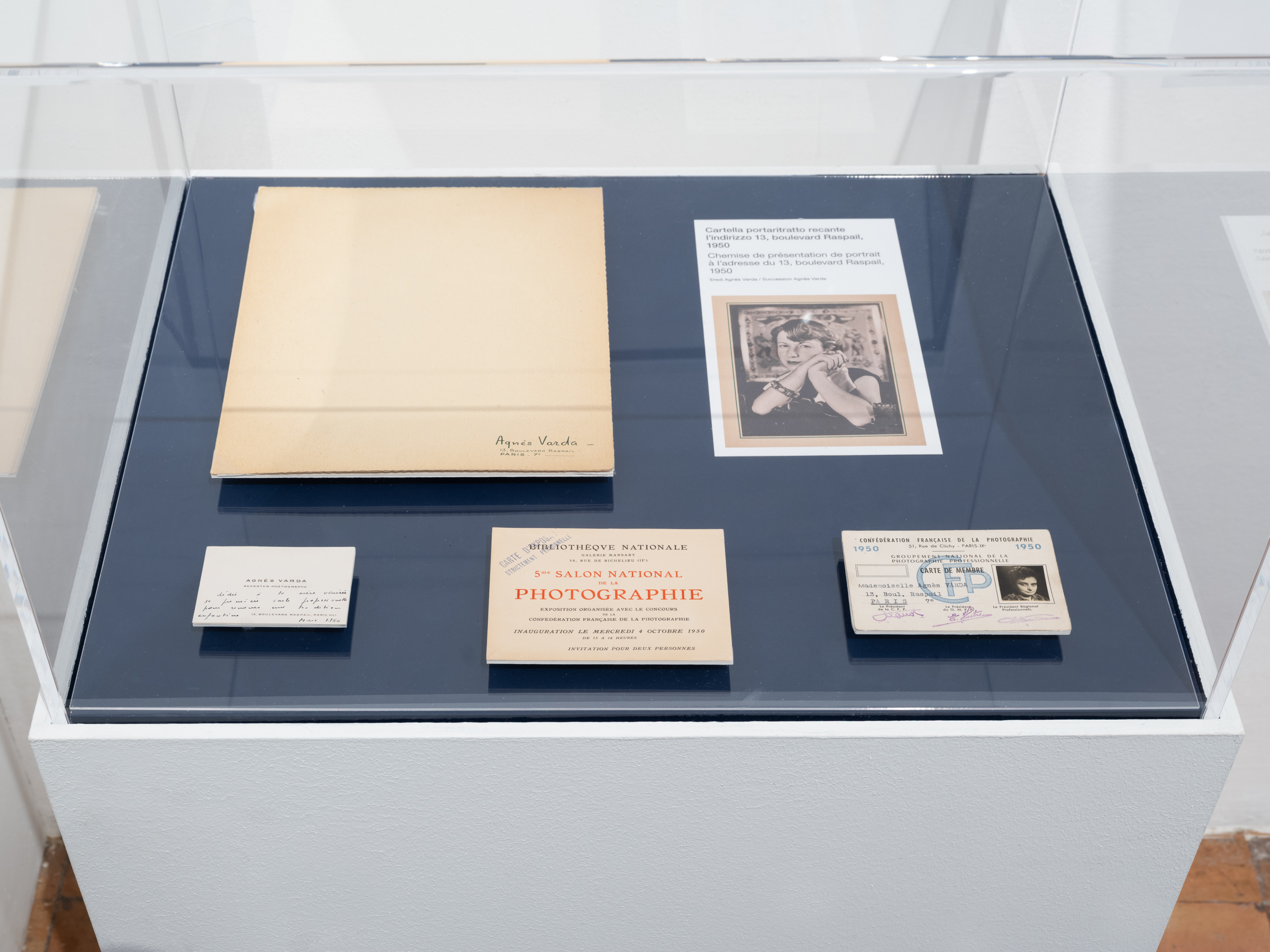
The exhibition at Villa Medici juxtaposes and compares the work of the photographer with that of the filmmaker through a series of 130 original prints, film clips, publications, documents, posters, on-set photographs, and objects that belonged to the artist. Designed by the Musée Carnavalet – Histoire de Paris and Paris Musées, under the direction of Anne de Mondenard and Paris Musées, it was presented in Paris from April 9 to August 24, 2025. The retrospective is the result of more than two years of research and draws on the Agnès Varda photographic collection, as well as the archives of Ciné-Tamaris, the production company she created, now run by her children, Rosalie Varda and Mathieu Demy.
The walkthrough traces Agnès Varda’s beginnings as a photographer and how she settled, in the early 1950s, in the courtyard-workshop on Rue Daguerre, which became a shooting studio, a photo lab and the venue for her first exhibition in 1954. This courtyard, later shared with her partner, the filmmaker Jacques Demy, became the beating heart of her world. Photographs and film clips emphasize the offbeat gaze, tinged with humour and strangeness, that she brought to bear on the streets of the capital and its inhabitants. Through cinematic works such as Cleo from 5 to 7 (1962) or Daguerreotypes (1975), the retrospective particularly highlights her constant attention to women and to people living on the margins of society.
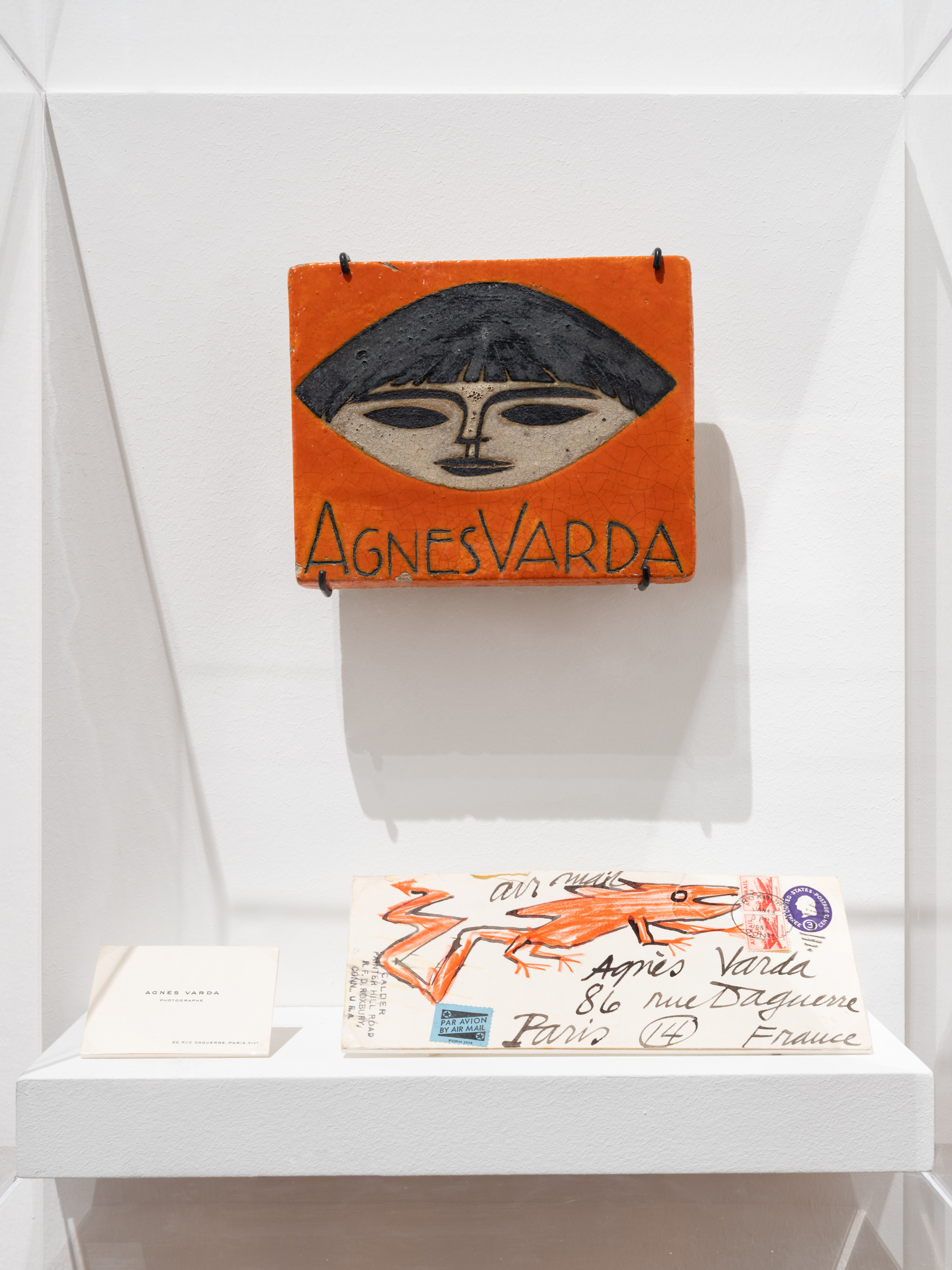
The exhibition includes works by several artists presented in dialogue with Agnès Varda’s photographs and films: Giancarlo Botti, Michaële Buisson, Alexander Calder, Martine Franck, Dominique Genty, JR, Liliane de Kermadec, Michèle Laurent, Claude Nori, Laurent Sully-Jaulmes, Robert Picard, Valentine Schlegel, Collier Schorr.
Curator: Anne de Mondenard, Musée Carnavalet – Histoire de Paris.
With the exceptional collaboration of Musée Carnavalet – Histoire de Paris, Paris Musées and Rosalie Varda.
Agnès Varda’s Italy
The continuation of the exhibition designed by the Carnavalet Museum, Italy, illuminates the ties between Agnès Varda and Italy through a selection of unpublished photographs taken by the artist during two visits to that country, in 1959 and 1963. At the time, she was known as a theatre photographer and fulfilled numerous commissions to produce features for the French and European press.
In 1959, she travelled around Venice and its region scouting locations for La Mélangite (ou les Amours de Valentin), a film that in the end she did not make. Her photographs bear witness to her discovery of Italy and her taste for the picturesque. Her views of Venice and its inhabitants are a faithful reflection of her state of mind. In addition to her spontaneous approach to photography, she was attracted to graphic scenes that play with shadows and contrasts. At the Villa della Torre, near Verona, and the Bomarzo Gardens in the Latium, she was captivated by the materials and the strangeness of the sculptures.
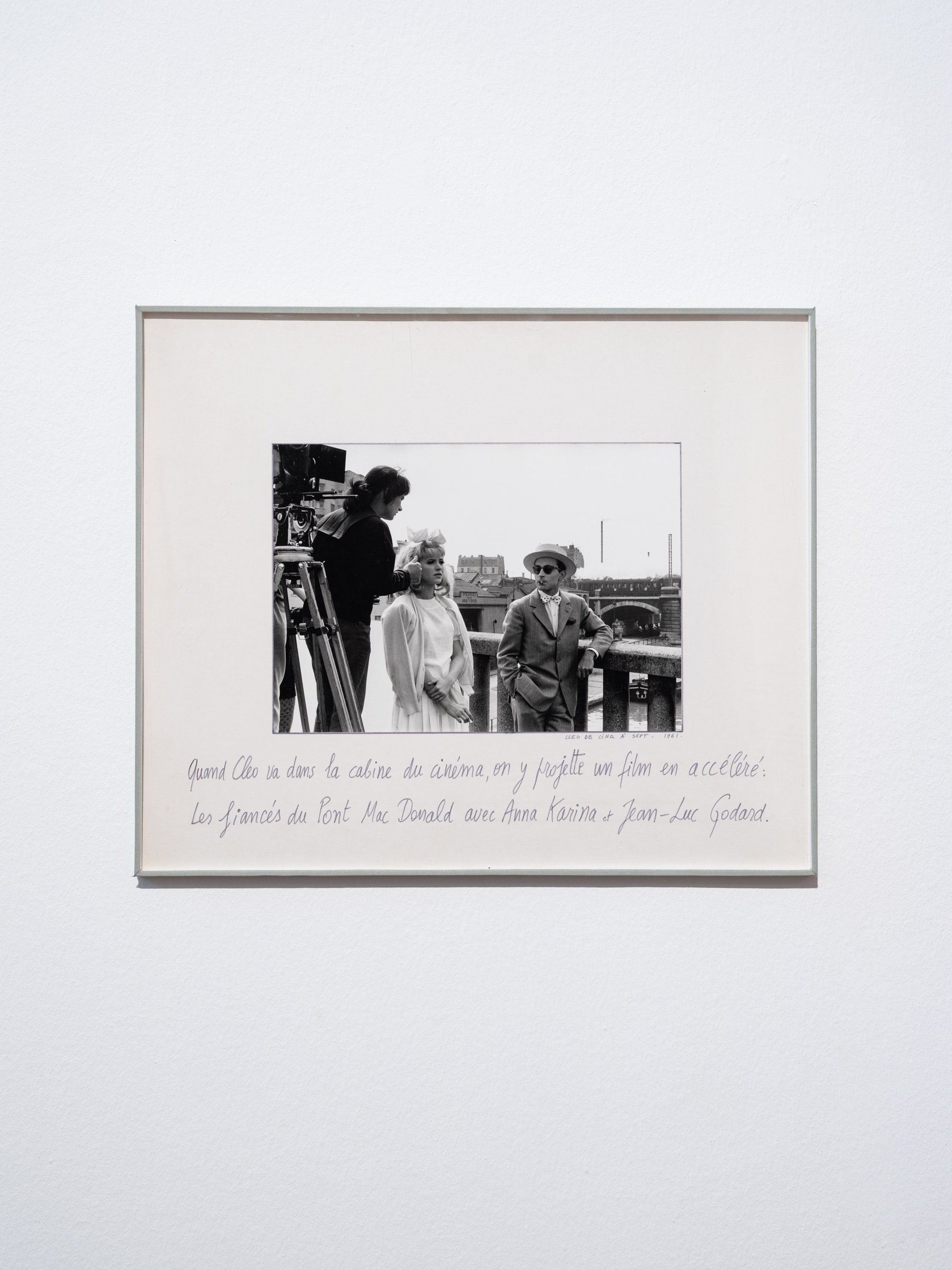
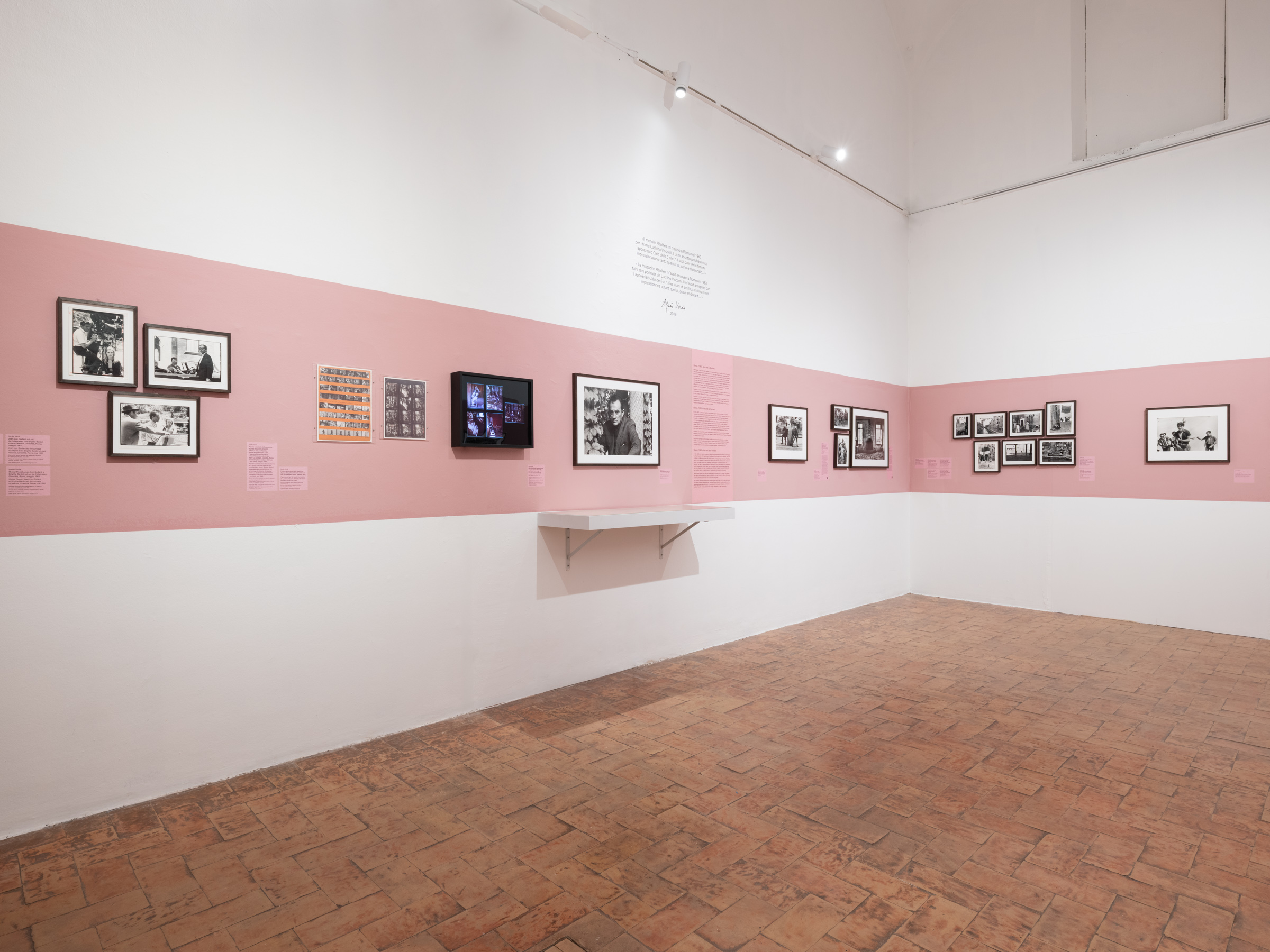
In May 1963, the French magazine Réalités commissioned her to take a portrait of Luchino Visconti, who had just been awarded the Palme d’Or for his film The Leopard. She flew to Rome with three cameras. Contact sheets and colour photos bear witness to this shoot with the man the press dubbed the “taciturn prince of Italian film”. At the same time, Jean-Luc Godard was making Contempt at the Titanus studios. Agnès Varda visited the set and photographed her friend directing Brigitte Bardot, Jack Palance, and Michel Piccoli.
Some fifty original prints from Rosalie Varda’s collection and documents from her archives and from the collection deposited at the Hauts-de-France Institute for Photography tell the story of Varda’s relationship with Italy for the first time.
Curator: Carole Sandrin, Institut pour la photographie.
In coproduction with the Institut pour la photographie des Hauts-de-France, based on the photographic collection and archives of the Succession Agnès Varda.
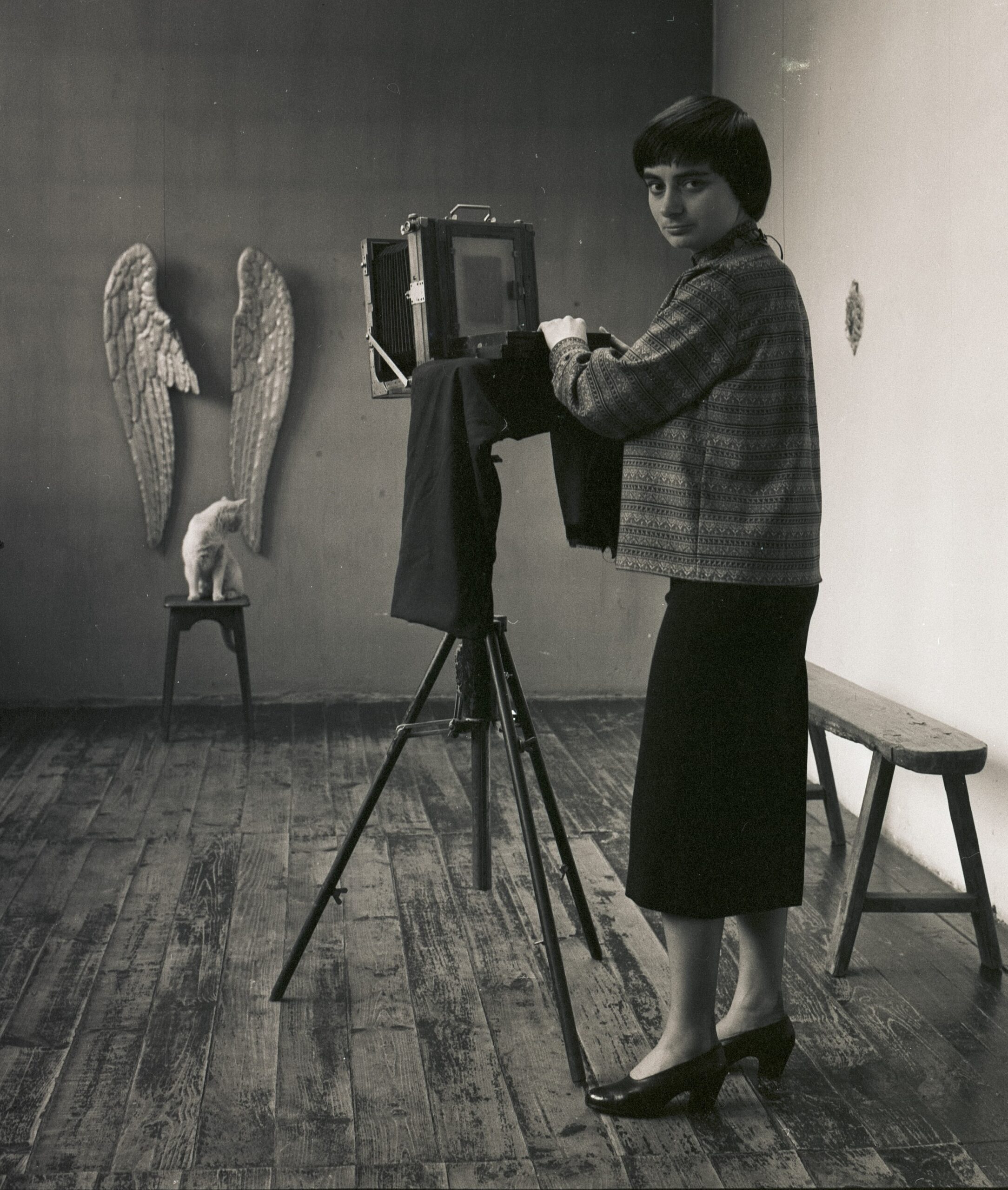
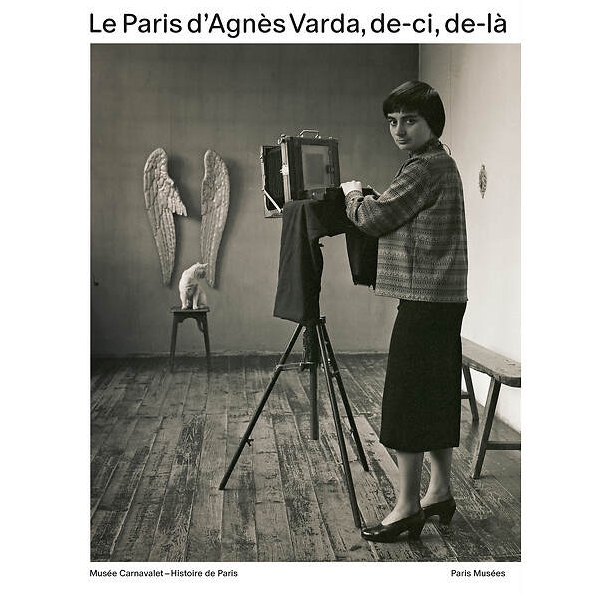
Agnès Varda, Self-portrait in her studio, rue Daguerre, Paris 14th, 1956 © Succession Agnès Varda
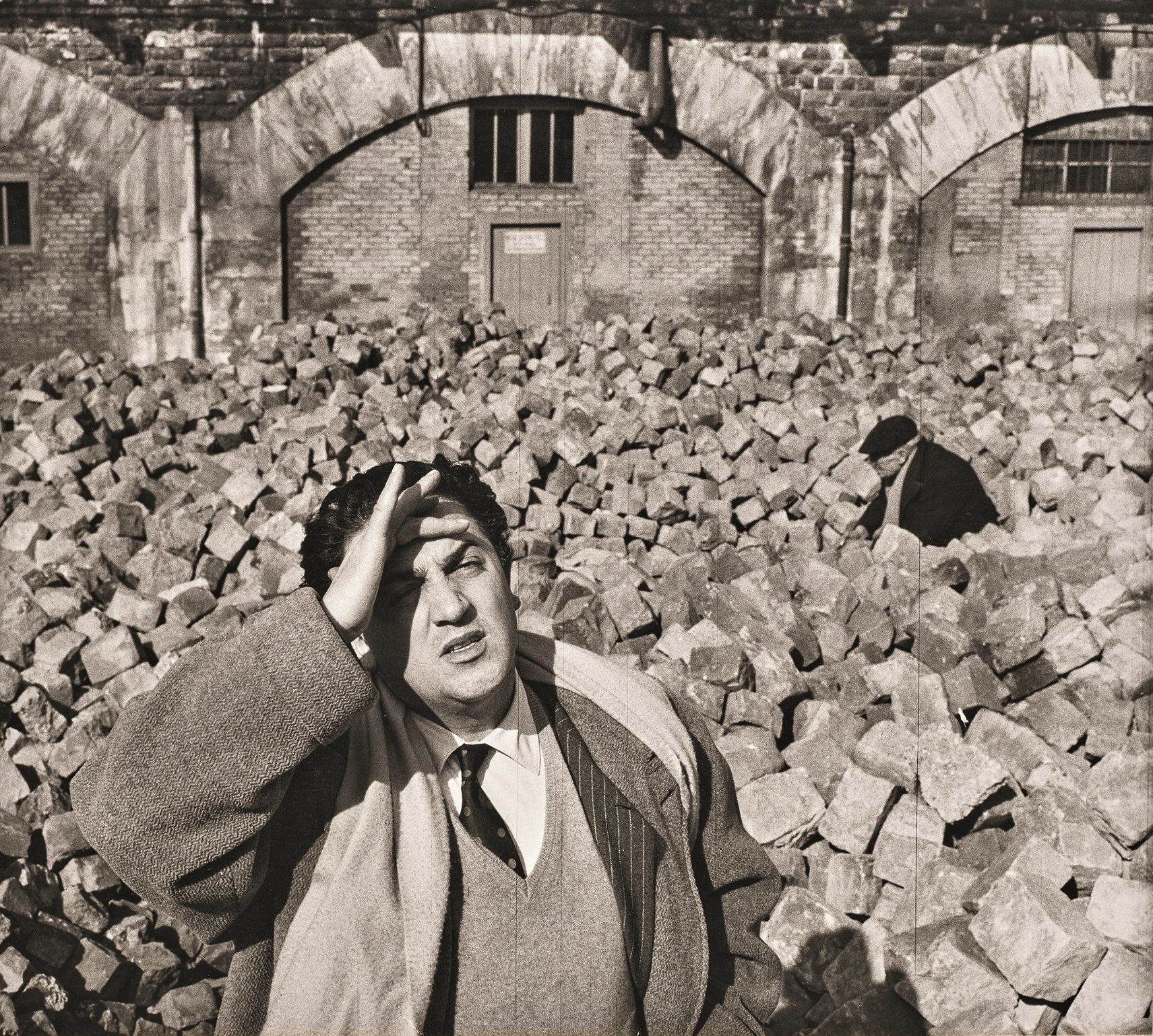
Luchino Visconti, Rome, 1963 © Succession Agnès Varda
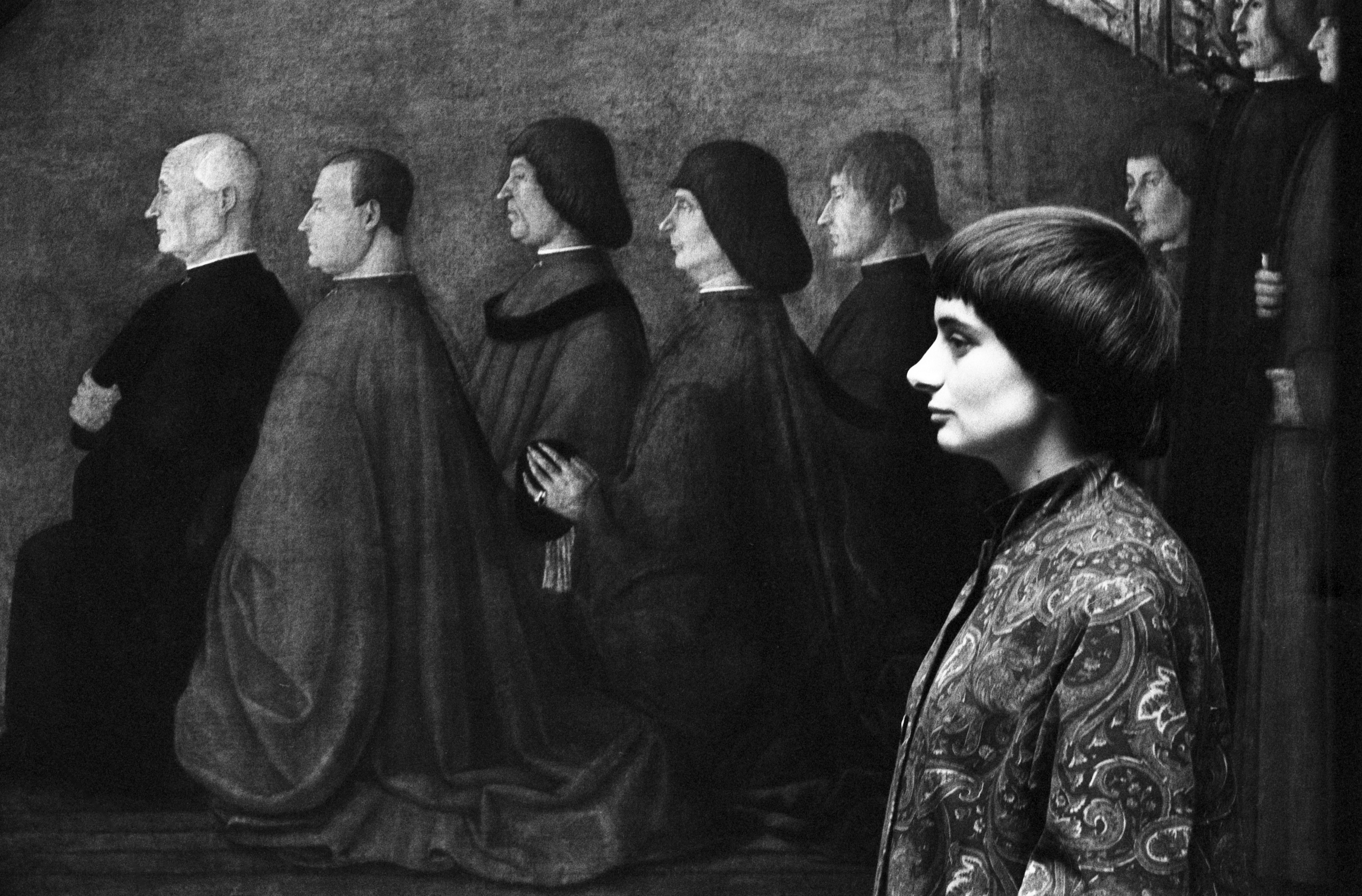
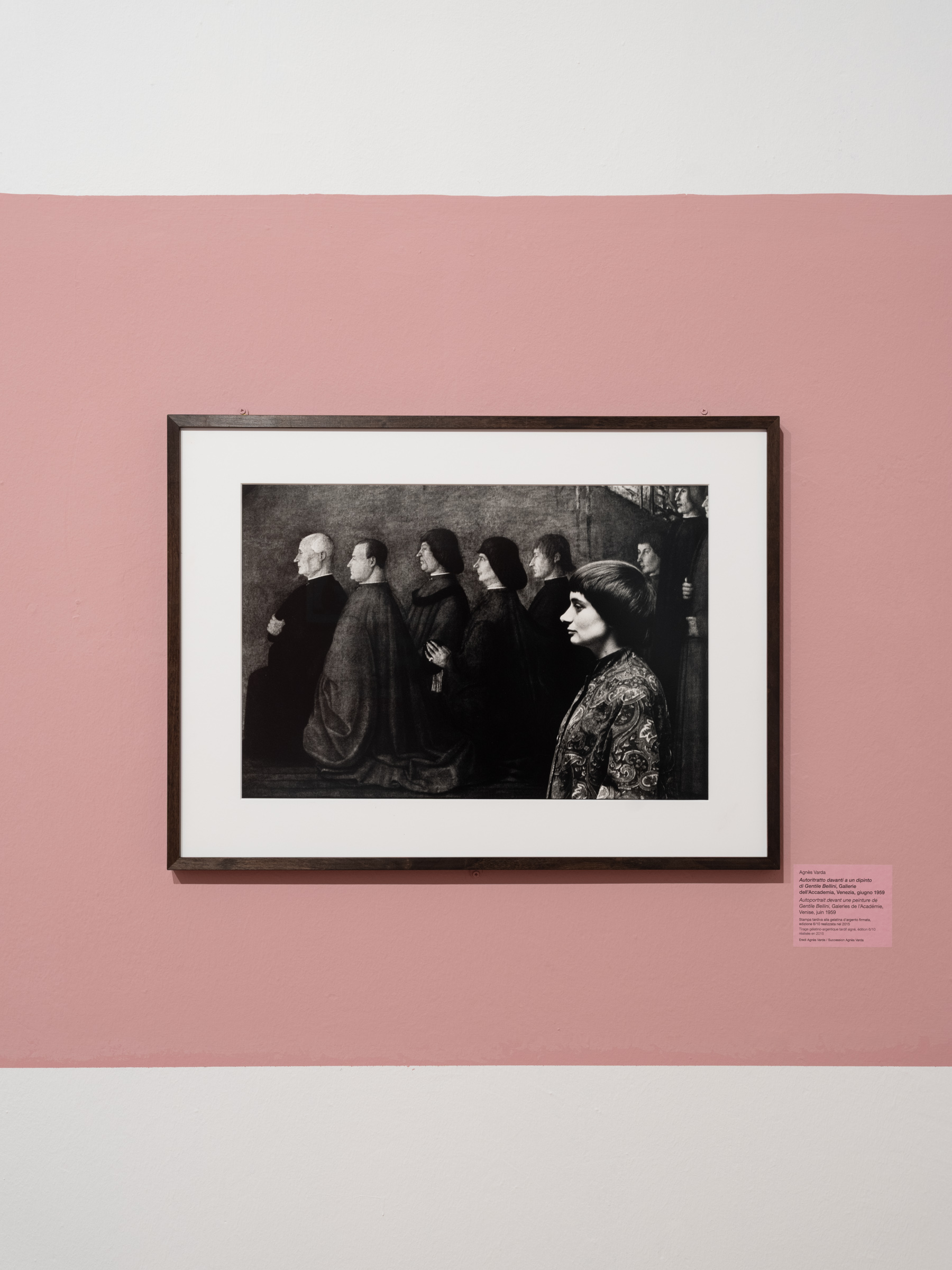
Self-portrait in front of a painting by Gentile Bellini, Venice, 1959 © Succession Agnès Varda
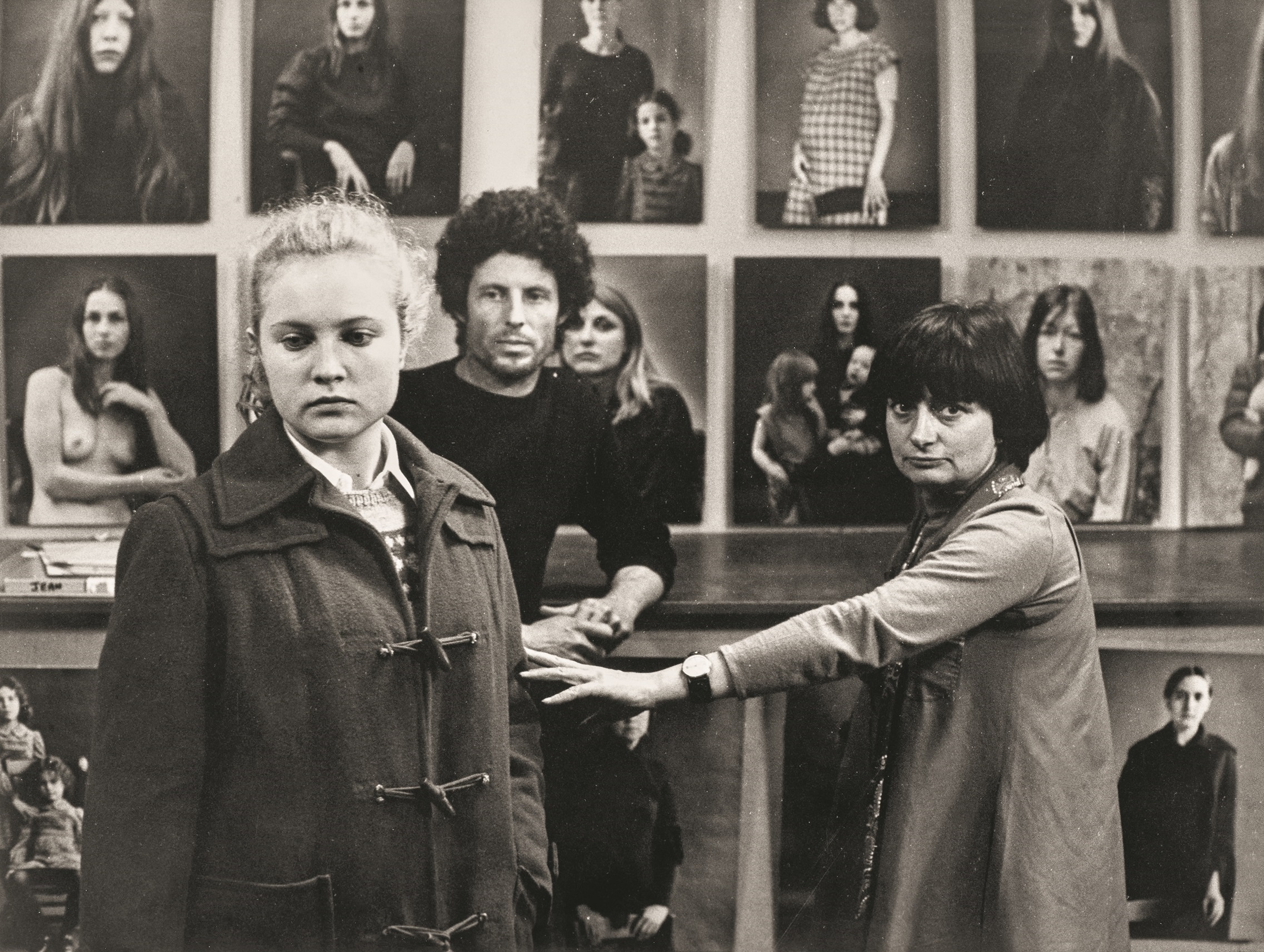
Photograph of Robert Picard, Valérie Mairesse, Robert Dadiès and Agnès Varda on the set of Agnès Varda’s film L’une Chante, l’autre pas, 1976 Robert Picard © Ciné-Tamari
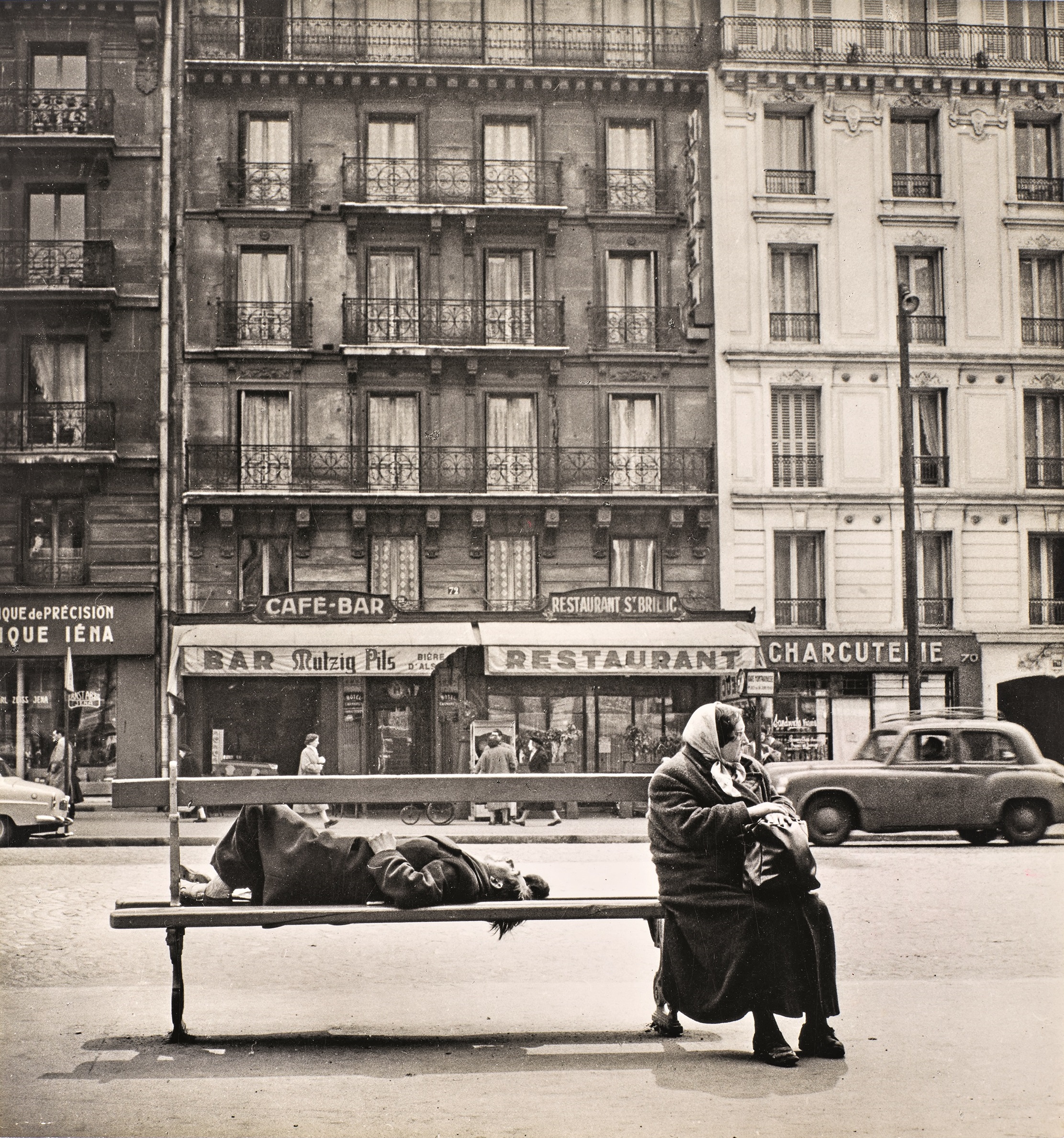
Agnès Varda, Boulevard du Montparnasse, Paris, March 1956 © Succession Agnès Varda
Collier Schorr, Agnès Varda dans sa cour rue Daguerre, Paris 14e
Interview magazine, July 22, 2018, no. 521 Courtesy Collier Schorr
Rue Mouffetard, Paris 5e, 1957 © Succession Agnès Varda
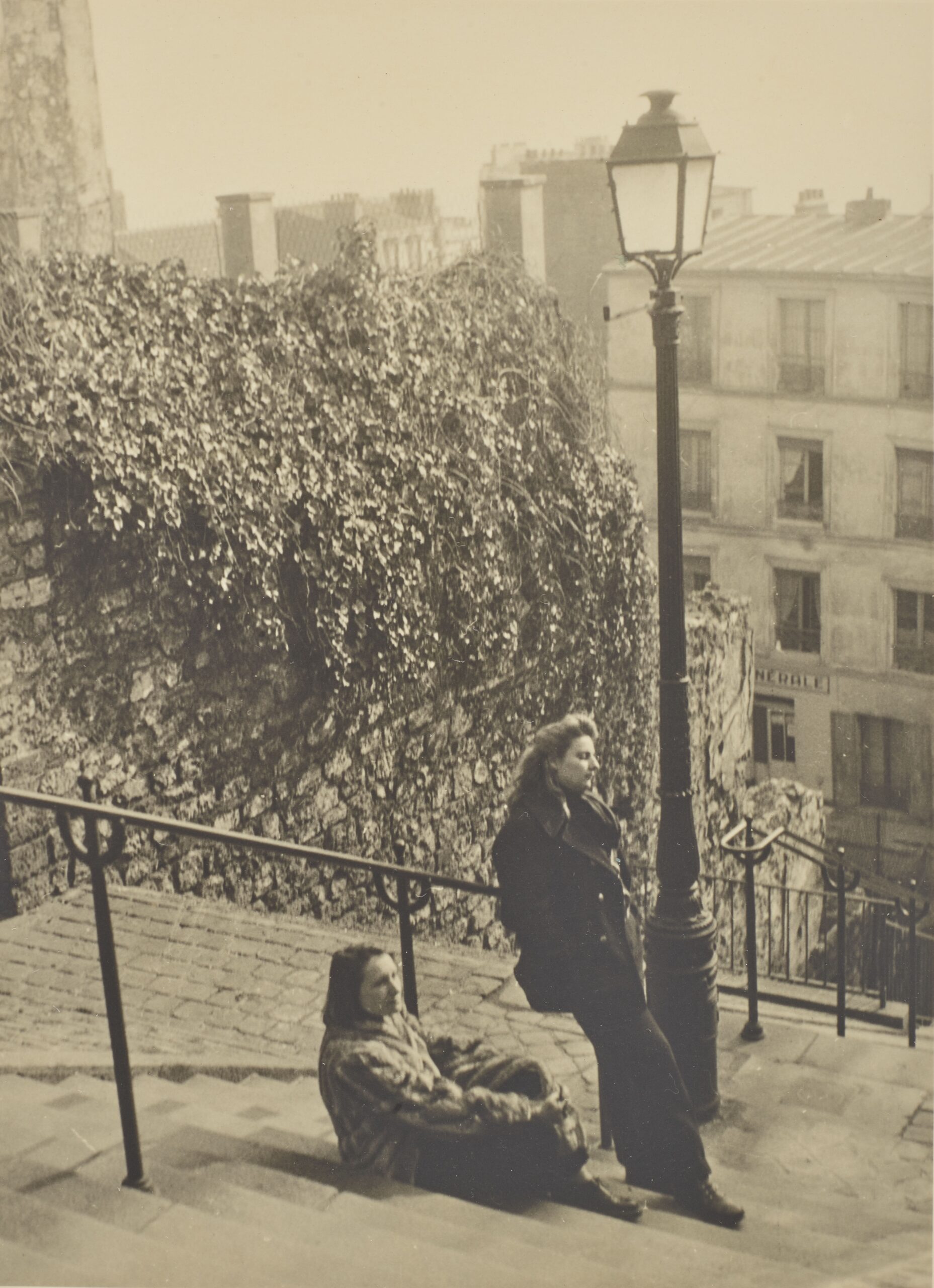
Agnès Varda, Valentine Schlegel and Frédérique Bourguet
in Montmartre, Paris 18th, 1948-1949 © Succession Agnès Varda
Agnès Varda in 9 chapters
1. Before rue Daguerre
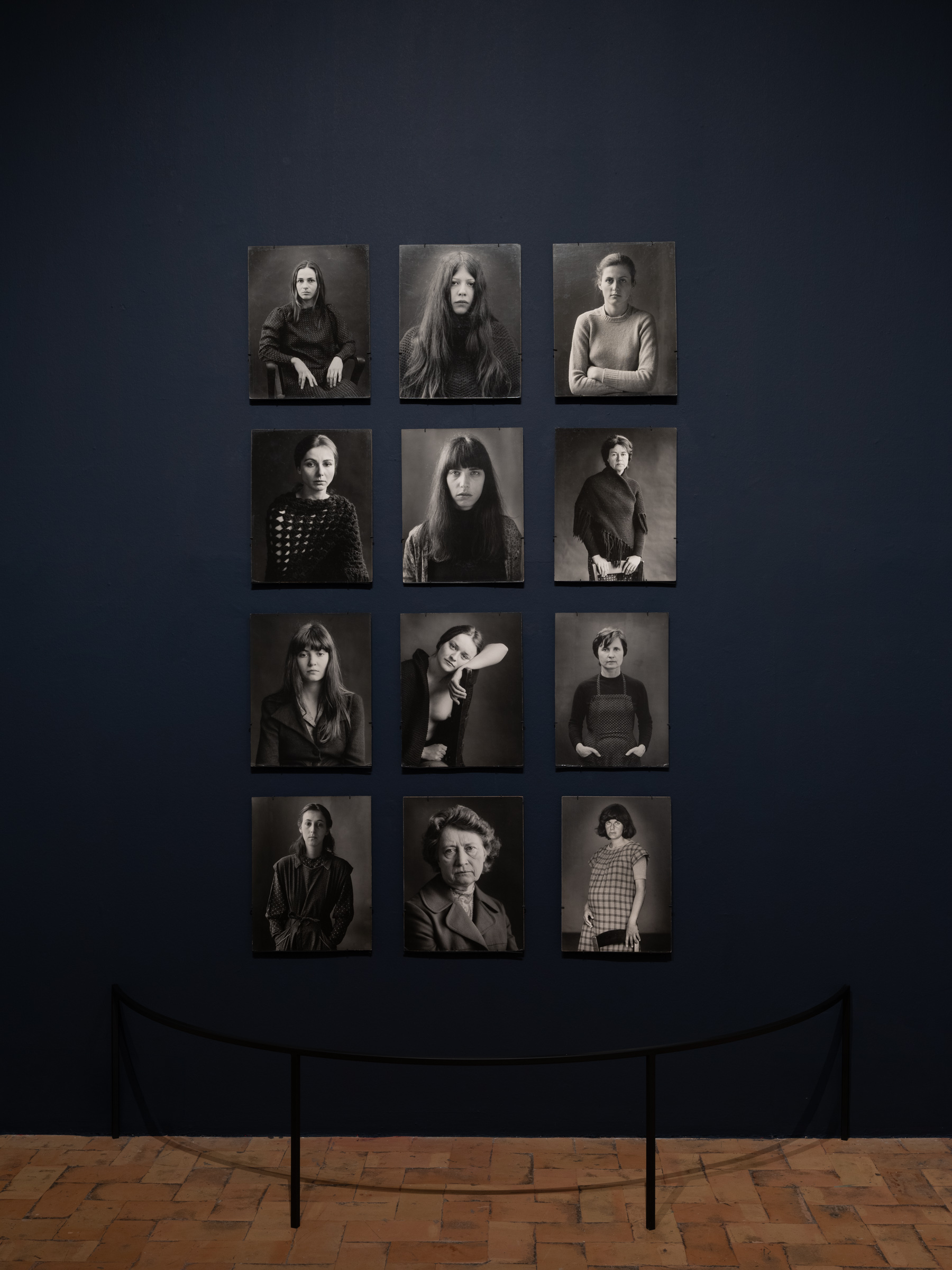
Having arrived in Paris in 1943, Agnès Varda studied at the École du Louvre and decided to become a photographer, a profession that enabled her to combine manual and intellectual activities. While she was learning her craft, she shared an apartment near Pigalle with three other young women. Her roommates were her first models and the banks of the Seine her first Parisian landscapes. She was already asserting her own style, a kind of strangeness influenced by surrealism, and her artistic identity.
2. The Daguerre courtyard
In 1951, Agnès Varda moved to 86, Rue Daguerre, an unusual location. She turned two former shops separated by a courtyard/alley into a workshop, studio, and laboratory. This workspace and creative base was also a living space shared with the sculptor Valentine Schlegel and a family of Spanish refugees. In the courtyard, she organized her first exhibition in 1954 and shot her first films.
3. The funny side of Paris
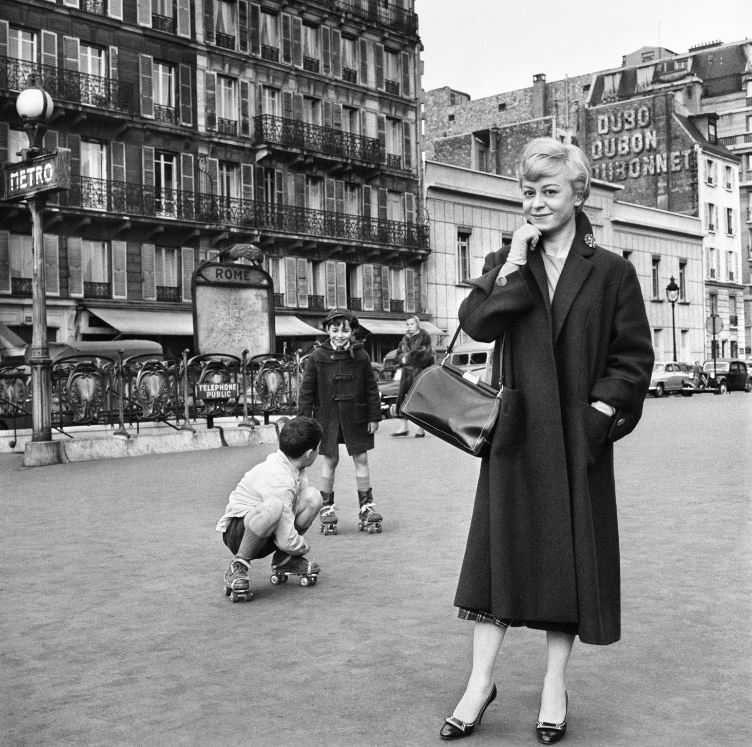
In the 1950s, Agnès Varda was the official photographer for Jean Vilar’s Théâtre National Populaire and the Avignon Festival. This activity opened the doors of the Paris art world to her: she produced numerous portraits and features, photographing figures such as Calder, Brassaï, Suzanne Flon, Giulietta Masina, and Fellini. Combining humour and strangeness, bordering on a form of darkness, she gradually established herself as a distinctive voice on the postwar intellectual scene.
4. Photographic writing
Agnès Varda excelled at reportage, while asserting an aesthetic and a method marked by the language of film, in certain subjects. Like a filmmaker, she staged her shots and directed her models: a little girl dressed as an angel or young actors miming various kinds of romantic behaviour.
5. Echoing the city
In 1961, with her film Cleo from 5 to 7, Agnès Varda produced both a portrait of a woman and a documentary on Paris, in which the city reflects the moods of her heroine, frantic with fear of cancer. In 1967, she filmed Paris again, in tune with the feelings afflicting a young mother, panic-stricken by the Vietnam War. Being close to the filmmakers of the New Wave, Varda framed her view of Paris in a dialogue between the intimate and the political.
6. Women, people
In her photographs and then in her films, Agnès Varda questioned the way women are viewed, particularly in One Sings, the Other Doesn’t, where she defended women’s rights and contraception. Her feminism was part of a wider focus on humanity: from the 1950s onward, she highlighted the impoverished population that frequented the Rue Mouffetard street market (L’Opéra-Mouffe, 1958). Later, in Daguerreotypes (1975), she turned her attention to the shopkeepers of Rue Daguerre, whom she described as the “silent majority”. She captured gestures, faces, and stories of everyday life with poetic sincerity, in a style between social documentary and surrealist homage.
7. The courtyard-garden
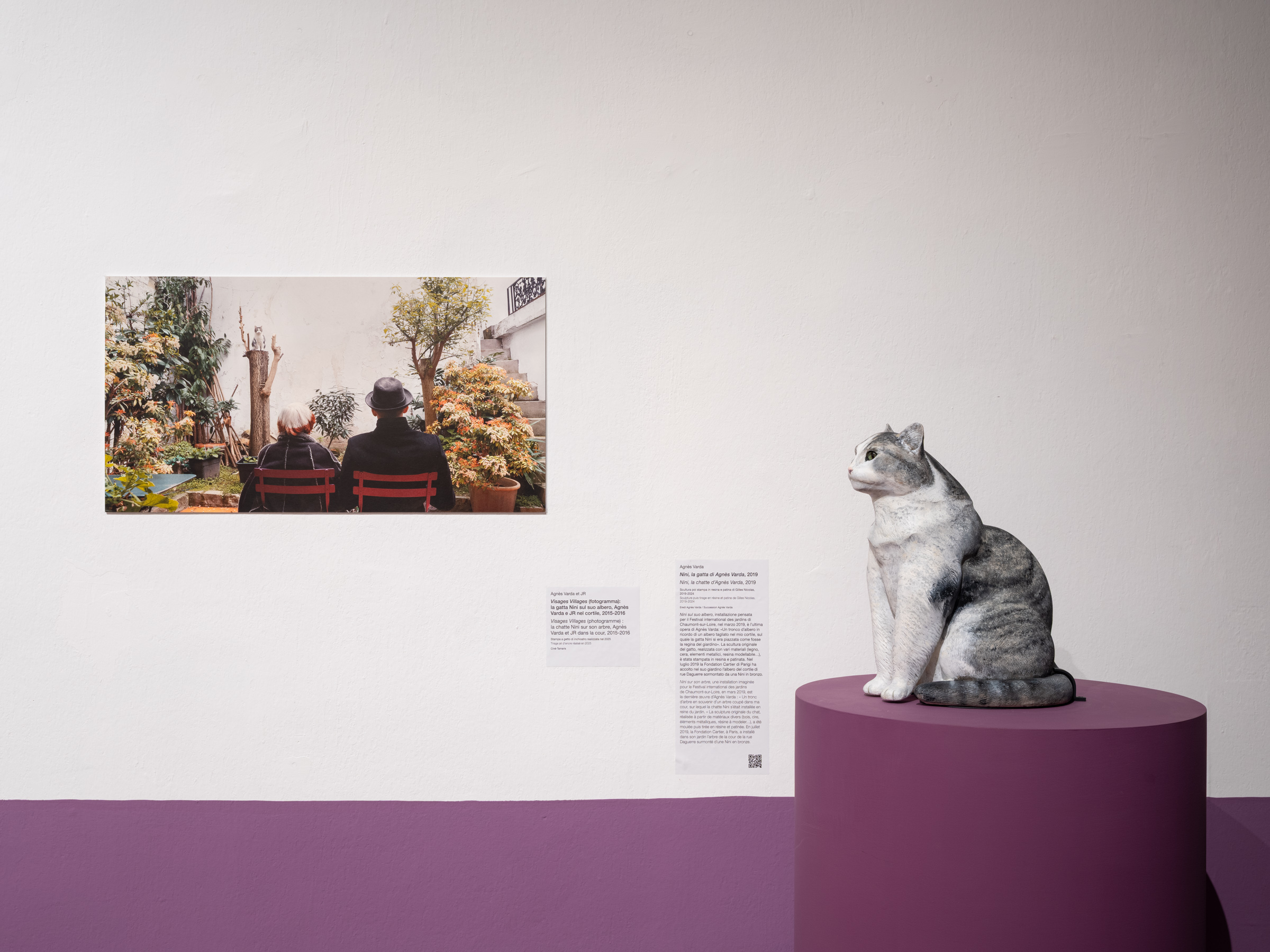
Until the mid-1960s, Agnès Varda photographed young actors, such as Delphine Seyrig and Gérard Depardieu, in her courtyard. After making her neighbouring shopkeepers famous in Daguerreotypes (1975), she increasingly identified with her street, to the point of calling herself a “Daguerreotypist”. Over the years, the courtyard-studio became a courtyard-garden, sometimes extending to Rue Daguerre, as in the “auto-documentary” The Beaches of Agnès (2008). It was also the place where Agnès Varda told her story, staged herself, and showcased her work.
8. Travelling shots in the city
In Paris, Agnès Varda was not tempted to film the picturesque side of the capital. She was drawn to aspects that do not attract attention and to the places she knew best: her own neighborhood and the banks of the Seine. The excerpts brought together in the exhibition show how her camera moved around the city. They borrow from every genre (fiction, documentary, advertising) and all formats (feature films, shorts, screen tests).
9. Italy
Special focus on Villa Medici
In 1959, while scouting locations in Venice and its surroundings, Agnès Varda captured scenes of everyday life and recurrent motifs such as washing drying in windows and dark passageways.
During this trip she composed one of her famous self-portraits in front of a painting by Gentile Bellini, humorously drawing attention to her by now iconic hairstyle. When she was sent to Rome in 1963 to photograph the director Luchino Visconti, she visited Jean-Luc Godard on the set of Contempt and immortalized Brigitte Bardot, Jack Palance, and Michel Piccoli.
The curators
Agnès Varda’s Paris
Anne de Mondenard is a general heritage curator, with a doctorate in art history, and head of the Department of Photographs and Digital Images at the Musée Carnavalet – Histoire de Paris. Since the early 1990s she has been curating numerous exhibitions. She is also the author of many publications related to photography.
Agnès Varda’s Italy
Carole Sandrin has been curator responsible for the photographic collections of the Institute for Photography since 2021. A historian of photography with a diploma in preventive conservation, she has curated the exhibitions Agnès Varda. Expo54 (2021), Bettina Rheims: Rose, c’est Paris (2021), Agnès Varda. La Pointe courte, des photographies au film (2023), and Jean-Louis Schoellkopf: Portraits d’intérieurs (2024). Since 2023 she has co-directed the Carnets de l’Institut collection, co-published with delpire&co.
Partners
Paris Musées
Paris Musées is the public institution that brings together the twelve museums of the City of Paris and two heritage sites. The leading museum network in Europe, Paris Musées received more than 4.8 million visitors in 2024. It includes art museums (Musée d’Art Moderne de Paris, Petit Palais – Musée des Beaux-Arts de la Ville de Paris), history museums (Musée Carnavalet – Histoire de Paris, Musée de la Libération de Paris – Musée du Général Leclerc – Musée Jean Moulin), former artists’ studios (Musée Bourdelle, Musée Zadkine, Musée de la Vie Romantique), writers’ homes (Balzac’s house, Victor Hugo’s houses in Paris and Guernsey), a fashion museum (Palais Galliera – Musée de la Mode de la Ville de Paris), museums of major donors (Musée Cernuschi – Musée des Arts de l’Asie de la Ville de Paris, Musée Cognacq-Jay), as well as the heritage sites of the Paris Catacombs and the Archaeological Crypt of the Île de la Cité.
Musée Carnavalet – Histoire de Paris
Housed in the Hôtel Carnavalet and the Hôtel Le Peletier de Saint-Fargeau, in the heart of the Marais district, the Carnavalet Museum is the foremost reference point for the history of Paris. Its collections, comprising some 640,000 items, make it one of the leading French museums. Paintings, sculptures, pieces of furniture, woodwork, decorative art and historical objects, signs, photographs, drawings, prints, posters, medals, coins, archaeological collections… 3,800 works are displayed in an outstanding historical setting, enabling visitors to explore the capital from prehistoric times to the present day. The history of Paris is recounted in a unique and vibrant way: at once historical, documentary, sentimental, and close to the essence of Parisians.
Hauts-de-France Institute for Photography
The Institute for Photography, launched in 2018 by the Hauts-de-France Region in collaboration with the Rencontres d’Arles, is a venue for exhibitions, resources, exchanges, and experimentation entirely devoted to photography, located in the heart of Old Lille. Reflecting the desire to provide a secure base for the image within a region with a strong cultural identity by endowing it with an international benchmark institution in the field of photography, the Institute for Photography aims to develop the culture of the image among people of all kinds, to preserve photographic heritage, and to support research and creation.
Ciné-Tamaris
In 1954, to produce her first full-length film, La Pointe Courte, a forerunner of the New Wave, Agnès Varda created a cooperative, Tamaris Films, which she subsequently turned into a producion company. In 1975, the company adopted the name Ciné-Tamaris during the production of the film Daguerréotypes. From 1990, Ciné-Tamaris bought most of Jacques Demy’s films to add them to its catalogue, and in 2010 it began to digitize and restore them, as well as those of Agnès Varda, most of which are available in 2K and 4K. Ciné-Tamaris produced or co-produced the majority of Agnès Varda’s films, up to her last feature-length film, Visages Villages (Faces Places), co-directed with JR in 2017, and her last documentary, Varda by Agnès, in 2019. Ciné-Tamaris manages the two filmmakers’ photographic collections and archives.
Paris-Rome: 70 years of friendship
In 2026, Paris and Rome celebrate 70 years of a unique twinning agreement, formalized in 1956 to affirm a special bond between two capitals that chose each other. The year will be punctuated by a joint program combining culture, heritage, festivals, exhibitions, gastronomy, and large popular events. This anniversary highlights a living dialogue, lasting friendship, and even stronger cooperation between the two cities.
Practical information
Opening hours
From 10 a.m. to 7 p.m. every day, last admission at 6.30 p.m.
Closed on Tuesdays
Prices
Open ticket (gives access to the exhibition on any date):
€12 full price
€10 reduced price*
Free admission under certain conditions*
Dated ticket (gives access to the exhibition on the date selected when booking the ticket):
€10 full price
€8 reduced price*
€2 for Villa Medici Tribu cardholders
Free admission under certain conditions*
*Conditions for reduced rates and free admission
Reduced rates
- Under 25
- Job seekers upon presentation of proof
- Residents and members of foreign academies in Rome
Free admission
- Under 18
- Holders of VILLA MEDICI SOLO or DUO membership cards (only for temporary exhibitions)
- Journalists
- People with disabilities (with a companion)
- ICOM or ICOMOS cardholders
- Holders of the French Ministry of Culture’s Carte Culture (with a companion)
- Professional artists in the graphic, plastic and photographic arts upon presentation of the annual certificate issued by the French organisation responsible for their affiliation
- Residents and staff of the Casa de Velázquez in Madrid and the Villa Kujoyama in Kyoto
- Members and staff of the Ecole française de Rome
Free or reduced-price tickets are issued upon presentation of valid proof of eligibility.
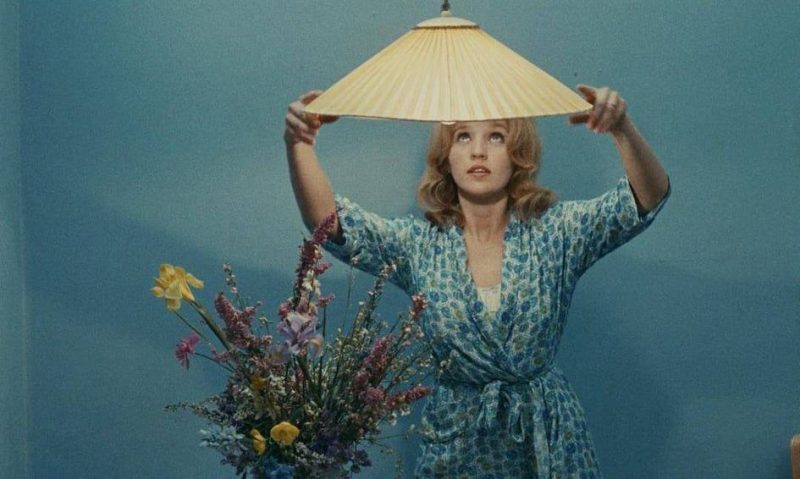
CINE VARDA
18.05.2026